Valentina Matviyenko's Tenure as Governor of Saint Petersburg
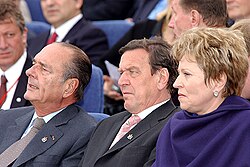
Valentina Matviyenko holds a significant place in the political history of Russia's "Northern Capital," having served as the first female head of government for Saint Petersburg. Her leadership was characterized by a drive for massive infrastructure modernization, an aggressive push for industrial growth, and a complex relationship with the city's architectural preservationists.
The Path to Power: Election and Confirmation
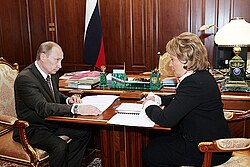
Following the early resignation of Governor Vladimir Yakovlev on June 24, 2003, Matviyenko announced her candidacy for the office. Her campaign received strong backing from the United Russia political party and President Vladimir Putin, who publicly endorsed her on September 2. The election period was marked by shifts in local media, including the shutdown of several analytical political programs on St. Petersburg Television.
In the first round of elections on September 21, 2003, Matviyenko secured 48.61% of the vote, leading former staff member Anna Markova (15.89%). Despite a low voter turnout of 29%, Matviyenko won the second round on October 5, 2003, with 63% of the vote, officially becoming the Governor of Saint Petersburg.
By 2005, Russian federal law changed the appointment process for governors, shifting from direct popular votes to presidential nominations approved by regional legislative assemblies. On December 6, 2006, Matviyenko requested that President Putin nominate her under this new system. She was subsequently approved by the Saint Petersburg Legislative Assembly on December 22, 2006.
Key Facts
- First Female Governor: Matviyenko was the first woman to lead the Saint Petersburg City Administration.
- Tourism Boom: Tourist arrivals doubled between 2003 and 2010, reaching 5.2 million visitors.
- Infrastructure Milestones: Oversaw the completion of the Saint Petersburg Dam and the expansion of the Metro.
- Industrial Growth: Attracted global automotive giants like Toyota, Nissan, and Hyundai to the Shushary industrial zone.
- Political Shift: Facilitated the transfer of the Constitutional Court of Russia from Moscow to Saint Petersburg in 2008.
City Development and Infrastructure
Matviyenko focused heavily on the city's economic and physical landscape. One of her primary goals was increasing the local budget by transferring a larger share of taxation money from the federal level to the city.
Infrastructure and Industry
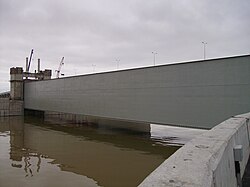
Her administration launched several megaprojects—large-scale, expensive engineering feats. These included the Saint Petersburg Ring Road and the Big Obukhovsky Bridge, the city's only non-draw bridge over the Neva River. Most notably, she oversaw the completion of the Saint Petersburg Dam, designed to protect the city from chronic flooding.
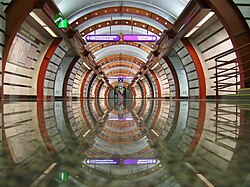
The city's transit system also expanded with the launch of Line 5 of the Saint Petersburg Metro.
Industrially, the Shushary zone became a hub for international automotive manufacturers, including Toyota, General Motors, Nissan, Hyundai Motor, Suzuki, Magna International, Scania, and MAN SE.
Tourism and Culture
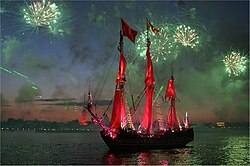
To elevate the city's global profile, the administration implemented aggressive international advertising and built new hotels. These efforts paid off, as Saint Petersburg became one of Europe's top five tourist centers by 2010. Culturally, the Scarlet Sails—a massive graduation celebration for school students—was scaled up and began broadcasting nationwide.
Challenges and Controversies
Matviyenko's tenure was not without friction. She faced public protests, including the "Dissenters' March" in 2007 on Nevsky Prospekt, where opposition groups called for her dismissal. In May 2007, the Federal Security Service reported thwarting an assassination attempt by a youth religious group planning to use plastic explosives and grenades.
Architectural Conflicts
The most enduring criticism involved construction in the city's historic center, a UNESCO World Heritage Site. Matviyenko supported the Okhta Center (Gazprom City), a proposed 400-meter skyscraper. To allow this, the city administration changed regulations that previously capped building heights at 42 to 48 meters.
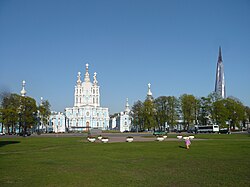
Following years of protests from gradozaschitniki (city-defenders) and intervention by President Dmitry Medvedev, the project was relocated to the Lakhta suburb. Other projects, such as the Mariinsky Theatre Second Stage and the New Holland Island reconstruction, also faced criticism for destroying historic buildings or proposing designs that clashed with classical architecture.
Administrative Failures and Legal Accusations
During the severe winters of 2009–2011, the administration was criticized for a lack of snow-cleaning equipment, leaving the historical center and drivers in distress. Additionally, businessman Vitaly Arkhangelsky accused Matviyenko of corruption and corporate raiding regarding the Bank Saint Petersburg and the Vyborg Port, though lawyers for the bank denied her involvement in the London court proceedings.
Summary of Governance
| Category | Key Achievements / Events | Major Controversies |
|---|---|---|
| Infrastructure | Saint Petersburg Dam, Ring Road, Metro Line 5 | Snow removal failures (2009-2011) |
| Economy | Attracted Toyota, Nissan, Hyundai; increased tourism | Corporate raiding allegations (Bank Saint Petersburg) |
| Urbanism | Modernized tourist infrastructure | Okhta Center skyscraper conflict |
| Politics | First female governor; moved Constitutional Court to city | Dissenters' March protests |
Frequently Asked Questions
How did Valentina Matviyenko first become governor?
She was elected in October 2003 after winning a two-round election with 63% of the vote in the final round, supported by President Vladimir Putin and the United Russia party.
What was the Okhta Center controversy?
It was a proposal to build a 400-meter skyscraper near the historic Smolny Cathedral. It was heavily criticized for violating the city's classical architecture and UNESCO status, eventually leading to its relocation to Lakhta.
Which major infrastructure projects were completed during her term?
Key projects included the Saint Petersburg Dam to prevent flooding, the Saint Petersburg Ring Road (including the Big Obukhovsky Bridge), and the expansion of the Metro with Line 5.
How did tourism change under her administration?
Through international advertising and hotel construction, the number of tourists doubled between 2003 and 2010, reaching 5.2 million and making the city a top 5 European tourist destination.
What were the "Dissenters' Marches"?
These were protests organized by opposition parties on Nevsky Prospekt in 2007, where participants called for Matviyenko's dismissal.