US Senate Composition and Election Cycles of the 91st Congress
The United States Senate operates on a staggered election system designed to ensure stability and continuity within the legislative branch. Senators are popularly elected statewide every two years, but they serve six-year terms. To maintain this cycle, only one-third of the Senate is up for election during any given congressional cycle.
During the 91st Congress, these cycles were categorized into three distinct classes. Senate class numbers indicate the specific election cycle a Senator belongs to, which determines when their term expires and when they must seek re-election.
- Class 1: Terms ended with the current Congress, requiring re-election in 1970.
- Class 2: Terms began in the previous Congress, requiring re-election in 1972.
- Class 3: Terms began with the current Congress, requiring re-election in 1974.
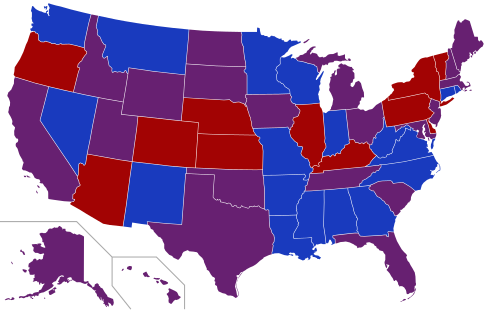
Key Facts
- Senators serve six-year terms, with one-third of the body elected every two years.
- The 91st Congress featured a mix of Democratic (D), Republican (R), and regional party affiliations like DFL (Democratic-Farmer-Labor) and D-NPL (Democratic-Nonpartisan League).
- Several seats experienced transitions during this period due to resignations or deaths, such as the Illinois seat held by Everett Dirksen.
- State representation is split between three classes to ensure the Senate is never entirely renewed at once.
Senate Membership by State
The composition of the Senate during this era reflected the political landscape of the late 1960s and early 1970s. Below is a detailed breakdown of the Senators serving by state and their respective classes.
| State | Senator(s) | Class | Party |
|---|---|---|---|
| Alabama | John Sparkman, James Allen | 2, 3 | D, D |
| Alaska | Ted Stevens, Mike Gravel | 2, 3 | R, D |
| Arizona | Paul Fannin, Barry Goldwater | 1, 3 | R, R |
| California | George Murphy/John V. Tunney, Alan Cranston | 1, 3 | R/D, D |
| Florida | Spessard Holland, Edward Gurney | 1, 3 | D, R |
| Illinois | Charles H. Percy, Everett Dirksen/Ralph Tyler Smith/Adlai Stevenson III | 2, 3 | R, R/R/D |
| New York | Charles Goodell, Jacob Javits | 1, 3 | R, R |
| Texas | Ralph Yarborough, John Tower | 1, 2 | D, R |
Regional Political Dynamics
While most Senators were affiliated with the Democratic or Republican parties, some states utilized specific regional designations. For example, Minnesota's senators, Eugene McCarthy and Walter Mondale, were members of the DFL (Democratic-Farmer-Labor) party, and North Dakota's Quentin Burdick was affiliated with the D-NPL (Democratic-Nonpartisan League).
Mid-Term Transitions
The 91st Congress saw several shifts in membership. In California, John V. Tunney succeeded George Murphy on January 2, 1971. In Delaware, William Roth took over for John J. Williams on January 1, 1971. Illinois experienced a more complex transition in its Class 3 seat: Everett Dirksen passed away on September 7, 1969, followed by Ralph Tyler Smith (September 17, 1969 – November 3, 1970), and finally Adlai Stevenson III, who took office on November 17, 1970.
Frequently Asked Questions
How long is a US Senator's term?
A US Senator is elected to a six-year term.
What are Senate classes?
Senate classes are groups of senators whose terms end at the same time. They are divided into three classes so that only one-third of the Senate is up for election every two years.
When were Class 1 Senators of the 91st Congress required to run for re-election?
Senators in Class 1 were required to seek re-election in 1970.
Which parties were represented in the 91st Congress?
The primary parties were the Democrats (D) and Republicans (R), with some senators representing the Democratic-Farmer-Labor (DFL) and Democratic-Nonpartisan League (D-NPL) parties.
How often are Senate elections held?
Senate elections are held every two years, though only a portion of the seats are contested in each cycle.