Al Gore: A Legacy of Public Service and Environmental Advocacy
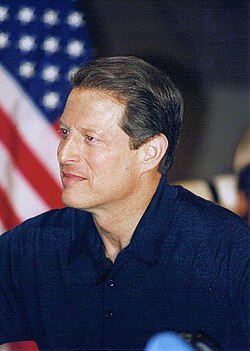
Albert Arnold Gore Jr., known globally as Al Gore, has occupied a unique space in American history. From his early days in the Tennessee legislature to serving as the 45th Vice President of the United States, Gore's career has been defined by a transition from traditional political leadership to becoming one of the world's most prominent advocates for environmental sustainability.
His journey is marked by a deep commitment to public policy, a fascination with the transformative power of technology, and a lifelong crusade to alert the global community to the dangers of climate change.
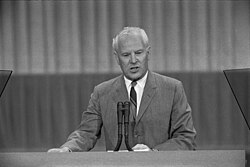
Key Facts

- Highest Office: 45th Vice President of the United States (1993–2001).
- Legislative Experience: Served in both the U.S. House of Representatives and the U.S. Senate representing Tennessee.
- Military Service: Served as a Specialist 4 in the U.S. Army's 20th Engineer Brigade during the Vietnam War.
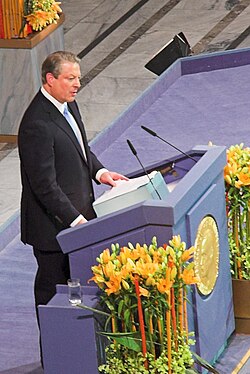
- Major Honor: Co-recipient of the 2007 Nobel Peace Prize for efforts to disseminate knowledge about climate change.
- Education: Bachelor of Arts from Harvard University.
Early Life, Education, and Military Service
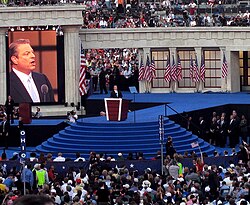
Born on March 31, 1948, Al Gore was raised in a political environment, later attending Harvard University where he earned his BA. His early adulthood was marked by service in the United States Army from 1969 to 1971. During the Vietnam War, he served with the 20th Engineer Brigade and worked as a journalist for The Castle Courier.
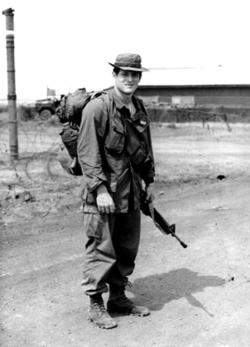
Following his military service, Gore pursued further education at Vanderbilt University and engaged in journalism before launching his political career in his home state of Tennessee.
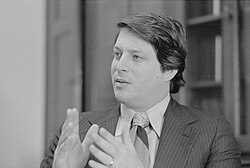
Congressional Career (1977–1993)
Gore entered the national political stage in 1977 when he was elected to the U.S. House of Representatives. He represented Tennessee's 4th district until 1983, and subsequently the 6th district until 1985. In 1985, he transitioned to the U.S. Senate, where he served until 1993.
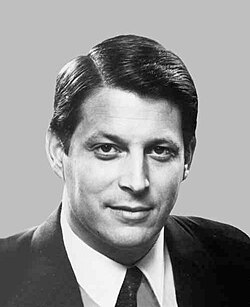
During his tenure in Congress, Gore began to develop his interests in environmental policy and the emerging role of information technology in governance. He also navigated personal challenges, including a serious accident involving his son in 1989, which influenced his personal writing.
The Vice Presidency and the Clinton Era
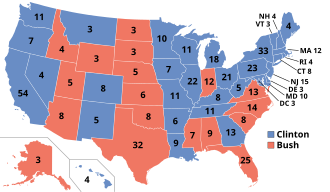
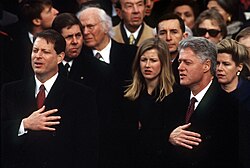
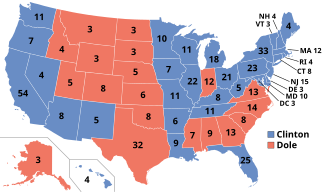
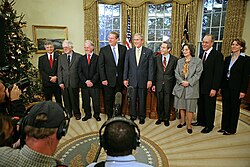
In 1992, Al Gore joined forces with Bill Clinton, forming a ticket that won the presidential election with 370 electoral votes to 168. Gore was sworn in as the 45th Vice President on January 20, 1993.
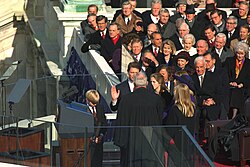
Throughout his eight years in office, Gore was a key partner to President Clinton. He became particularly well-known for his promotion of the "Information Superhighway," advocating for the expansion of internet infrastructure and digital literacy.
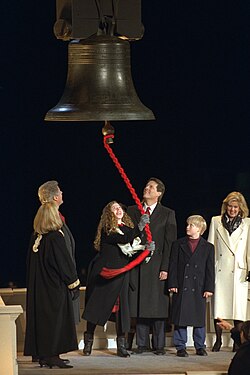
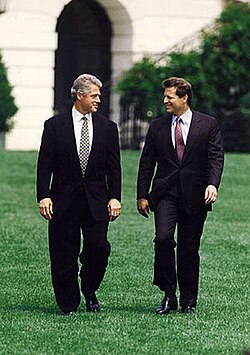

Gore's vice presidency was also characterized by his focus on environmental leadership, including his participation in the 1997 Kyoto climate conference in Japan.
The 2000 Presidential Election
In 2000, Gore ran for President with Joe Lieberman as his running mate. The election became one of the most contentious in U.S. history, culminating in a highly disputed recount in Florida. Despite the narrow margin, Gore eventually conceded the election to George W. Bush on December 13, 2000.


Post-Political Life and Environmental Activism
After leaving the White House in 2001, Gore shifted his focus toward global warming. He became a leading voice in environmentalism, utilizing books and documentaries to educate the public on the scientific reality of climate change.

His efforts were recognized globally in 2007 when he was awarded the Nobel Peace Prize, shared with the Intergovernmental Panel on Climate Change (IPCC). He has continued to influence policy and public opinion, often advising subsequent Democratic administrations.
Personal Life and Honors
Al Gore married Tipper Aitcheson on May 19, 1970, at the Washington National Cathedral. The couple has four children, including Karenna and Kristin, though they separated in 2010.

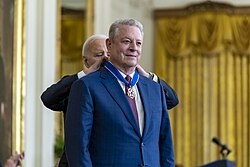
Beyond the Nobel Prize, Gore has received numerous accolades for his service and advocacy, including the Presidential Medal of Freedom, presented to him by Joe Biden on May 3, 2024.
| Role/Award | Period/Year | Key Detail |
|---|---|---|
| U.S. Representative | 1977–1985 | Represented TN 4th and 6th districts |
| U.S. Senator | 1985–1993 | Represented Tennessee |
| Vice President | 1993–2001 | Served under President Bill Clinton |
| Presidential Candidate | 2000 | Democratic nominee; lost in narrow recount |
| Nobel Peace Prize | 2007 | Awarded for climate change advocacy |
| Presidential Medal of Freedom | 2024 | Highest civilian award in the U.S. |
Frequently Asked Questions
Did Al Gore actually invent the internet?
No, Al Gore did not invent the internet. However, he was a strong political proponent of the high-speed networking and infrastructure that allowed the internet to grow and become accessible to the general public.
When did Al Gore serve as Vice President?
Al Gore served as the 45th Vice President of the United States from January 20, 1993, to January 20, 2001, under President Bill Clinton.
Why did Al Gore win the Nobel Peace Prize?
He was awarded the 2007 Nobel Peace Prize, shared with the Intergovernmental Panel on Climate Change, for his efforts to disseminate knowledge about man-made climate change and promote measures to combat it.
What was Al Gore's military rank?
Al Gore served in the United States Army from 1969 to 1971 and held the rank of Specialist 4.
Which state did Al Gore represent in the Senate?
Al Gore represented the state of Tennessee in the U.S. Senate from 1985 until 1993.