Uruguayan Civil War: The Conflict of the Blancos and Colorados
The Uruguayan Civil War, known in Spanish as the Guerra Grande (Great War), was a devastating series of armed conflicts that shaped the early political landscape of Uruguay. While the primary conflict spanned from 1839 to 1851, it was part of a broader cycle of instability that began in 1832 and did not fully resolve until 1904. This era was defined by a bitter struggle for power between the leaders of Uruguayan independence, eventually splitting the nation into two enduring political factions.
Key Facts
- Duration: Officially 1839–1851, though related conflicts occurred from 1832 to 1904.
- Primary Factions: The liberal Colorados (Reds) and the conservative Blancos (Whites).
- Major Outcome: Victory for the Colorado Party and the overthrow of Argentine leader Juan Manuel de Rosas.
- Casualties: Estimated between 10,000 and 25,000 killed.
- International Involvement: Brazil, Argentina, the British Empire, France, and Italian volunteers.
The Roots of Conflict: Rivera vs. Lavalleja
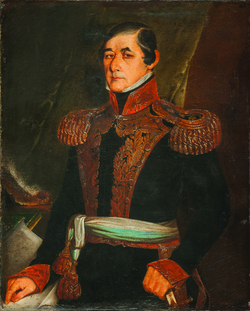
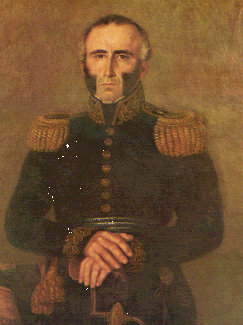
Following the proclamation of Uruguayan independence in 1828, a power struggle emerged between two key figures: Juan Lavalleja, leader of the Thirty-Three Orientals, and Fructuoso Rivera, a veteran military commander. Rivera became the first President of Uruguay on November 6, 1830.
Tensions peaked in June 1832 when supporters of Lavalleja attempted to assassinate Rivera. This led to a revolt by the Montevideo garrison. However, Rivera, supported by Argentine Unitarians (opponents of the federalist system), defeated Lavalleja at the Battle of Tupambaé on September 18, 1832. Lavalleja fled to Brazil, where he later organized a force with the support of Argentine strongman Juan Manuel de Rosas to invade Uruguay in 1834, though he was defeated by Rivera once again.
The Rise of the Blancos and Colorados
In 1835, Manuel Oribe was elected as the second President of Uruguay. Oribe sought to implement his own policies, removing Rivera from military command in 1836 and granting amnesty to Lavalleja. This sparked a rebellion by Rivera on July 16, 1836.
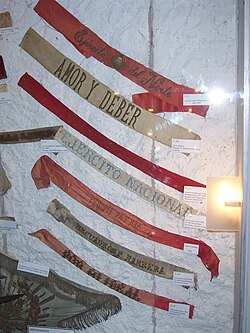
To distinguish their forces on the battlefield, Oribe's soldiers wore white armbands, while Rivera's supporters initially wore blue. When the blue dye faded, they switched to red. These markers gave birth to the two primary political parties: the Blancos (Whites) and the Colorados (Reds). The Colorados, led by Rivera, represented the liberal business interests of Montevideo. The Blancos, led by Oribe, represented the conservative agricultural interests of the countryside and advocated for protectionism.
The Fall and Return of Oribe
The conflict intensified as foreign powers intervened. Rivera was briefly defeated at the Battle of Carpintería in 1836 and fled to Brazil. He returned in 1837, defeating Oribe's forces at the Battle of Yucutujá and the Battle of Palmar. By October 24, 1838, Oribe resigned and fled to Buenos Aires, leaving Rivera in power.
However, Juan Manuel de Rosas of Argentina did not recognize Rivera's legitimacy and worked to restore Oribe. This transformed the internal struggle into an international war involving British and French forces. On December 6, 1842, the Blancos achieved a decisive victory at the Battle of Arroyo Grande, leading Oribe to lay siege to the capital, Montevideo.
The Great Siege of Montevideo
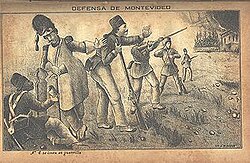
The Siege of Montevideo lasted for nine years, from 1843 to 1851. Despite the surrounding forces of Rosas and Oribe, the city held out, defended largely by a cosmopolitan population of foreign exiles and a contingent of 5,000 newly freed slaves. By 1843, only one-third of the city's 30,000 inhabitants were Uruguayan.
During this period, Uruguay was split between two parallel governments:
- Gobierno de la Defensa: Based in Montevideo and led by Joaquín Suárez.
- Gobierno del Cerrito: Led by Manuel Oribe and ruling the rest of the country.
The city survived thanks to British naval supplies and the assistance of the French and British fleets. A diverse group of international volunteers, including the Italian Legion led by Giuseppe Garibaldi, fought alongside the Colorados. In 1846, Britain's 73rd (Perthshire) Regiment of Foot also arrived to defend the city for seven months.
![Giuseppe Garibaldi, leader of the Italian Legion and Uruguayan Navy. Garibaldi, celebrated as one of the greatest generals of modern times[8] and as the "Hero of the Two Worlds" because of his military enterprises in South America and Europe,[9] fought in many military campaigns that led to Italian unification.](/images/92/f5/92f5dc5ca15127770ec5edbb06710d6f1e57c9354e4b5a3c4243388b62eaf668.jpg)
The Final Resolution
The tide turned in 1850 when British and French forces withdrew. However, a rebellion against Rosas led by Justo José de Urquiza, governor of Entre Ríos, shifted the balance of power. With Brazilian financial and naval support, the Colorados regained control. Following the defeat of Rosas at the Battle of Caseros in February 1852, the siege of Montevideo was finally lifted.
Aftermath and Legacy
The victory of the Colorados came at a high cost. To secure Brazilian support, Uruguay signed five treaties in 1851. These agreements established a perpetual alliance, required the extradition of runaway slaves and criminals to Brazil, and granted Brazil exclusive navigation rights in the Laguna Merin and Rio Yaguaron. Uruguay also renounced territorial claims north of the Río Cuareim, reducing its size to approximately 176,000 square kilometers.
While a 1870 agreement attempted to divide the country into spheres of influence—Colorados in the coast and Blancos in the hinterland—political instability persisted, leading to further conflicts such as the Revolution of the Lances (1870–1872).
| Feature | Colorado Party | Blanco Party |
|---|---|---|
| Primary Leader | Fructuoso Rivera | Manuel Oribe |
| Political Leanings | Liberal | Conservative |
| Economic Base | Montevideo Business Interests | Rural Agricultural Interests |
| Key Allies | Brazil, UK, France, Unitarians | Argentine Confederation (Rosas) |
| Symbol | Red Armband | White Armband |
Frequently Asked Questions
Why was the war called the "Guerra Grande"?
It is referred to as the Great War because of its scale, its long duration (specifically the nine-year siege of Montevideo), and the high level of international involvement from European powers and neighboring South American nations.
Who were the Blancos and Colorados?
They were political factions that emerged from the civil war. The Blancos (Whites) were conservatives representing rural landowners, while the Colorados (Reds) were liberals representing the urban commercial interests of Montevideo.
What role did Giuseppe Garibaldi play in the conflict?
Garibaldi led a legion of Italian volunteers who fought alongside the Colorado Party to defend Montevideo during the Great Siege, contributing to his reputation as a global military leader.
How did the war affect Uruguay's borders?
As part of the treaties signed with Brazil in 1851, Uruguay renounced territorial claims north of the Río Cuareim, which reduced the country's total area to about 176,000 square kilometers.
What was the significance of the Battle of Caseros?
The Battle of Caseros in 1852 resulted in the defeat and resignation of Juan Manuel de Rosas, the Argentine leader who had supported the Blancos, effectively ending the external support for Oribe and lifting the siege of Montevideo.