Charrúa People: History, Genocide, and Modern Resilience
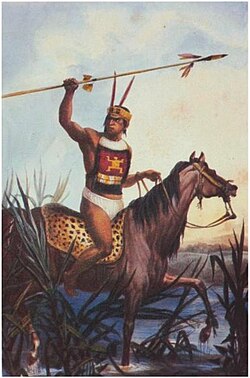
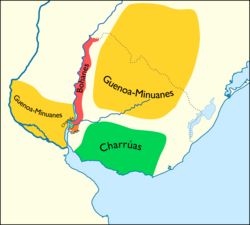
The Charrúa are an Indigenous Nation of the Southern Cone, historically inhabiting present-day Uruguay and adjacent regions of Argentina (Entre Ríos) and Brazil (Rio Grande do Sul). Known for their resilience and deep connection to the land, the Charrúa lived as semi-nomadic people, moving across the landscape in response to environmental factors such as rain and drought. This lifestyle, often classified as seasonal nomadism, allowed them to sustain themselves through a sophisticated system of hunting and gathering.
For centuries, the Charrúa navigated the plains and coasts, adapting their movements to the availability of resources. While much of their pre-colonial history remains a mystery due to the reliance on Spanish records, their legacy continues to shape the cultural identity of the region today.
Key Facts
- Region: Primarily Uruguay, with populations in Argentina and Brazil.
- Lifestyle: Semi-nomadic hunter-gatherers.
- Major Conflict: The Massacre of Salsipuedes (1831).
- Modern Population: Estimated 160,000 to 300,000 descendants.
- Cultural Legacy: The term "garra charrúa" symbolizes tenacity and bravery in Uruguay.
Traditional Way of Life
The Charrúa utilized a seasonal migration pattern to maximize their food sources. During the summer, they moved toward the shores to fish and gather roots, fruits, and clams. In the winter, they transitioned inland to hunt smaller game, rheas, and deer. To capture prey, they employed bolas (stones connected by short ropes thrown to ensnare animals) as well as bows and arrows.
Their social structure and survival strategies were put to the test following the arrival of Spanish colonists. Early encounters were marked by resistance; for instance, the Jesuit Pedro Lozano recorded that the Charrúa were responsible for the death of Spanish explorer Juan Díaz de Solís during his 1515 voyage up the Río de la Plata.
Impact of Colonization
By the 18th and 19th centuries, the introduction of large-scale cattle exploitation fundamentally altered the Charrúa way of life. As land was privatized for livestock, the Charrúa faced famine and were forced to rely on cows and sheep. This led to malones (raids) on settler lands, which were met with violent retaliation from colonists.
The Genocide and the Massacre of Salsipuedes
The most devastating blow to the Charrúa population occurred under the administration of Uruguay's first president, Fructuoso Rivera. Despite an initially positive relationship, the drive for territorial expansion led Rivera to organize a genocide campaign in 1831 known as La Campaña de Salsipuedes.
The campaign consisted of three targeted attacks: "El Paso del Sauce del Queguay," "La Cueva del Tigre," and the most infamous, "El Salsipuedes." According to historical accounts, the attack at Salsipuedes began as a betrayal; Rivera invited tribal leaders to his barracks under the guise of requesting help to defend territory. Once the leaders were off guard, the Uruguayan soldiers attacked. Following these events, the Charrúa were officially declared extinct by the state.
The "Last Charrúas" in Paris
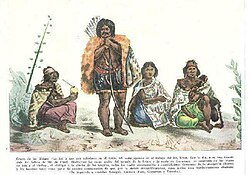
Four survivors—Senacua Sénaqué (a medicine man), Vaimaca-Pirú Sira (a warrior), and a young couple, Laureano Tacuavé Martínez and María Micaëla Guyunusa—were captured and taken to Paris in 1833. They were exhibited to the public as specimens of a "nearly extinct race." None of the four survived their time in France, including a daughter born to Sira and Guyunusa. In Montevideo, a sculpture titled Los Últimos Charrúas stands as a memorial to their tragedy.
Modern Legacy and Cultural Rebirth
Despite the official narrative of extinction, many Charrúa survived in clandestine communities or integrated into other populations in Argentina and Brazil. Since the end of Uruguay's last dictatorship in 1985, there has been a powerful movement to vindicate Charrúan ancestry.
Two primary organizations have led this effort: the Association of Descendants of the Charrúa Nation (ADENCH), founded in 1989, and the Council of the Charrúa Nation (CONACHA), formed in 2005. These groups work to rescue and preserve Indigenous knowledge and advocate for official recognition.
International Recognition
In Brazil, the struggle for recognition saw a significant victory in 2007. Through the efforts of Acuab, the first female cacique (chief) of the Charrúas in Rio Grande do Sul, the Brazilian government officially recognized the Charrúa as an existing native people. This led to the 2008 designation of Aldeia Polidoro as a municipal Indigenous territory in Porto Alegre.
| Country | Population | Census/Data Year |
|---|---|---|
| Uruguay | 159,319 | 2011 |
| Argentina | 14,649 | 2010 |
| Brazil | 42 | 2014 |
Cultural Influence in Modern Society
The spirit of the Charrúa remains embedded in the national psyche of Uruguay. The term "garra charrúa" (Charrúan tenacity) is widely used to describe the bravery and determination of Uruguayans, particularly when facing overwhelming odds in sports or competition. The national football team is also nicknamed "Los Charrúas." Beyond sports, the name persists in geography (the municipality of Charrua in Brazil), literature (the epic poem Tabaré), and biology (the fish species Austrolebias charrua).
Frequently Asked Questions
Who were the Charrúa people?
The Charrúa were a semi-nomadic Indigenous nation from the Southern Cone, primarily inhabiting present-day Uruguay, as well as parts of Argentina and Brazil. They sustained themselves through seasonal hunting and gathering.
What was the Massacre of Salsipuedes?
It was a genocide campaign carried out in 1831 by the Uruguayan Army under President Fructuoso Rivera. The campaign aimed to eliminate the Charrúa people to facilitate territorial expansion, leading to the false claim that the nation had become extinct.
What does "garra charrúa" mean?
Literally translating to "Charrúan claw/grip," it is a cultural expression in Uruguay referring to tenacity, courage, and the ability to achieve victory even when facing certain defeat.
Are there any Charrúa people alive today?
Yes. While once declared extinct, contemporary descendants have organized to reclaim their identity. It is estimated that between 160,000 and 300,000 individuals in Uruguay, Argentina, and Brazil are descendants of the Charrúa.
How is the Charrúa identity recognized in Brazil?
In September 2007, the Brazilian government officially recognized the Charrúa as a native people, following advocacy by leaders like Cacique Acuab. This recognition included the granting of municipal Indigenous territory to Aldeia Polidoro in Porto Alegre.