Urfa: The Glorious City of Prophets and Ancient History
Known as the City of Prophets or Urfa the Glorious, Şanlıurfa is a city where millennia of human civilization converge. Located in southeastern Turkey, it serves as a living museum, bridging the gap between the dawn of urban life in the Bronze Age and the complex geopolitical shifts of the modern era. From its roots as the Roman city of Edessa to its role as a vital Ottoman trade hub, Urfa remains a cornerstone of cultural and spiritual heritage in the Near East.
Key Facts
![Urfa Man, Pre-Pottery Neolithic, c. 9000 BC. Şanlıurfa Museum.[22]](/images/23/d5/23d5953544721ff103c2e2a2f2dddabb5995757a35e422dce49c256d8156c86f.jpg)
- Founded: 303/302 BC by Seleucus I Nicator.
- Ancient Name: Edessa.
- Population: Approximately 596,637 (Urban, 2022).
- Elevation: 477 meters (1,565 ft).
- Key Industries: Footwear production and limestone quarrying.
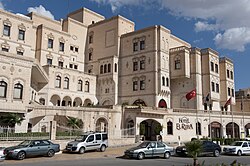
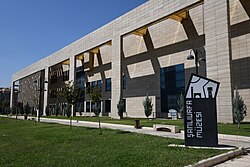
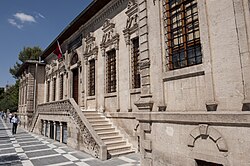
- Major Landmarks: Balıklıgöl, Urfa Castle, and the Haleplibahçe museum complex.
From Prehistory to the Roman Era
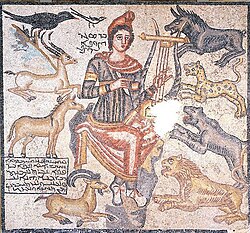
The transformation of Urfa from a collection of villages into an urban center began around 3200 BC during the Uruk expansion. By the Early Bronze Age (2900–2600 BCE), Urfa had evolved into a walled city spanning 200 hectares, centered at the archaeological site of Kazane Tepe.
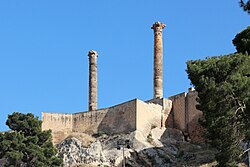
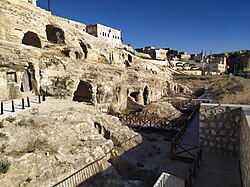
During the Roman period, the city became known as Edessa. It grew into a significant center of Late Antiquity, blending diverse cultural influences. The heritage of this era is still visible today in the architectural remnants that dominate the city's skyline.
The Mandylion and Byzantine Influence
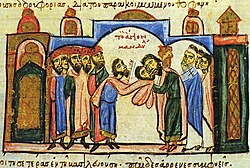
In 943, the city became a focal point of conflict between the Byzantine Empire and the Caliphate. The Byzantines sought the mandylion, a revered Christian relic. To spare the city from a siege, the people of Edessa, with the Caliph al-Muttaqi's permission, handed over the relic, which arrived in Constantinople in August 944.
Medieval Struggles and the County of Edessa
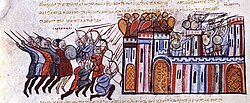
The 11th century saw the establishment of the County of Edessa, a Crusader state. This period was marked by intense volatility, including the sieges of 1144 and 1146. During the latter, the city suffered significant destruction as Frankish forces looted both Christian and Muslim shops before the Turkish garrison held the main citadel.
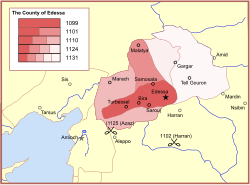
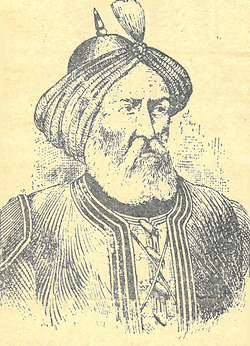
Following the Crusader era, Urfa passed through the hands of the Zengids, Ayyubids, and Mongols. By the late 14th century, under Mamluk rule, the city began to recover. In 1394, Timur occupied the city, noting the beauty of its buildings while claiming its portable wealth.
The Ottoman Renaissance
Urfa was incorporated into the Ottoman Empire around 1517. While initial populations were low due to conflicts with Safavid Iran, the city experienced a renaissance over the next 150 years. By 1566, the population grew to approximately 14,000, supported by a thriving textile industry and its role as an entrepot (a commercial center for importing and exporting goods) between Iran and Aleppo.
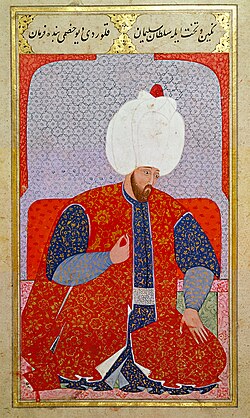
The 17th century brought instability via the Celali revolts, leaving parts of the town in disrepair. However, the city remained strategically important; in 1638, Sultan Murad IV stayed in Urfa during his campaign to Baghdad and ordered the restoration of the citadel.
Modern History and Demographics
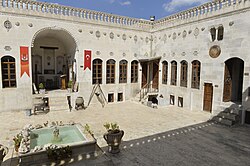
The 19th and early 20th centuries were periods of profound demographic change. Urfa once hosted a diverse population of Turks, Kurds, Arabs, Armenians, Syriacs, and Jews. However, the Hamidian massacres of 1896 led to the emigration of most of the Jewish community, and the events of World War I resulted in the genocide of the Armenian and Assyrian populations.
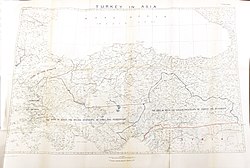
In the 21st century, Urfa has once again become a crossroads of people. Since the start of the Syrian Civil War, the city has welcomed hundreds of thousands of Syrian refugees, significantly impacting the local demographics and economy.
Geography and Urban Landmarks
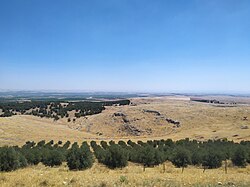
Urfa is characterized by its limestone bedrock and a climate of extreme temperatures, with summer highs reaching over 46°C.
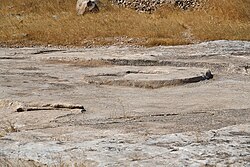
The Citadel and City Walls
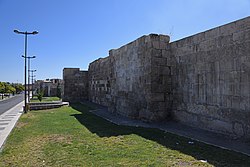
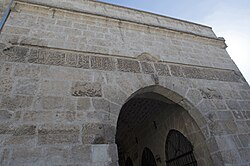
The city's monumental walls, rebuilt in 812 during the Abbasid era, are constructed from large stone blocks. While much of the wall has been integrated into private homes, the Harran Gate remains a key feature, showcasing Ayyubid-era inscriptions and a double-headed eagle relief.
Sacred Sites and Culture
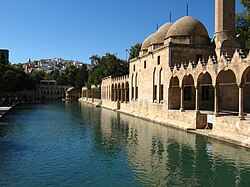
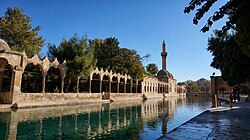
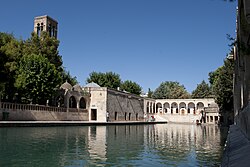
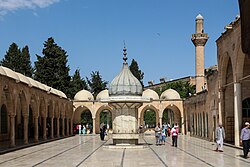
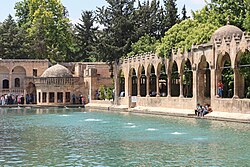
The city is world-renowned for Balıklıgöl (the Pool of Abraham), where sacred carp swim in a tradition dating back to ancient times. This area is surrounded by the Rızvaniye Mosque and the Halil ür-Rahman Cami.
Commerce and Architecture
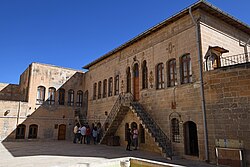
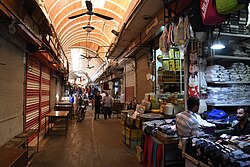
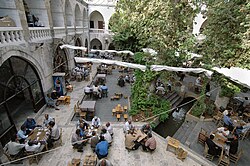
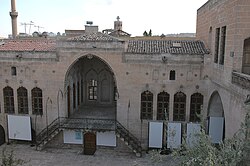
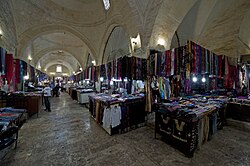
The heart of Urfa's trade lies in its covered marketplaces, the Bedesten, and the Gümrük Hanı (Customs Inn). The city's traditional architecture is exemplified by the Hacı Hafız house, featuring the mastaba (a raised platform) and the zerzembe (a traditional cellar).
Economy and Industry
Today, Urfa is a regional leader in footwear production. The industry employs thousands of workers, with major factories like FLO producing millions of pairs of shoes annually. Additionally, the Evren Industrial Estate serves as a hub for 1,500 businesses and limestone quarrying.
| Category | Details |
|---|---|
| Ancient Name | Edessa |
| Key Historical Eras | Bronze Age, Roman, Byzantine, Crusader, Ottoman |
| Primary Industry | Footwear and Limestone |
| Climate | Semi-arid with extreme summer heat |
| Major Religious Sites | Balıklıgöl, Halil ür-Rahman Cami |
Frequently Asked Questions
Why is Urfa called the "City of Prophets"?
Urfa is deeply associated with biblical and quranic traditions, most notably as a site linked to the Prophet Abraham, exemplified by the sacred Balıklıgöl.
What was the significance of the Mandylion?
The Mandylion was a famous Christian relic believed to bear the image of Christ. Its surrender to the Byzantine Empire in 943 was a major diplomatic and religious event for the city of Edessa.
What is the main economic driver of modern Urfa?
While tourism is significant, the city is a major center for footwear production and limestone quarrying, with thousands of people employed in these sectors.
What are the architectural features of a traditional Urfa house?
Traditional houses, such as the Hacı Hafız house, often feature a mastaba (a central raised platform) and a zerzembe (a cool underground cellar used for storage).
How has the Syrian Civil War affected the city?
Urfa has become a primary destination for Syrian refugees due to its proximity to the border, with as many as 300,000 Syrians residing in the city as of 2017.