Upper Midwest: Geography, Culture, and Political Evolution
The Upper Midwest is a distinct northern subregion of the Midwestern United States, characterized by its dramatic seasonal shifts, rich agricultural heritage, and a complex political landscape. While its exact boundaries vary depending on the organization defining them, the region generally encompasses the northernmost states of the Midwest, serving as a bridge between the Great Lakes and the Great Plains.
Defining the Region
Establishing a precise border for the Upper Midwest is challenging, as different federal and academic institutions use different criteria. Most definitions include Iowa, Michigan, Minnesota, and Wisconsin, with many also adding North Dakota and South Dakota.
- National Centers for Environmental Information: Focuses on Iowa, Michigan, Minnesota, and Wisconsin.
- USGS Environmental Sciences Center: Includes Illinois, Indiana, Iowa, Michigan, Minnesota, and Wisconsin, based on the watersheds of the upper Great Lakes and Upper Mississippi River.
- USGS Mineral Resources Program: Defines the area as Illinois, Indiana, Michigan, Minnesota, and Wisconsin.
- Association for Institutional Research: Includes Iowa, Minnesota, North Dakota, South Dakota, Wisconsin, and Michigan's Upper Peninsula.
- Library of Congress: Limits the region to Minnesota, Wisconsin, and Michigan.
Climate and Environment
The region is known for extreme temperature swings. Summers can be hot, while winters are notoriously severe. For instance, Sioux Falls averages 25 days above 90°F (32°C) and 45 days below 5°F (−15°C) annually. Mitchell, South Dakota, holds a record high of 116°F (47°C) and a record low of −39°F (−39°C).
Agricultural productivity is heavily influenced by these conditions. The growing season becomes shorter, cooler, and drier as one moves further north and west. In fact, the western boundary of the region is often defined by the point where the climate becomes too dry to support non-irrigated crops, leaving only hay grass or small grains viable.
Regional Dialects
Language in the Upper Midwest is split into two primary linguistic patterns. The Inland North dialect is centered in the eastern portion (Wisconsin, Michigan, and northern Illinois and Ohio) and is defined by the Northern Cities Vowel Shift—a chain shift in the pronunciation of short vowels.
Conversely, North Central American English (often called "Upper Midwestern") is spoken in Minnesota, Iowa, parts of Wisconsin, the Upper Peninsula of Michigan, and portions of the Dakotas and Montana. This dialect features a distinct monophthong (a single, pure vowel sound), which is attributed to the heavy influence of German and Scandinavian immigration during the late 19th century.
Political History and Trends
Throughout the 20th century, the Upper Midwest was a stronghold for the Republican Party and the epicenter of the early Progressive movement. This was evident in the region's support for Theodore Roosevelt's Progressive Party in 1912 and Robert La Follette's party in 1924.
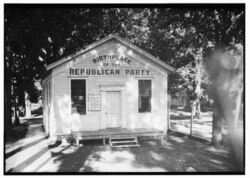
By the 1930s and 1940s, third-party movements gained traction, including the Minnesota Farmer-Labor party, the Wisconsin Progressive Party, and the North Dakotan Nonpartisan League. In 1938, the National Progressives of America emerged from the Wisconsin Progressive Party.
In recent decades, the region has become a political battleground. States closest to the Great Lakes—Michigan, Minnesota, and Wisconsin—often favor Democratic candidates and are frequently referred to as part of the "Blue Wall." For example, Minnesota supported every Democratic presidential candidate from 1976 through the 2020 election, including a narrow win for native son Walter Mondale in 1984.
However, the Great Plains states of the region (Iowa, North Dakota, and South Dakota) remain consistently Republican. Recent trends show a fluctuation in state-level control; while Republicans made significant gains in state legislatures and executive offices between 2010 and 2016, Democrats regained some ground starting in 2018.
Economy, Industry, and Agriculture
Historically, the Upper Midwest economy relied heavily on timber and the mining of copper and iron. As mechanization reduced the need for manual labor in these sectors, the region shifted toward tourism. The combination of traditional hunting and fishing with a growing modern interest in environmentalism has attracted large numbers of urban visitors.
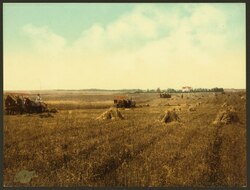
Agriculture remains a cornerstone of the region, though it is susceptible to weather volatility. In 2018, while crops like soybeans, corn, sunflowers, and sugar beets saw harvest gains, they remained below five-year averages. In North Dakota, for example, only 49% of corn was harvested by November 4, compared to a typical average of 97%, due to adverse October weather.
Key Facts
- Core States: Generally includes MN, WI, MI, IA, ND, and SD.
- Climate: Extreme variations, with record lows reaching −39°F in South Dakota.
- Linguistics: Influenced by Scandinavian and German immigration, resulting in the North Central American English dialect.
- Political Divide: Great Lakes states lean Democratic; Great Plains states lean Republican.
- Economic Shift: Transitioned from mining and timber toward tourism and mechanized agriculture.
| Category | Details |
|---|---|
| Primary States | Minnesota, Wisconsin, Michigan, Iowa, North Dakota, South Dakota |
| Major Dialects | Inland North, North Central American English |
| Key Industries | Agriculture, Tourism, Mining (Historical), Timber (Historical) |
| Climate Type | Continental (Hot summers, very cold winters) |
Frequently Asked Questions
Which states are officially part of the Upper Midwest?
There is no single official definition, but it typically includes Minnesota, Wisconsin, Michigan, Iowa, North Dakota, and South Dakota. Some definitions also include parts of Illinois and Nebraska.
How does the climate affect farming in the region?
The growing season is shorter, cooler, and drier in the north and west. The western edge of the region is often defined by the limit where non-irrigated crops (other than hay or small grains) can no longer grow.
What is the "Upper Midwestern" accent?
Also known as North Central American English, it is characterized by a specific monophthong sound, largely influenced by 19th-century German and Scandinavian immigrants.
What is the political trend in the Upper Midwest?
The region is split: the Great Lakes states (MN, MI, WI) often lean Democratic, while the Great Plains states (IA, ND, SD) strongly favor the Republican Party.
How has the economy changed over time?
The economy has moved away from a heavy reliance on timber and iron/copper mining due to mechanization, shifting instead toward tourism and modern agricultural practices.