UOTC Units: History and Legacy of University Officers' Training Corps
The University Officers' Training Corps (UOTC) serves as a vital bridge between academic life and military leadership. These units provide students with the opportunity to develop leadership skills and military knowledge, continuing a long tradition of university-based military service in the United Kingdom. From early volunteer corps to the structured regiments of today, the UOTC has played a pivotal role in supplying the British Army with commissioned officers, particularly during the world wars.
Most modern UOTC units trace their formal establishment to the early 20th century, specifically following the recommendations of a committee formed by Lord Haldane. These reforms standardized military training across universities, ensuring a steady stream of trained leaders for the national defense.
Key Facts
- Cambridge UOTC is the only unit to have earned a battle honour ("South Africa 1900-01").
- London UOTC is currently the largest unit, with approximately 400 officer cadets.
- The Haldane Reforms of 1908 were the catalyst for the formal raising of most university contingents.
- Many units have evolved from early 19th-century volunteer batteries and rifle corps.
- Several UOTCs are now combined into larger Officers' Training Regiments (e.g., North West, South West, and Yorkshire).
Regional UOTC Units and Their Histories
Scotland: Aberdeen, Edinburgh, Glasgow, and Tayforth
In Aberdeen, military links began in 1885 with a battery of the 1st Aberdeen Volunteer Royal Artillery. By 1912, the Aberdeen University contingent of the OTC was formally raised. During WWII, the unit peaked at 491 members and provided technical courses for Royal Artillery cadets.
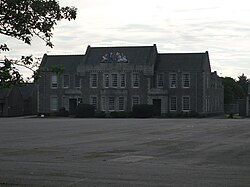
Edinburgh UOTC originated in 1859 with the 1st City of Edinburgh Rifle Volunteer Corps. It has a deep connection to Lord Haldane, who served as the Rector of the University of Edinburgh. The unit moved to Duke of Edinburgh House in 1993.
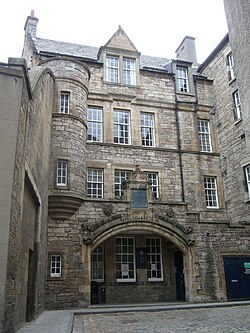
Glasgow's military ties date back to the Jacobite risings of 1715 and 1745, when militia were raised to defend the city and university. Later, in the 1880s, professors and students formed infantry companies that eventually became part of the 5th Battalion of the Cameronians (Scottish Rifles).
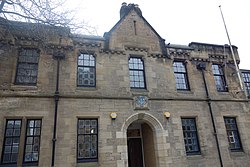
Tayforth UOTC, based in Dundee, also traces its roots to the Jacobite risings. It is notable for establishing the Tayforth Regimental Association in 1984, the oldest association of its kind for former officer cadets.
England: The Historic Hubs
Cambridge UOTC has a storied history, claiming descent from a 1803 volunteer corps. It is uniquely distinguished by its service in the Second Boer War, where a detachment served with the Suffolk Regiment in South Africa. During WWI, it supplied 3,000 officers—more than any other UOTC.

London UOTC, the largest of the units, was formally raised in 1909. It has suffered significant losses during both World Wars, with 665 officers trained by the unit dying in WWI and 245 in WWII. It is currently based at Yeomanry House.
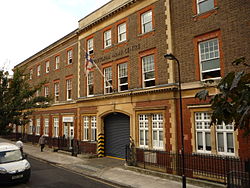
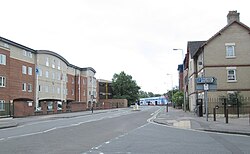
Oxford UOTC's lineage is among the oldest, descending from a bodyguard formed for Charles I in 1642. The modern unit was formally raised in 1908 and is now housed in the purpose-built Falklands House.
Other Regional Units
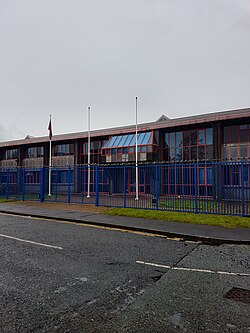
The Northumbrian UOTC, based at St. Cuthbert's Keep, grew from Durham University's "K" Company of the 3rd Battalion, Northumberland Fusiliers. In the Midlands, Birmingham UOTC was raised in 1900, with Field Marshal William Slim serving as a member between 1912 and 1914.
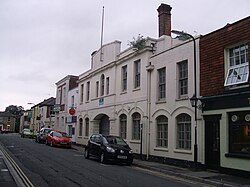
Southampton UOTC has a fragmented history, being placed in "suspended animation" in 1951 before reforming in 1979. Similarly, the Exeter unit was suspended in 1947 and reformed in 1980.
Wales and Northern Ireland
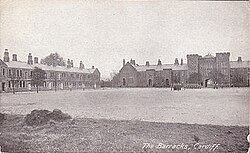
Wales UOTC began with University College, Wales in Aberystwyth in 1900. While it provided many officers during WWII, recruitment dips led to temporary suspensions in the late 1940s and early 1950s.
Queen's UOTC in Belfast was raised in 1908. A dedicated Drill Hall was opened in 1912 at a cost of £4,000 to support the training of cadets from Queen's University Belfast and the University of Ulster.
UOTC Organizational Summary
| Regiment/Unit | Key Affiliated Universities | Current/Notable Base |
|---|---|---|
| Aberdeen and Tayforth | Aberdeen, Robert Gordon, St Andrews, Dundee, Abertay, Stirling | Gordon Barracks / Park Wynd |
| Northumbrian | Newcastle, Northumbria, Durham, Teesside, Sunderland | St. Cuthbert's Keep |
| North West | Liverpool, Lancaster, Manchester, Salford | Crawford Hall / University Barracks |
| South West | Bristol, Exeter | Artillery Grounds / Wyvern Barracks |
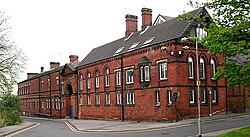
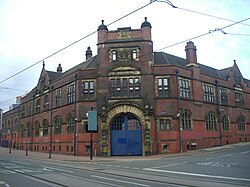
| Yorkshire | Leeds, Sheffield | Carlton Barracks / Somme Barracks |
| London | University of London | Yeomanry House |
| Queen's | Queen's University Belfast, University of Ulster | Belfast Drill Hall |
Frequently Asked Questions
What are the Haldane Reforms?
The Haldane Reforms were a series of recommendations made by Lord Haldane in 1908 that led to the formal raising and standardization of the University Officers' Training Corps across the UK.
Which UOTC has a battle honour?
Cambridge UOTC is the only unit to have earned a battle honour, specifically "South Africa 1900-01," for its service during the Second Boer War.
What is the largest UOTC unit?
London UOTC is the largest unit, currently training approximately 400 officer cadets.
What does "suspended animation" mean in the context of UOTCs?
In military terms, suspended animation refers to a period where a unit is formally inactive due to factors such as falling recruitment, though it remains on the official rolls and can be reformed later, as seen with the Southampton and Exeter units.
Which UOTC has the oldest lineage?
Oxford UOTC claims the oldest descent, tracing its origins back to a bodyguard formed for King Charles I during the English Civil War in 1642.