UNODC: Combating Global Drug Trafficking and Organized Crime
The United Nations Office on Drugs and Crime (UNODC) serves as the global leader in the fight against illicit drugs, international terrorism, and political corruption. Established in 1997, this secretariat office operates under the United Nations Secretariat to coordinate a comprehensive response to the interrelated challenges of crime and drug abuse that threaten global security and stability.
The organization was formed by merging the United Nations International Drug Control Program (UNDCP) and the Crime Prevention and Criminal Justice Division in the United Nations Office at Vienna. While it began as the Office for Drug Control and Crime Prevention, it adopted its current name in 2002.
Key Facts
- Established: 1997 (renamed UNODC in 2002).
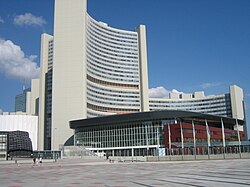
- Headquarters: Vienna, Austria.
- Leadership: Monica Juma (since 2026).
- Global Reach: 115 field offices and liaison offices in New York and Brussels.
- Budget: Estimated biannual budget of US$822 million for 2022–23.
- Funding: Approximately 90% comes from voluntary government contributions.
Organizational Structure and Global Presence
The UNODC is managed by an Executive Director appointed by the United Nations Secretary-General. The agency maintains a vast operational network to address regional crime trends, with primary operating locations across Africa, the Middle East, Europe, West/Central Asia, Latin America, the Caribbean, Southeast Asia, the Pacific, and South Asia.
To amplify its impact, the UNODC manages several specialized entities and networks:
- PNI (Crime Prevention and Criminal Justice Programme Network): A global network of crime-related institutes that facilitates research, training, and information exchange.
- International Narcotics Control Board (INCB): The UNODC incorporates the secretariat for this monitoring body.
- Terrorism Prevention Branch: A specialized unit providing legal and technical assistance to member states.
Core Aims and Functions
The primary mission of the UNODC is to equip governments with the tools necessary to handle drug-related issues, crime, terrorism, and corruption. It achieves this through three main pillars: research, guidance on the implementation of international treaties, and technical/financial assistance.
The agency focuses on a wide array of critical themes, including:
- Alternative development and drug prevention.
- Prison reform and criminal justice.
- Human trafficking and migrant smuggling.
- Money laundering and organized crime.
- Piracy and terrorism prevention.
- HIV and AIDS prevention related to drug use.
The World Drug Report
One of the agency's most vital contributions is the World Drug Report. This annual publication provides a comprehensive assessment of the international drug problem, tracking trends in the production and trafficking of opium, heroin, coca, cocaine, cannabis, and amphetamine-type stimulants. It serves as a critical data source for member states to understand evolving illicit markets.
International Treaties and Legal Frameworks
The operational work of the UNODC is underpinned by several legally binding international instruments.
Convention against Transnational Organized Crime
Entering into force on September 29, 2003, this convention requires states to create domestic offenses to combat organized crime and establish frameworks for extradition and mutual legal assistance. It is supported by three specific protocols:
- The Protocol to Prevent, Suppress and Punish Trafficking in Persons, especially Women and Children.
- The Protocol against the Smuggling of Migrants by Land, Sea and Air.
- The Protocol against the Illicit Manufacturing of and Trafficking in Firearms, their Parts and Components and Ammunition.
Convention against Corruption (UNCAC)
Adopted in 2003 and entering into force in December 2005, the UNCAC is the primary global instrument against political corruption. The UNODC serves as the Secretariat for the Conference of the States Parties and helped establish the International Anti-Corruption Academy (IACA).
Drug Control Treaties
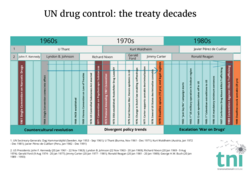
Three mutually supportive treaties guide the agency's drug programs: the Single Convention on Narcotic Drugs (1961), the Convention on Psychotropic Substances (1971), and the Convention Against Illicit Traffic in Narcotic Drugs and Psychotropic Substances (1988). These ensure that narcotics remain available for medical and scientific use while preventing their diversion into illegal channels.
Global Awareness Campaigns
The UNODC launches high-profile campaigns to mobilize public action and support:
- World Drug Campaign: "Do Drugs Control Your Life?" targets youth to discourage drug abuse.
- International Anti-Corruption Campaign: "Your No Counts" highlights how corruption undermines democracy and human rights.
- World AIDS Campaign: "Think AIDS" focuses on the link between unsafe injecting drug use and HIV transmission among youth.
- Blue Heart Campaign: A global effort to stop human trafficking and show solidarity with victims.
Summary of UNODC Operations
| Category | Details |
|---|---|
| Headquarters | Vienna, Austria |
| Staff Size | Approximately 2,500 to 3,400 worldwide |
| Primary Focus Areas | Drugs, Crime, Terrorism, Corruption |
| Key Publication | World Drug Report (Annual) |
| Major Conventions | UNCAC, Transnational Organized Crime Convention |
Frequently Asked Questions
What is the primary purpose of the UNODC?
The UNODC is designed to assist the United Nations in coordinating a comprehensive response to illicit drug trafficking, crime prevention, international terrorism, and political corruption through research, government guidance, and technical assistance.
How is the UNODC funded?
The agency is primarily funded through voluntary contributions, with approximately 90% of its budget provided by governments.
What is the World Drug Report?
It is a yearly publication that assesses the global illicit drug situation, providing data on the production, trafficking, and use of substances like cocaine, heroin, and cannabis to help member states understand market trends.
Which treaties govern the UNODC's work on drugs?
The agency is guided by three major treaties: the Single Convention on Narcotic Drugs (1961), the Convention on Psychotropic Substances (1971), and the Convention Against Illicit Traffic in Narcotic Drugs and Psychotropic Substances (1988).
What is the Blue Heart Campaign?
The Blue Heart Campaign is an initiative aimed at raising awareness and encouraging action to stop human trafficking, using the blue UN color to symbolize the organization's commitment to combating this crime.