University of Oslo: A History of Academic and National Evolution
The University of Oslo (UiO) stands as a cornerstone of Norwegian intellectual and political life. From its origins as a royal institution in a union to its transformation into a modern research powerhouse, the university has mirrored the growth and independence of the Norwegian state. Its journey is one of shifting priorities—from training a small elite of civil servants to fostering a "University of the Masses" that serves a diverse population.
The Foundation and Early Years
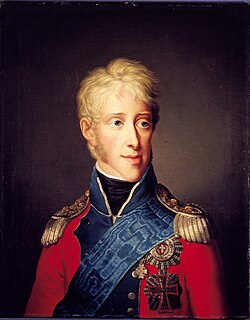
Established in 1813 as The Royal Frederick's University in Christiania (modern-day Oslo), the institution was born from an agreement with King Frederik VI. Initially, the King had been hesitant, fearing that a university might fuel political separatist movements within the Dano-Norwegian Union.
The university's early years were marked by dramatic geopolitical shifts. Just one year after its commencement, Norway proclaimed independence in 1814. While this independence was tempered by a personal union with Sweden—where royal power and foreign affairs were shared—Norway maintained its own constitution and state institutions. In this climate of perceived Swedish domination, the university became a vital symbol of Norwegian cultural and political autonomy.
Initially, the university focused on educating the upper echelon of society, including government ministers, parliamentary representatives, and civil servants. It also served as a hub for documenting the nation's identity through surveys of Norwegian language, history, folk traditions, and culture. By the 1870s, the institution began to evolve, shifting away from purely classical education toward professional management and a stronger emphasis on academic research.
Academic Expansion and the Early 20th Century
As the union with Sweden dissolved in 1905, the university's role expanded to produce experts capable of building a secure and dignified society. This era saw the rise of professionalized public administration, health services, and education. In 1905, Parliament established the position of rector, with Professor of Geology Waldemar Christofer Brøgger serving as the first in this role.
The turn of the century brought a qualitative shift in research. Academics were now expected to be highly qualified researchers who continued their scientific inquiries alongside their teaching duties. This period saw a move toward specialization, moving beyond the traditional dominance of law and theology to meet the practical needs of a developing society.
Scientific Achievement and Growth
Between 1911 and 1940, student enrollment doubled, drawing from a broader social and geographical base, though the working class remained largely underrepresented. This era of increased activity yielded significant international prestige, including two Nobel Prizes: Ragnar Frisch in Economics and Odd Hassel in Chemistry. Additionally, Norwegian researchers made substantial marks in the field of linguistics.
Conflict and Occupation (1940–1945)
The German occupation of Norway from 1940 to 1945 brought severe disruption. Rector Didrik Arup Seip was imprisoned, and the university was placed under the control of Adolf Hoel, an appointee of the NS (Norwegian Nazi Party). The university became a site of resistance; after a fire was set in the auditorium, Reich Commissar Terboven ordered the university closed and arrested the students. Many faculty members and students remained detained until the end of the war.
Post-War Growth and the "University of the Masses"
The aftermath of World War II triggered a surge in enrollment. To support students from less affluent backgrounds, the State Educational Loan Fund for Young Students was established in 1947. By the autumn semester of 1945, enrollment hit a record 5,951 students, rising to over 6,000 by 1947—a 50 percent increase over pre-war levels.
The 1960s represented the most transformative decade in the university's history. Student numbers tripled from 5,600 in 1960 to 16,800 by 1970. This growth led to the expansion of the Blindern campus, which grew to accommodate 7,000 students, and a doubling of academic staff from under 500 to approximately 1,200. While the Law and Medicine faculties in central Oslo saw their numbers double, the humanities and social sciences tripled.
Social Change and Student Activism
By 1968, the university became a center for revolutionary political ideas. The "Student Uprising" reflected a growing disconnect between students from non-academic backgrounds and the traditional academic establishment. Many students sought to use their education to advocate for the underprivileged and change society.
The 1970s brought a demographic shift as female students became the majority. During this time, the university also served as a hub for the organized women's liberation movement.
The Late 20th Century
Enrollment continued to climb exponentially toward the end of the century. By 1996, the university had 38,265 students—roughly 75 percent higher than the average of the 1970s and 1980s. This surge, partly attributed to a poor labor market, led the university to implement admission restrictions across all faculties for the first time in 1992.
Key Facts
- Founded: 1813 as The Royal Frederick's University.
- First Rector: Waldemar Christofer Brøgger (appointed 1905).
- Nobel Laureates: Ragnar Frisch (Economics) and Odd Hassel (Chemistry).
- Growth Spike: Student enrollment tripled between 1960 and 1970.
- Campus Expansion: The Blindern complex was significantly expanded to handle the 1960s influx.
- Demographic Shift: Women became the majority of the student body during the 1970s.
| Period/Year | Enrollment/Staffing Milestone | Key Development |
|---|---|---|
| 1945 | 5,951 students | Post-WWII record enrollment |
| 1960 | 5,600 students | Start of the great expansion era |
| 1970 | 16,800 students | Tripling of student population |
| 1960s (Staff) | ~500 to 1,200 academic positions | Doubling of academic staff |
| 1996 | 38,265 students | Peak late-century enrollment |
Frequently Asked Questions
Why was King Frederik VI initially hesitant to found the university?
The King feared that establishing a university might encourage political separatist tendencies within the Dano-Norwegian Union.
How did the university contribute to Norwegian independence?
During the personal union with Sweden, the university served as a key institution for preserving and developing Norwegian political and cultural independence, helping the nation avoid total Swedish domination.
What happened to the university during the German occupation?
The university was placed under the management of a Nazi Party appointee, Adolf Hoel, and Rector Didrik Arup Seip was imprisoned. Following student resistance and a fire in the auditorium, the university was closed and many students and teachers were arrested.
What caused the massive increase in students during the 1990s?
The rise in student numbers during the 1990s was attributed in part to a poor job market, which led more people to pursue higher education.
When did women become the majority of the student population?
The proportion of female students increased throughout the 1970s until they constituted the majority of the student body.