Universidad Tecnológica Nacional
The Universidad Tecnológica Nacional (UTN) stands as a cornerstone of technical education in Argentina. As the only national university in the country dedicated exclusively to engineering, it plays a pivotal role in the nation's industrial and technological development. With a massive student body of over 85,000, UTN is one of the largest higher education institutions in Argentina, surpassed in size only by the University of Buenos Aires (UBA) and comparable to the National University of La Plata.
Operating through a unique federalized model, UTN maintains 29 semi-independent branches across the country, ensuring that high-quality technical training is accessible regardless of geography. This expansive reach allows the university to graduate nearly 50% of all new engineers in Argentina.
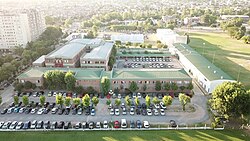
Key Facts
- Established: August 19, 1948 (originally as Universidad Obrera Nacional).
- Student Population: Over 85,000 students.
- Scope: 29 semi-independent regional branches across Argentina.
- Specialization: The only Argentine national university focused solely on engineering.
- Impact: Produces approximately 50% of Argentina's new engineering graduates.
- Leadership: Led by Rector Ing. Ruben Soro and Vice-rector Ing. Haroldo Avetta.
Academic Programs and Specializations
UTN offers a comprehensive suite of engineering disciplines designed to meet modern industrial demands. Most regional branches provide programs in the following fields:
- Aeronautical Engineering
- Chemical Engineering
- Civil Engineering
- Electrical Engineering (with a strong focus on Power Systems)
- Electronic Engineering (oriented toward electronics and telecommunications)
- Industrial Engineering
- Information Systems Engineering
- Mechanical Engineering
Degree Structure and Professional Certification
The primary qualification awarded is the Engineer's degree (Título de Ingeniero), a professional degree with full legal backing. These programs typically span five to six years, requiring the completion of approximately 45 final exams. Due to their depth and 3,600+ STEM clock hours, these degrees are equivalent to an Integrated Master’s Degree (US MEng / EU Level 7) rather than a standard Bachelor's degree. This allows graduates to transition directly into PhD programs.
Many programs also offer an Intermediate Engineering Degree (IED) after the third or fourth year. These provide students with a professional qualification, such as University Chemical Technician or University Systems Analyst, before they complete their full engineering degree.

Foundational Curriculum
Regardless of the chosen specialization, all students must complete a rigorous set of foundational courses, including:
- Calculus, Algebra, and Analytical Geometry
- Physics and Chemistry
- Probability and Statistics
- Technical Drawing
- Economics, Law, and Engineering in Society
Research, Development, and Modernization
Innovation is driven by 18 official research centers specializing in critical areas such as Robotics, Information Technology, Energy research, Environmental Science, Mechanics, Chemical Engineering, and Construction Engineering.
To maintain global standards, UTN is undergoing a process of curricular modernization (adecuación curricular). This includes certification by CONEAU (the National Commission for University Evaluation and Accreditation) and efforts to align the university's model with the Bologna process, a series of mechanism to ensure comparability in the standards and quality of higher-education qualifications.
History and Evolution
The university was founded on August 19, 1948, by President Juan Perón under the name Universidad Obrera Nacional (National Workers' University). Its primary mission was to address the critical shortage of technical specialists in Argentina, initially granting degrees as "Factory Engineers."
The institution grew rapidly, expanding to nine branches by 1954. On October 14, 1959, it was renamed the National Technological University, marking its transition into the modern institution it is today. Since its inception, UTN has granted over 30,000 degrees and established cooperation agreements with more than 75 international institutions.

Regional Presence
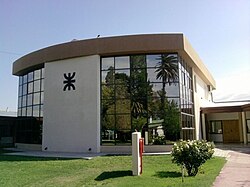
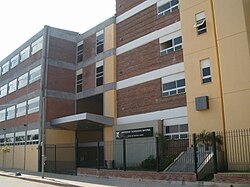
UTN's strength lies in its distributed network. While the Buenos Aires Regional Faculty (FRBA) is a primary hub, the university maintains a presence in numerous cities to support regional development.
| Region/City | Faculty Name | Focus/Type |
|---|---|---|
| Buenos Aires | FRBA | Regional Faculty |
| Tucumán | FRT | Regional Faculty |
| San Rafael | Regional Faculty | Regional Faculty |
| Haedo | FRH | Regional Faculty |
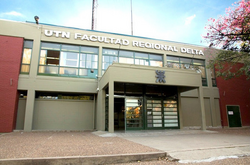
| Delta | FRD | Regional Faculty |
| Córdoba | FRC | Regional Faculty |
Enrollment and Admissions
Admission to UTN requires a secondary education degree and the successful completion of an entrance exam. Due to competitive acceptance rates, many students enroll in preparation courses. While those wishing to start before the end of the year may need a minimum GPA for certain prep courses, February enrollment is open to all valid high school diploma holders.
Prospective students must declare their engineering specialization upon enrollment. Because only foundational subjects are shared across degrees, changing specializations later requires taking additional specialized lectures.
Frequently Asked Questions
Is a degree from UTN equivalent to a Bachelor's degree?
No. Due to the length, breadth, and rigid structure of the programs, UTN degrees are equivalent to an Integrated Master's Degree (US MEng / EU Level 7), which allows graduates to apply directly for PhD programs.
What are the requirements to enroll at UTN?
Applicants must possess a secondary education degree and pass the university's entrance exam.
Can students earn a qualification before finishing the full engineering degree?
Yes, many programs offer an Intermediate Engineering Degree (IED) after the third or fourth year, such as a University Systems Analyst or University Chemical Technician.
How many engineers in Argentina graduate from UTN?
UTN is responsible for graduating almost 50% of the new engineers in the country.
What is the purpose of the "curricular modernization" process?
The goal is to adapt the university's analytic programs and certification processes to align with the Bologna process for better international comparability.