United States Navy Oilers: The Lifeline of the Fleet
Modern naval operations depend on the ability of a fleet to remain at sea for extended periods without returning to port. This capability is made possible by Oilers, specialized Combat Logistics ships designed to provide critical resources to other vessels while they are in motion. This complex process of transferring supplies is known as Underway Replenishment (UNREP).
While their primary mission is the delivery of fuel, these vessels often serve as floating warehouses, providing food, mail, ammunition, and other essential necessities to ensure operational readiness across the globe.
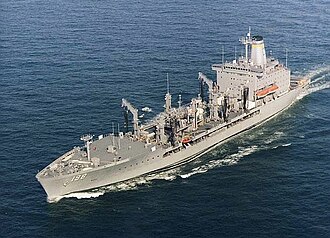
The Evolution of Naval Replenishment
The design of Navy oilers has evolved significantly over the last century. Through the Second World War, the Navy relied on commercial tanker hulls that were modified with UNREP gear, defensive weaponry, and military-grade electronic and damage-control systems. However, starting in the 1950s, the Navy shifted toward building specialized naval auxiliaries from the keel up to better meet the demands of military operations.
Historically, these ships were known as Fleet Oilers. Under current operations managed by the Military Sealift Command (MSC), they are officially classified as Fleet Replenishment Oilers. A separate designation, Transport Oiler (AOT), has been used since the 1960s for tankers that deliver petroleum products to global depots but do not perform UNREP duties.
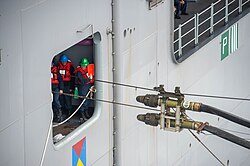
Classifications and Designations
The U.S. Navy uses specific hull designations to categorize these vessels based on their size and capabilities:
- AO: The standard designation for fleet oilers.
- AOE (Fast Combat Support Ships): Large, high-speed multifunction vessels that provide fuel, ammunition, and dry stores.
- AOR (Replenishment Oilers): Mid-size vessels (this designation is no longer in active use).
Many of these ships provide a combined suite of services that would otherwise require separate vessels, including those designated as AE (ammunition), AFS (store ships), and AK (cargo ships).
When you see a ship with the prefix T and the style USNS (United States Naval Ship), it indicates that the vessel is operated by a civilian crew under the Military Sealift Command, which was known as the Military Sea Transportation Service until 1970.
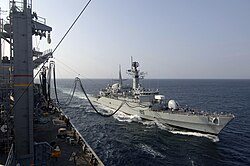
Current and Future Fleet
The Navy currently maintains three primary classes of replenishment vessels to sustain its global presence. The fleet is currently in a transition period, with newer designs replacing aging platforms.
| Class Name | Hull Designation | Service Entry | Status |
|---|---|---|---|
| Henry J. Kaiser | T-AO-187 to T-AO-204 | 1986 | Being replaced |
| Supply | T-AOE | 1990 | Being replaced |
| John Lewis | T-AO-205 to T-AO-221 | 2022 | Active/Entering Service |
Key Facts
- UNREP is the process of replenishing ships with fuel and supplies while underway.
- USNS ships are operated by civilian crews under the Military Sealift Command.
- AOE ships are the fastest and most multifunctional, carrying fuel, ammunition, and dry stores.
- The John Lewis class is the newest class of oilers, slated to replace both the Henry J. Kaiser and Supply classes.
- Transport Oilers (AOT) deliver fuel to depots but do not perform underway replenishment.
Frequently Asked Questions
What is the difference between an AO and an AOE?
An AO is a standard fleet oiler focused primarily on fuel, whereas an AOE is a Fast Combat Support Ship that provides a broader range of supplies, including ammunition and dry stores, at higher speeds.
What does the "T" prefix in T-AO mean?
The "T" prefix indicates that the ship is operated by a civilian crew under the Military Sealift Command rather than a commissioned Navy crew.
What is Underway Replenishment (UNREP)?
UNREP is the method of transferring fuel, food, ammunition, and mail from a logistics ship to another vessel while both ships are moving at sea.
Which class of oiler is currently replacing the older fleet?
The John Lewis class (T-AO-205 to T-AO-221), which entered service in 2022, is replacing both the Henry J. Kaiser and Supply classes.
Do all oilers perform UNREP?
No. While Fleet Replenishment Oilers perform UNREP, Transport Oilers (AOT) are used specifically to ship petroleum products to depots and do not engage in underway replenishment.