United Arab Emirates National Football Team: A Legacy of Ambition
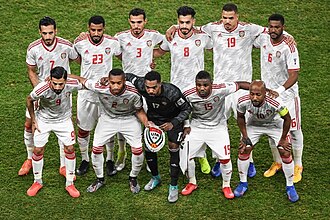
The United Arab Emirates national football team, known affectionately as Al-Abyad (The White Jersey) or Eyal Zayed (Sons of Zayed), represents the UAE on the global stage. Governed by the United Arab Emirates Football Association (UAE FA) and affiliated with the UAE Pro League, the team competes within the Asian Football Confederation (AFC) and the West Asian Football Federation (WAFF).
From its first international match in 1972 to its appearances in the FIFA World Cup, the UAE has established itself as a competitive force in West Asian football, blending a rich history of regional success with a drive for continental excellence.
Key Facts
- Highest FIFA Ranking: 40th (November–December 1998).
- World Cup History: One appearance, debuting in 1990.
- Asian Cup Peak: Runners-up in 1996.
- Regional Dominance: Two-time Arabian Gulf Cup Champions (2007, 2013).
- All-Time Top Scorer: Ali Mabkhout with 85 goals.
- Most Capped Player: Adnan Al-Talyani with 161 appearances.
Historical Milestones and Major Tournaments
The UAE's journey began on March 17, 1972, with a 1–0 victory over Qatar in Riyadh, Saudi Arabia. Since then, the team has navigated the highest peaks and deepest valleys of international football, including a record-breaking 12–0 win against Brunei in 2001 and a challenging 0–8 defeat to Brazil in 2005.
FIFA World Cup and Confederations Cup
The pinnacle of the team's journey was its first and only FIFA World Cup appearance in 1990. The UAE competed in the group stage, facing teams like Colombia and West Germany. Additionally, the team participated in the 1997 FIFA Confederations Cup, where they reached the group stage.
AFC Asian Cup and Regional Success
The UAE has been a mainstay in the AFC Asian Cup with 12 appearances. Their most successful campaign came in 1996, where they finished as runners-up. More recently, they reached the semi-finals in 2019 and secured a third-place finish in 2015.
Regionally, the team has excelled in the Arabian Gulf Cup, lifting the trophy in 2007 and 2013. They also secured a third-place finish in the 2025 FIFA Arab Cup.
Player Legends and Records
The UAE's success has been built on the backs of legendary players who have defined eras of football in the Emirates.

Adnan Al-Talyani remains the most capped player in the nation's history, earning 161 caps and scoring 52 goals between 1983 and 1997. Following him in appearances is Ismail Matar, a modern icon with 136 caps.

In terms of offensive prowess, Ali Mabkhout stands alone as the all-time leading goalscorer, netting 85 goals in 115 appearances between 2009 and 2023.
Stadiums and Infrastructure
The UAE utilizes several world-class venues for its home matches. While the Zayed Sports City Stadium in Abu Dhabi serves as a primary home with a capacity of 43,206, the team also frequently plays at the Mohammed bin Zayed Stadium, Hazza bin Zayed Stadium, and various venues in Dubai and Sharjah.
| Category | Detail |
|---|---|
| FIFA Code | UAE |
| Current Captain | Khalid Eisa |
| Highest Ranking | 40 (1998) |
| Asian Cup Best | Runners-up (1996) |
| Gulf Cup Best | Champions (2007, 2013) |
| Primary Kit Sponsor | Adidas (2014–present) |
Frequently Asked Questions
Who is the all-time top scorer for the UAE?
Ali Mabkhout is the top scorer for the United Arab Emirates national team, having scored 85 goals.
When did the UAE first play in the FIFA World Cup?
The UAE made its first and only World Cup appearance in 1990, where they competed in the group stage.
What is the team's best result in the AFC Asian Cup?
The team's best result in the AFC Asian Cup was finishing as runners-up in 1996.
Which player has the most caps for the national team?
Adnan Al-Talyani holds the record for the most appearances, with 161 caps.
How many times has the UAE won the Arabian Gulf Cup?
The UAE has won the Arabian Gulf Cup twice, claiming the title in 2007 and 2013.