Articles/United Arab Emirates: A Journey from Ancient Antiquity to Modern Global Hub
United Arab EmiratesUAE historyAbu DhabiDubaiEmirati culture
United Arab Emirates: A Journey from Ancient Antiquity to Modern Global Hub
The United Arab Emirates: A Journey from Antiquity to Global Innovation The United Arab Emirates (UAE) is a nation defined by its remarkable transformation. Located on the Arabian Peninsu...
The United Arab Emirates: A Journey from Antiquity to Global Innovation
The United Arab Emirates (UAE) is a nation defined by its remarkable transformation. Located on the Arabian Peninsula, this federation of emirates has evolved from a collection of historic coastal settlements and desert outposts into one of the world's most influential economic and technological hubs. Today, the UAE stands as a testament to rapid modernization, blending deep-rooted cultural traditions with a futuristic vision.
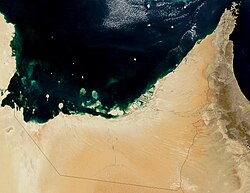
Satellite image of United Arab Emirates: Satellite image of United Arab Emirates
Key Facts
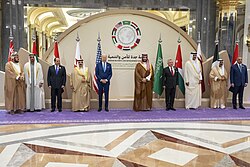
UAE's President Mohamed bin Zayed Al Nahyan and other leaders at the GCC+3 summit in Jeddah, 16 July 2022
Capital: Abu Dhabi
Largest City: Dubai
Official Language: Arabic
Population: Approximately 11,027,129 (2024 estimate)
Currency: Emirati dirham (AED)
Government Type: Federal semi-presidential elective semi-constitutional monarchy
A Rich Historical Tapestry
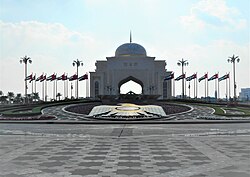
Entrance to Qasr Al Watan, the presidential palace in Abu Dhabi.
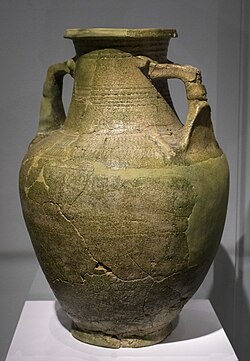
The history of the UAE stretches back to antiquity. Archaeological evidence, such as artifacts found at the Mleiha site in Sharjah, points to a sophisticated presence dating as far back as the 2nd century BCE.
2nd century BCE era jar found in Mleiha Archaeological site in Sharjah: 2nd century BCE era jar found in Mleiha Archaeological site in Sharjah
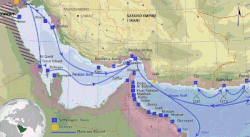
Throughout the centuries, the region's strategic location on the Persian Gulf made it a focal point for various empires. During the 16th and 17th centuries, the Portuguese Empire established a significant presence, leaving behind architectural and historical imprints across the coast.
A painting of the Portuguese Empire Doba Fortress [pt] in Dibba Al-Hisn in 1620: A painting of the Portuguese Empire Doba Fortress [pt] in Dibba Al-Hisn in 1620
Purple – Portuguese in the Persian Gulf in the 16th and 17th century. Main cities, ports, and routes.: Purple – Portuguese in the Persian Gulf in the 16th and 17th century. Main cities, ports, and routes.
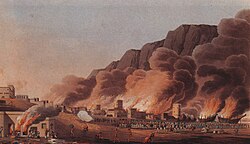
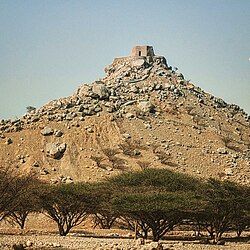
The 19th century was a period of significant conflict and shifting alliances. The coastal towns and ports, including the Emirate of Ras Al Khaimah, saw intense military campaigns. One notable event was the fall of Dhayah Fort in 1819, which was the last Al-Qasimi stronghold to fall during the Persian Gulf campaign, eventually paving the way for the General Maritime Treaty of 1820.
A painting depicting the burning of the coastal town and port of Emirate of Ras Al Khaimah during the Persian Gulf campaign of 1809: A painting depicting the burning of the coastal town and port of Emirate of Ras Al Khaimah during the Persian Gulf campaign of 1809
Dhayah Fort at the hill top. In 1819 it was the last Al-Qasimi stronghold to fall in the Persian Gulf campaign of 1819. The fall of Dhayah was to pave the way for the signing of the General Maritime Treaty of 1820.: Dhayah Fort at the hill top. In 1819 it was the last Al-Qasimi stronghold to fall in the Persian Gulf campaign of 1819. The fall of Dhayah was to pave the way for the signing of the General Maritime Treaty of 1820.
The Path to Independence
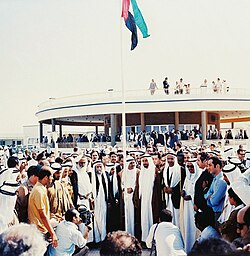
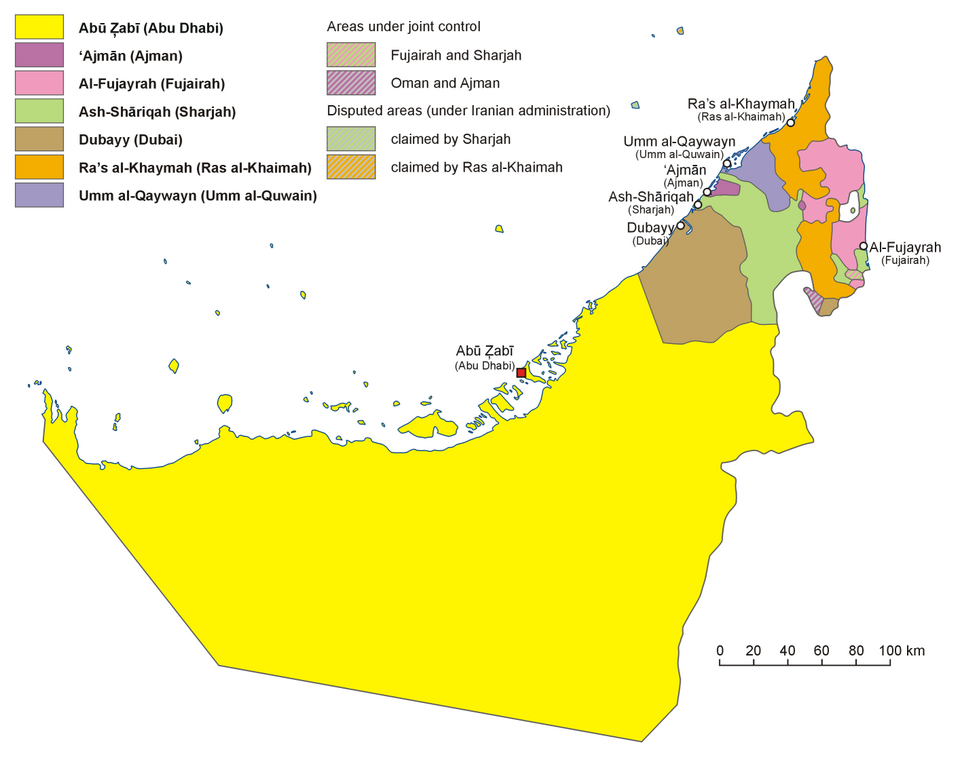
For much of the 19th and 20th centuries, the region existed as a British protectorate known as the Trucial States. This era changed forever on 2 December 1971, when the United Arab Emirates officially gained independence from the United Kingdom. Ras Al Khaimah later joined the federation on 10 February 1972.
Historic photo depicting the first hoisting of the United Arab Emirates flag by the rulers of the emirates at the Union House in Dubai on 2 December 1971: Historic photo depicting the first hoisting of the United Arab Emirates flag by the rulers of the emirates at the Union House in Dubai on 2 December 1971
Geography and Environment
ภาพประกอบจากบทความต้นฉบับ
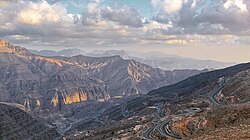
The UAE covers a total area of 83,600 km². Its landscape is characterized by vast deserts and diverse topographical features, ranging from the coastal plains to the rugged mountains of the north.
Roads leading to Jebel Jais, the highest mountain in the UAE (1,892 m), in Ras Al Khaimah: Roads leading to Jebel Jais, the highest mountain in the UAE (1,892 m), in Ras Al Khaimah
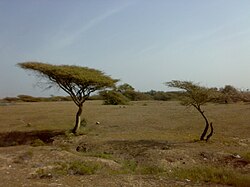
Despite its modern infrastructure, the nation faces significant environmental challenges. The UAE was ranked as the second most water-stressed country in the world in 2022. The local biodiversity includes resilient species like the Acacia trees that thrive in the desert suburbs.
Acacia trees growing in desert suburbs near Fujairah: Acacia trees growing in desert suburbs near Fujairah
United Arab Emirates was the second most water stressed country in the world in 2022.[107]: United Arab Emirates was the second most water stressed country in the world in 2022.[107]
Modern Economy and Urbanization
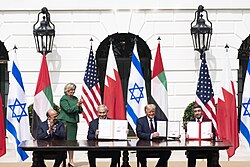
Emirati Minister of Foreign Affairs Abdullah bin Zayed Al Nahyan (furthest right) at the signing of the Abraham Accords
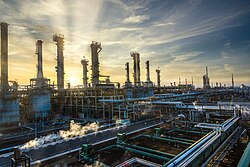
The UAE has transitioned from a traditional economy to a global powerhouse. While oil and gas remain vital—exemplified by massive facilities like the Ruwais Refinery—the nation has successfully diversified into tourism, finance, and technology.
Ruwais Refinery is the fourth-largest single-site oil refinery in the world and the biggest in the Middle East.: Ruwais Refinery is the fourth-largest single-site oil refinery in the world and the biggest in the Middle East.
The Rise of Dubai and Abu Dhabi
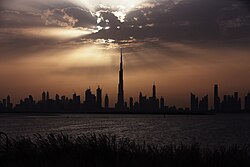
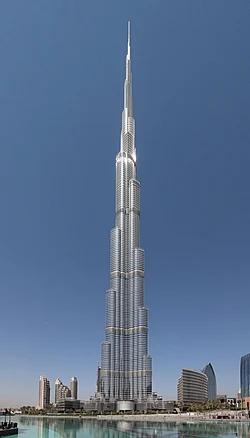
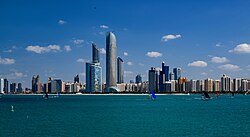
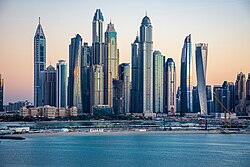
The skylines of Dubai and Abu Dhabi have become iconic symbols of the country's wealth and ambition. Dubai, the largest city, is home to the Burj Khalifa, the tallest human-made structure in the world.
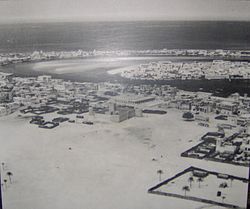
Dubai in 1950: the area in this photo shows Bur Dubai in the foreground (centred on Al-Fahidi Fort), Deira in middle-right on the other side of the creek, and Al Shindagha (left) and Al Ras (right) in the background across the creek, from Deira.: Dubai in 1950: the area in this photo shows Bur Dubai in the foreground (centred on Al-Fahidi Fort), Deira in middle-right on the other side of the creek, and Al Shindagha (left) and Al Ras (right) in the background across the creek, from Deira.
Skyline of Dubai: Skyline of Dubai
Burj Khalifa, the tallest human-made structure in the world, located in Dubai: Burj Khalifa, the tallest human-made structure in the world, located in Dubai
Abu Dhabi skyline: Abu Dhabi skyline
Dubai Marina skyline: Dubai Marina skyline
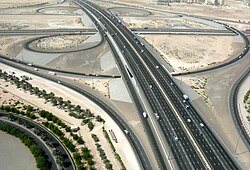
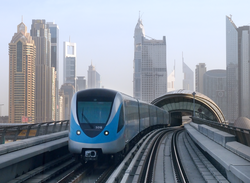
Infrastructure development has been a cornerstone of this growth. The Dubai Metro, the Arabian Peninsula's first rapid transit system, and a vast network of major highways like the E 311 facilitate movement across the emirates.
E 311, a major road in the UAE: E 311, a major road in the UAE
A Dubai Metro train. Dubai Metro is the Arabian peninsula's first rapid transit system and was the world's longest driverless metro network until 2016.: A Dubai Metro train. Dubai Metro is the Arabian peninsula's first rapid transit system and was the world's longest driverless metro network until 2016.
Tourism and Lifestyle
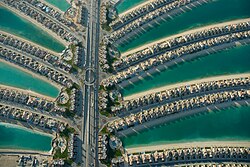
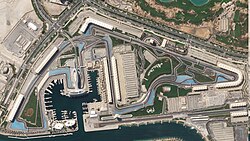
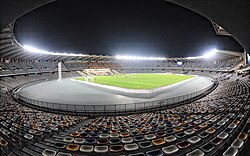
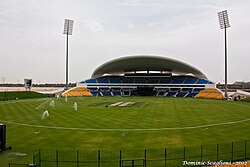
The UAE is a premier global destination, offering everything from luxury residential living on the Palm Jumeirah to world-class sporting events at the Yas Marina Circuit and various international cricket and football stadiums.
Residential villas in the Palm Jumeirah palm fronds in Dubai: Residential villas in the Palm Jumeirah palm fronds in Dubai
The Yas Marina Circuit in Abu Dhabi: The Yas Marina Circuit in Abu Dhabi
Zayed Sports City Stadium in Abu Dhabi: Zayed Sports City Stadium in Abu Dhabi
Sheikh Zayed Cricket Stadium in Abu Dhabi: Sheikh Zayed Cricket Stadium in Abu Dhabi
Demographics and Culture
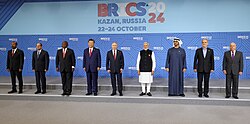
UAE President Mohamed bin Zayed at the 16th BRICS summit in October 2024
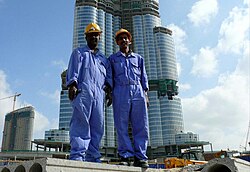
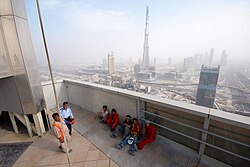
The UAE is a highly diverse, multicultural society. As of 2015 data, a significant portion of the population consists of South Asian expatriates, including large communities from India, Bangladesh, and Pakistan. This diversity is reflected in the country's religious landscape, where Islam is the official religion, but Christianity, Hinduism, and Buddhism are also practiced.
Two South Asian blue-collar workers posing for a picture with the Burj Khalifa on the background: Two South Asian blue-collar workers posing for a picture with the Burj Khalifa on the background
Dubai construction workers having a lunch break: Dubai construction workers having a lunch break
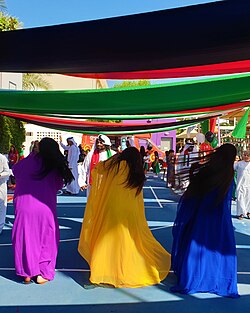
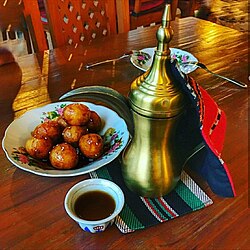
Cultural traditions remain vibrant. Emirati folk dance and traditional cuisine, such as lugaimat (a traditional sweet) served with Arabic coffee, continue to be celebrated.
Women in an Emirati folk dance.: Women in an Emirati folk dance.
Arabic coffee with lugaimat, a traditional Emirati sweet: Arabic coffee with lugaimat, a traditional Emirati sweet
Summary of Key Statistics
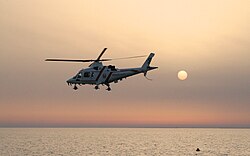
Dubai Police helicopter flying at sunset
United Arab Emirates Overview (2024-2026 Estimates)
Category
Value/Detail
Total Population
11,027,129
GDP (PPP) 2026 Est.
$1.006 trillion
GDP (Nominal) 2026 Est.
$621.546 billion
Human Development Index (2023)
0.940 (Very High)
Official Religion
Islam (74.5% - 76%)
Frequently Asked Questions
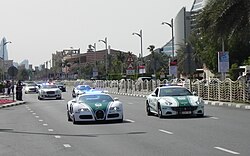
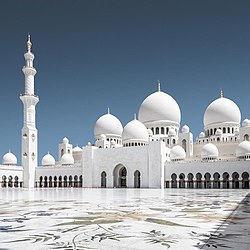
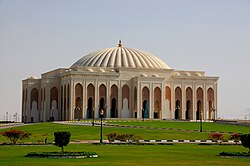
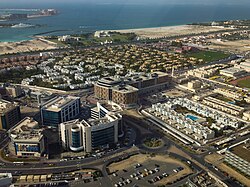
Dubai Police super-car motorcade at Jumeirah RoadSheikh Zayed Grand Mosque in Abu DhabiUniversity City Hall is the largest building located in University City in Sharjah. Graduation ceremonies of American University of Sharjah, University of Sharjah, and Higher Colleges of Technology are notably held here.Dubai Media City is home to diverse news and tech companies.
What is the capital of the United Arab Emirates?
The capital of the United Arab Emirates is Abu Dhabi.
Which city is the largest in the UAE?
Dubai is the largest city in the United Arab Emirates.
When did the UAE gain independence?
The United Arab Emirates gained independence from the United Kingdom on 2 December 1971.
What are the main languages spoken in the UAE?
Arabic is the official language, while English and Emirati Arabic are also commonly used.
What is the tallest building in the world located in the UAE?
The Burj Khalifa, located in Dubai, is the tallest human-made structure in the world.
![A painting of the Portuguese Empire Doba Fortress [pt] in Dibba Al-Hisn in 1620](/images/b5/4d/b54df33670dcd301c31214e0be1824349e8e2a8c0f4393b1fb40214a1b3a29ba.jpg)
![United Arab Emirates was the second most water stressed country in the world in 2022.[107]](/images/ea/7a/ea7a280c50bceb38deff8663f35ea39b83fbd8905de2d2077e3ac919eb8306ad.webp)