UN Convention on the Rights of the Child
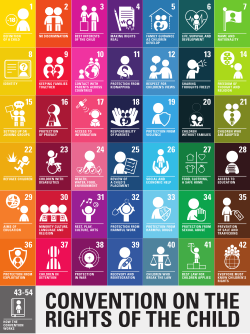
The United Nations Convention on the Rights of the Child (UNCRC) is a comprehensive international treaty designed to protect the fundamental rights of children globally. Adopted by the UN General Assembly on November 20, 1989—marking the 30th anniversary of the Declaration of the Rights of the Child—it establishes a universal standard for the legal protection and well-being of minors.
The convention was opened for signature in New York City and officially came into force on September 2, 1990, after reaching the required threshold of 20 ratifications. Since then, it has become one of the most widely accepted human rights treaties in history.

Key Facts
- Effective Date: September 2, 1990.
- Global Adoption: 196 parties as of August 5, 2026.
- Notable Exception: The United States is the only UN member state that is not a party to the convention.
- Official Languages: Arabic, Chinese, English, French, Russian, and Spanish.
- Depositary: The UN Secretary-General.
Global Adoption and Implementation
The UNCRC serves as a global benchmark, though its application can vary based on national laws and cultural contexts. While 196 countries are parties to the treaty, some nations have entered reservations—legal caveats that limit the application of specific articles based on domestic regulations.
For example, Thailand joined the convention on March 27, 1992, with reservations regarding Articles 7, 22, and 29. Over time, Thailand withdrew these reservations, starting with Article 29 (goals of education) in 1997, Article 7 (birth registration, name, and nationality) in 2010, and finally Article 22 (refugee children) on August 30, 2024.
Optional Protocols
To address specific and urgent threats to children, the UNCRC includes three Optional Protocols. These are additional treaties that parties can choose to sign and ratify to provide deeper protections.
Involvement of Children in Armed Conflict
Entering into force on July 12, 2002, this protocol prohibits the compulsory recruitment of children under 18 into armed forces. It urges governments to ensure that those under 18 do not participate in hostilities. As of August 5, 2026, 172 states are party to this protocol.
Sale of Children, Child Prostitution and Child Pornography
This protocol, effective since January 18, 2002, requires member states to criminalize and prohibit the sale of children, as well as child prostitution and pornography. It has been adopted by 178 states as of August 5, 2026.
Communications Procedure
Adopted in December 2011 and effective since April 14, 2014, this protocol allows children or their representatives to file individual complaints regarding violations of their rights. It currently has 50 ratifications and 52 signatures.
Summary of Convention Status
| Category | Details |
|---|---|
| Date Adopted | November 20, 1989 |
| Date Effective | September 2, 1990 |
| Total Parties | 196 |
| Non-Party UN Member | United States |
| Depositary | UN Secretary-General |
Environmental Rights and Future Directions
The scope of children's rights continues to evolve. On October 7, 2020, a UN Draft Resolution (A/HRC/45/L.48/Rev.1) was adopted, focusing on the necessity of a healthy environment as a means of realizing the rights of the child. This resolution was submitted by Germany (on behalf of the European Union) and Uruguay (on behalf of GRULAC).
Frequently Asked Questions
Which country has not ratified the UNCRC?
The United States is the only UN member state that is not a party to the Convention on the Rights of the Child.
What is an Optional Protocol?
An Optional Protocol is a supplementary treaty that provides additional legal obligations on specific issues, such as child soldiers or child pornography, which countries can choose to join separately from the main convention.
How many countries are party to the UNCRC?
As of August 5, 2026, 196 countries are party to the convention.
Can a country limit certain parts of the convention?
Yes, countries can register reservations upon accession, which means they may exclude or modify the legal effect of certain articles to align with their national laws and practices.
What does the Communications Procedure protocol allow?
It allows children or their legal representatives to file individual complaints when their rights under the convention have been violated.