Ukrainian Language: History, Evolution, and Global Presence
The Ukrainian language (українська мова) is a vibrant East Slavic tongue spoken primarily in Ukraine. As a member of the Indo-European language family, it serves as a cornerstone of Ukrainian national identity and culture. With approximately 39 million speakers worldwide as of 2023—including 32 million native speakers—it remains a significant linguistic force in Eastern Europe.
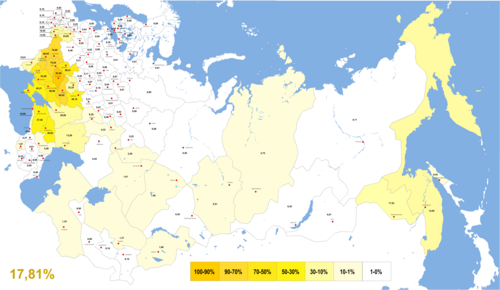
From its roots in Proto-Slavic to its modern status as the official language of Ukraine, the language has navigated centuries of political shifts, imperial pressures, and cultural revivals. Today, it is not only the primary means of communication in Ukraine but is also recognized as a minority language in numerous European nations and spoken by large diaspora communities in the Americas.
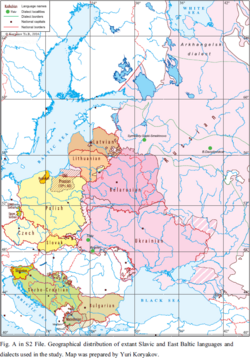
Key Facts
- Language Family: Indo-European → Balto-Slavic → Slavic → East Slavic.
- Total Speakers: 39 million (2023), comprising 32 million L1 and 6.9 million L2 speakers.
- Writing System: Cyrillic alphabet (including Ukrainian Braille).
- Official Status: Official language of Ukraine; recognized minority language in countries including Poland, Romania, and the Czech Republic.
- Global Reach: Significant speaker populations in Russia, Canada, and Brazil.
Linguistic Development and Chronology
The evolution of Ukrainian is categorized by linguists into several distinct periods, moving from early medieval forms to the standardized modern tongue.
Early and Middle Periods
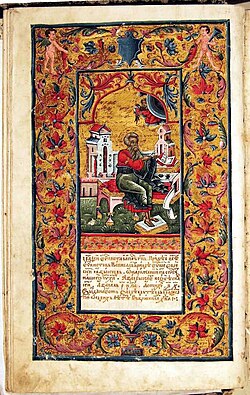
- Early Middle Ukrainian (1387–1575): This period focuses on the divergence of Ukrainian and Belarusian texts.
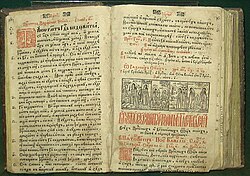
- Middle Ukrainian (1575–1720): Characterized by various vernacular varieties and the influence of Church Slavonic.
- Late Middle Ukrainian (1720–1818): A transitional phase often featuring mixed Ukrainian-Russian texts.
The Influence of Empires
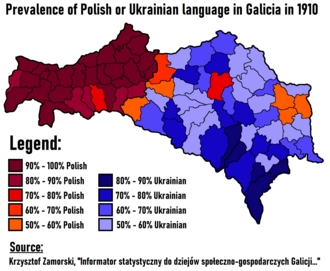
The spoken language evolved through various political administrations, including the Grand Duchy of Lithuania, the Crown of the Kingdom of Poland, and the Cossack Hetmanate. In the 19th century, under the Russian Empire, the language faced significant challenges. An 1897 census revealed a stark divide: while 80% of rural inhabitants in Ukrainian provinces identified Ukrainian as their native tongue, only 32.5% of urban residents did so. In Odesa, the largest city at the time, only 5.6% claimed Ukrainian as their native language.
The Soviet Era and Modern Independence
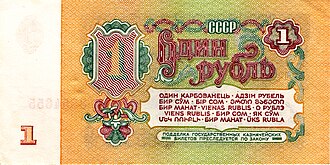
During the Soviet period, the language experienced fluctuating policies. While all national languages were proclaimed equal, Russian remained the de facto official language. For example, 1961 banknotes listed denominations in the languages of all fifteen republics, placing Ukrainian (один карбованець) immediately after Russian.
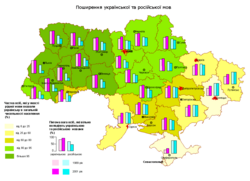
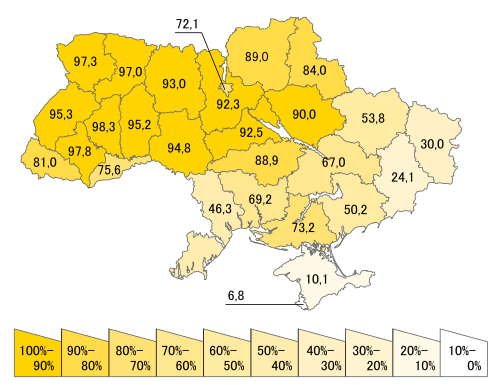
Following independence, there has been a marked shift toward the Ukrainian language. In the 2001 census, 67.5% of the population named Ukrainian as their native language. Recent data from 2022 indicates a continuing trend, with 51% of surveyed citizens stating they speak only Ukrainian at home, up from 44% in 2014.
![2007 sign in the Kyiv Metro in Ukrainian. The evolution in their language followed the changes in the language policies in post-war Ukraine. Originally, all signs and voice announcements in the metro were in Ukrainian, but their language was changed to Russian in the early 1980s, at the height of Shcherbytsky's gradual Russification. In the perestroika liberalization of the late 1980s, the signs were changed to bilingual. This was accompanied by bilingual voice announcements in the trains. In the early 1990s, both signs and voice announcements were changed again from bilingual to Ukrainian-only during the de-russification campaign that followed Ukraine's independence.[citation needed] Since 2012 the signs have been in both Ukrainian and English.](/images/d0/77/d077c3ebfc1bfab1ef9169fb69fb37d051788fd8747bf2fc0fe8f93899ae8473.jpg)
Language Structure and Dialects
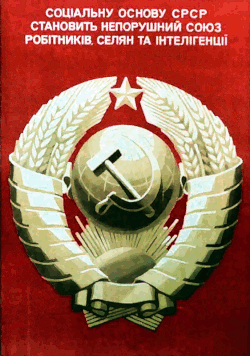
Ukrainian is a complex language with a rich grammatical structure and diverse regional variations.
Grammar and Phonology
Ukrainian nouns are categorized into three genders: masculine, feminine, and neuter. The language employs a sophisticated system of seven cases: nominative, accusative, genitive, dative, instrumental, locative, and vocative. Verbs are conjugated across four tenses (past, pluperfect, present, and future) and two voices (active and mediopassive).

Regional Dialects
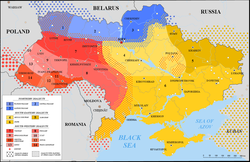
The language is divided into three primary dialect groups:
- Northern (Polissian) dialects
- Southeastern dialects (including Balachka)
- Southwestern dialects (including Canadian Ukrainian and Rusyn, which some linguists classify as a dialect)
Global Presence and Culture
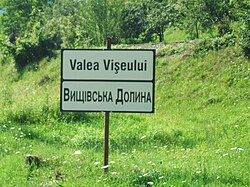
Beyond Ukraine's borders, the language thrives in diaspora communities. In Canada, over 200,000 people identify as Ukrainian, with many speaking the language at home. In Brazil, the Ukrainian community is substantial, and the language is an official co-language in the municipality of Prudentópolis.
Culturally, the 2010s saw a revival in Ukrainian-language cinema. Highly rated films such as Ivan Syla (2013) and Shadows of Forgotten Ancestors (1965) highlight the artistic depth of the language.
| Category | Detail |
|---|---|
| Total Speakers (2023) | 39 Million |
| Native Speakers (L1) | 32 Million |
| Official Status | Official in Ukraine, Transnistria, Republic of Crimea |
| Writing System | Cyrillic |
| Grammatical Cases | 7 |
Frequently Asked Questions
What is the difference between Ukrainian and Russian?
While both are East Slavic languages and share a Cyrillic script, they have distinct vocabularies, phonologies, and grammatical nuances. They also contain false cognates—words that look similar but have different meanings.
Is Ukrainian spoken outside of Ukraine?
Yes, it is spoken by significant diaspora populations in Canada, Brazil, and Russia, and is recognized as a minority language in several European countries like Poland and Romania.
What are the main dialects of Ukrainian?
The language is primarily divided into Northern, Southeastern, and Southwestern dialect groups, reflecting the regional history and influences of the territory.
How has the use of Ukrainian changed since independence?
There has been a significant increase in the use of Ukrainian, particularly in urban centers like Kyiv, as the country has moved away from the Russification policies of the Soviet era.
Which alphabet does Ukrainian use?
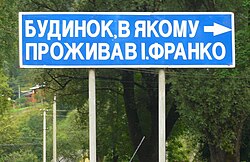
Ukrainian uses the Cyrillic alphabet, with specific characters that distinguish it from other Slavic languages using Cyrillic, such as the letter Ї.