UK Civil Service: History, Governance, and Structure
The UK Civil Service serves as the administrative backbone of the British government, providing the expertise and continuity necessary to implement public policy. While often conflated with all public sector employment, the civil service specifically refers to servants of the Crown working in a civil capacity who do not hold political or judicial office. This distinction ensures a clear separation between the political leadership of the country and the professional administration that executes government decisions.
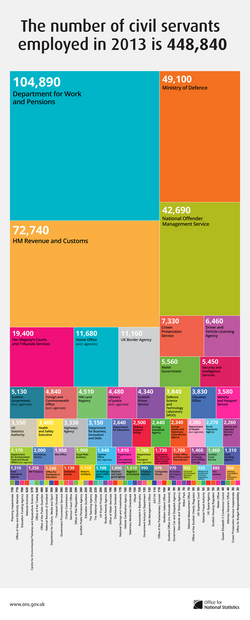
As of March 2021, the workforce comprised 484,880 civil servants, representing a 6.23% increase over the previous year. It is important to note that this body does not include government ministers, members of the British Armed Forces, police officers, NHS employees, or staff of the Royal Household.
Key Facts
- Political Neutrality: Civil servants must remain impartial to serve successive governments regardless of political affiliation.
- Merit-Based: Since the 19th century, appointments have been based on merit rather than patronage.
- Scale: The service employed nearly 485,000 people as of early 2021.
- Leadership: The service is led by the Cabinet Secretary, who currently serves as the Head of the Civil Service.
- Legal Obligations: All staff are bound by the Official Secrets Acts 1911 to 1989 to protect sensitive information.
The Evolution of the Civil Service
The Northcote-Trevelyan Reforms
The modern civil service was born from a desire to replace favoritism with expertise. In 1854, Stafford Northcote and Charles Trevelyan drafted a landmark report recommending a permanent, unified, and politically neutral service. They proposed that appointments be made on merit and suggested a division between "mechanical" routine work and "administrative" policy formulation.
While not immediately adopted, the bureaucratic failures of the Crimean War highlighted the need for reform. In 1855, a Civil Service Commission was established to oversee open recruitment, and by 1870, Prime Minister William Ewart Gladstone formally implemented the Northcote-Trevelyan proposals via an Order in Council.
The Fulton Report and Management Reform
By 1968, Lord Fulton's committee identified a lack of professional management skills and a disconnect between the service and the public. Fulton recommended a unified grading system, the creation of a Civil Service College, and a central policy planning unit. This led Prime Minister Harold Wilson to establish the Civil Service Department (CSD) in 1968, moving control away from the Treasury.
The Thatcher Era and Efficiency Drives
Under Margaret Thatcher, the civil service underwent significant contraction, with numbers falling from 732,000 to 594,000 during her first seven years. Efficiency expert Derek Rayner was brought in to reduce spending and shift the focus of "mandarins" (senior civil servants) from policy advice toward management and efficiency. This era saw the abolition of the CSD in 1981, transferring power to the Prime Minister's Office and the Cabinet Office.
Governance and Leadership
The governance of the civil service is centered around the Cabinet Secretary and the Minister for the Civil Service (a role held by the Prime Minister). Over time, the leadership structure has evolved; for instance, in 2011, the role of Head of the Home Civil Service was briefly split from the Cabinet Secretary position before being reintegrated.
The current leadership includes Dame Antonia Romeo, who was appointed Cabinet Secretary on February 19, 2026. Other key executives include Cat Little (Cabinet Office Permanent Secretary and COO of the Civil Service) and Harriet Aldridge (COO for the Cabinet Office).
Summary of Cabinet Secretary Tenure
| Name | Dates | Key Notes |
|---|---|---|
| Sir Warren Fisher | 1919–1939 | Secretary to the Treasury |
| Sir Robert Armstrong | 1981–1987 | Secretary to the Cabinet |
| Sir Robin Butler | 1988–1998 | Long-term leadership |
| Sir Gus O'Donnell | 2005–2011 | Head of the Home Civil Service |
| Simon Case | 2020–2024 | Resigned on health grounds |
| Dame Antonia Romeo | 2026–Present | Current Cabinet Secretary |
Organizational Structure and Grading
The civil service utilizes a complex grading system to define hierarchy and responsibility, often mapped against military ranks for equivalence. The Senior Civil Service (SCS) represents the highest tiers, including Permanent Secretaries and Director Generals.
Grading Hierarchy
- Senior Civil Service: Includes the Cabinet Secretary (Grade 1A) and Permanent Secretaries (Grade 1), equivalent to the highest military ranks (OF-9 to OF-10).
- Middle Management: Includes Higher Executive Officers (HEO) and Executive Officers (EO).
- Administrative and Support: Includes Administrative Officers (AO) and Administrative Assistants (AA).
Professional Groupings
Staff are organized into various professional streams to ensure specialized expertise. These include, but are not limited to:
- Digital, Data and Technology
- Economics and Statistics
- Law and Finance
- Science and Medicine
- Operational Delivery and Policy Delivery
Ethics and Conduct
To maintain public trust, the service adheres to strict codes of conduct, including the Civil Service Code and the Civil Service Management Code. Political neutrality is paramount; civil servants must provide objective advice to ministers regardless of their own political views.
Following the "Lobbygate" incident in 1998, where a reporter exposed privileged access to government officials, strict restrictions were placed on contacts between civil servants and lobbyists. The Committee on Standards in Public Life now regulates these interactions.
Frequently Asked Questions
Who is considered a civil servant in the UK?
A civil servant is generally defined as a servant of the Crown working in a civil capacity who does not hold a political or judicial office. This excludes ministers, police, military personnel, and NHS staff.
What is the purpose of the Northcote-Trevelyan Report?
The 1854 report sought to end the system of patronage (appointments based on favoritism) and establish a permanent, neutral civil service where recruitment was based on merit and open competition.
What does "political neutrality" mean for a civil servant?
It means that civil servants must serve the government of the day with impartiality, providing honest and objective professional advice regardless of which political party is in power.
Who currently leads the UK Civil Service?
The current Cabinet Secretary is Dame Antonia Romeo, appointed on February 19, 2026.
What are the Official Secrets Acts?
These are laws (spanning 1911 to 1989) that prohibit civil servants from disclosing sensitive government information to unauthorized parties.