TV Azteca: The History and Evolution of a Mexican Media Giant
The landscape of Mexican broadcasting was fundamentally altered in the 1990s, shifting from a state-controlled system and a single private monopoly to a competitive duopoly. At the center of this transformation is TV Azteca, a multimedia conglomerate that rose from the privatization of government assets to become the second-largest mass media company in Mexico.
The Formation of TV Azteca
In the early 1990s, under the presidency of Carlos Salinas de Gortari, the Mexican government began privatizing various state assets. A primary target for this process was the Instituto Mexicano de la Televisión, better known as Imevisión. This state entity operated two national networks—Red Nacional 7 and Red Nacional 13—along with three local stations.
To facilitate the sale, Imevisión's assets were divided into several new companies, the largest of which was Televisión Azteca, S.A. de C.V. While Canal 22 was separated and transferred to Conaculta, a single bidder secured the remaining stations. On July 18, 1993, the Secretaría de Hacienda y Crédito Público (SHCP), Mexico's Finance Ministry, announced that Radio Televisora del Centro—a group led by Ricardo Salinas Pliego—had won the auction. The winning bid of US$645 million included the state-owned media package and Imevisión's studios in the Ajusco area of Mexico City.
This acquisition effectively ended the era of a total television monopoly held by Televisa, establishing a duopoly where the two conglomerates controlled 97 percent of the country's commercial television concessions.
Strategic Expansion and Market Influence
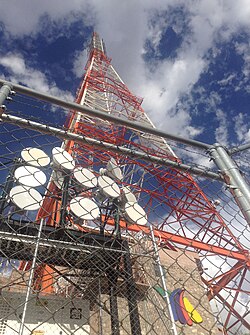
Following its inception, TV Azteca aggressively expanded its reach. In 1998, the company invested US$25 million in XHTVM-TV, owned by Javier Moreno Valle. This partnership initially allowed Azteca to manage programming and ad sales while Moreno Valle's CNI news service kept some primetime slots. However, the relationship soured in 2000, leading to a legal and physical battle for control of the XHTVM facilities on Cerro del Chiquihuite.
After a period of government intervention and a crippling employee strike at CNI, TV Azteca finally regained full control of XHTVM in 2006, rebranding the station as Proyecto 40.

Beyond broadcasting, the company evolved into a diversified multimedia empire. Although it briefly changed its name to simply "Azteca" in 2011 to reflect this growth, it restored the TV Azteca name in 2016. Today, the company holds 31% of the 465 television concessions in Mexico.
Diversification of Assets
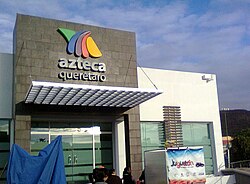
TV Azteca's influence extends far beyond the television screen. Its portfolio includes a wide array of business ventures:
- Financial Services: Azteca banks and Azteca insurance.
- Telecommunications: Iusacell and internet services.
- Entertainment: Cinemas, live theater, an acting school, and music production.
- Media: News channels, newspapers, and specialized series.
- Other: Sports stadiums and consumer products.
Financial Challenges and Bankruptcy
Despite its market dominance, TV Azteca has faced significant financial instability in recent years. On March 21, 2023, creditors filed an involuntary Chapter 11 bankruptcy petition in the United States. The company requested the dismissal of this case by April 26, arguing that reorganization should occur exclusively within Mexico. Consequently, the company was suspended from the Mexico Stock Exchange on June 1, 2023.
The financial crisis culminated on February 26, 2026, when TV Azteca applied for bankruptcy proceedings in Mexico. The company cited several contributing factors for this decision, including the economic fallout from the COVID-19 pandemic, license payment impacts, and a substantial US$2 billion payment in back taxes owed to Mexican authorities.
Key Facts
- Founded: 1993 by Ricardo Salinas Pliego.
- Acquisition Cost: US$645 million for the Imevisión state-owned media package.
- Market Share: Together with Televisa, controls 97% of Mexico's mass media.
- Concessions: Holds 31% of the 465 television concessions in Mexico.
- Recent Legal Status: Filed for bankruptcy in Mexico on February 26, 2026.
| Category | Details |
|---|---|
| Founder | Ricardo Salinas Pliego |
| Original Asset Source | Imevisión (Privatized) |
| Primary Competitor | Televisa |
| Major Business Arms | Banking, Insurance, Telecom, Media, Sports |
| Key Financial Liability | $2 billion in back taxes |
Frequently Asked Questions
How was TV Azteca created?
TV Azteca was formed in 1993 when Ricardo Salinas Pliego's group, Radio Televisora del Centro, won a US$645 million auction to purchase the privatized assets of the state-owned Imevisión.
What is the relationship between TV Azteca and Televisa?
They are the two largest mass media companies in Mexico, forming a duopoly that controls approximately 97% of the country's commercial television concessions.
What other businesses does TV Azteca own?
The company is a multimedia conglomerate owning assets in banking, insurance, telecommunications (Iusacell), cinemas, sports stadiums, and various entertainment and news outlets.
Why did TV Azteca file for bankruptcy in 2026?
The company cited the impact of the COVID-19 pandemic, license payment issues, and a $2 billion tax debt to the Mexican government as the primary reasons for seeking bankruptcy proceedings to restructure its finances.
What happened with the XHTVM-TV station?
After a long legal and physical dispute with owner Javier Moreno Valle, TV Azteca eventually gained full control of the station in 2006 and rebranded it as Proyecto 40.