Dynegy Inc.: A History of Energy Generation, Crisis, and Acquisition
Dynegy Inc. was a prominent American electric company based in Houston, Texas, specializing in the ownership and operation of fossil-fuel-powered stations across six U.S. states. From its origins as a niche brokerage to its eventual acquisition by Vistra Corp, the company's trajectory serves as a complex case study in the volatility of the energy sector.
Founded in 1984 as the Natural Gas Clearinghouse, the firm began as an energy brokerage focused on the buying and selling of natural gas supplies. As it expanded into electrical power generation, it rebranded as NGC Corporation in 1995, and finally as Dynegy, Inc. in June 1998.
Key Facts
- Founded: 1984 as Natural Gas Clearinghouse.
- Industry: Electrical power generation (fossil fuels).
- Headquarters: Houston, Texas.
- Major Acquisition: Acquired by Vistra Corp on April 9, 2018, for $1.7 billion.
- 2016 Financials: Reported revenue of US$4.3 billion with total assets of US$13 billion.
- Workforce: 2,489 employees as of 2017.
Growth and Early Controversies
Dynegy experienced rapid expansion in the late 1990s. In 1999, the company acquired Illinova Corporation in a deal valued at US$1.75 billion, while assuming US$2.25 billion in debt. This move allowed major stakeholders, including Nova and British Gas, to exit their positions in the company.
However, this growth was marred by legal challenges. During the California electricity crisis of 2000 and 2001, Dynegy—alongside other energy giants like Enron and El Paso Corporation—was accused of fraudulent practices and price manipulation. While the case against Dynegy was eventually dismissed in 2003, the period signaled the beginning of significant instability.
Financial Turmoil and the 2002 Crisis
By June 2002, Dynegy faced a severe liquidity crisis. Moody's downgraded the company's bonds to "junk" status, and share prices plummeted by 64% following announcements that the company required a financial partner to stabilize operations.
To avoid immediate bankruptcy, Dynegy sold the Northern Natural Gas Company to MidAmerican Energy Holdings for $928 million. Despite this survival, the company shuttered its online energy trading business in October 2002, resulting in a 14% reduction in its workforce. The financial mismanagement of this era led to a class-action lawsuit from shareholders, which Dynegy settled in 2005 for US$468 million.
Restructuring and Bankruptcy
The company attempted a recovery through a US$2.3 billion joint venture with LS Power Group in 2006. However, the partnership dissolved by 2009 after Dynegy's share price fell 80% and the company posted a $345 million loss in the second quarter of that year.
Financial instability culminated in a series of bankruptcy filings. Dynegy Holdings filed for bankruptcy in November 2011, followed by Dynegy Inc. on July 6, 2012. The restructuring process involved a merger between the parent company and its holdings subsidiary, with creditors receiving 99% of the new company's stock.
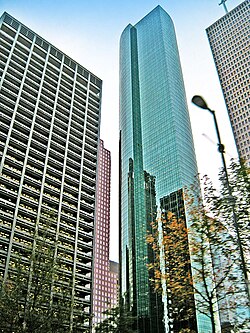
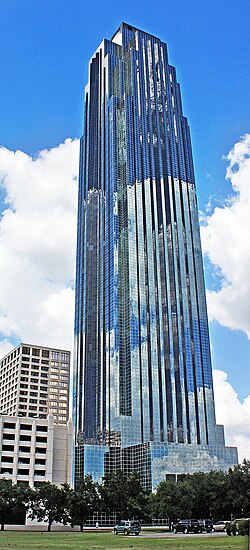
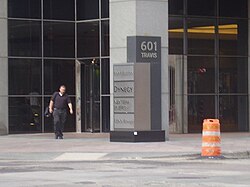
During this period, Dynegy relocated its headquarters to 601 Travis Street in Downtown Houston, abandoning significant office space at the Wells Fargo Plaza.
Final Years and Vistra Acquisition
Following its emergence from bankruptcy on October 2, 2012, Dynegy focused on expanding its generating capacity. In 2014, the company executed two major transactions: acquiring Duke's Midwest Generation assets and retail business for $2.8 billion, and purchasing EquiPower Resources' generating assets for $3.45 billion. These acquisitions nearly doubled its capacity from 13,000 MW to approximately 26,000 MW.
The company's independent history ended on April 9, 2018, when Vistra Corp completed its acquisition of Dynegy for $1.7 billion, a deal approved by the Federal Energy Regulatory Commission (FERC).
Corporate Overview Summary
| Metric | Detail |
|---|---|
| Revenue (2016) | US$4.3 Billion |
| Net Income (2016) | US$-1.2 Billion |
| Total Assets (2016) | US$13 Billion |
| Generating Capacity (Post-2014) | ~26,000 MW |
| Final Parent Company | Vistra Corp |
Frequently Asked Questions
What was Dynegy's original business model?
Dynegy was founded in 1984 as the Natural Gas Clearinghouse and originally operated as an energy brokerage, focusing on the trading of natural gas supplies before expanding into electricity generation.
Why did Dynegy file for bankruptcy in 2012?
The bankruptcy was the result of long-term financial instability, high debt loads, and the prior bankruptcy of its subsidiary, Dynegy Holdings, in 2011.
What role did Dynegy play in the California electricity crisis?
Dynegy was accused of price manipulation and fraudulent practices during the 2000-2001 crisis, though the specific case against the company was dismissed in 2003.
Who eventually acquired Dynegy?
Dynegy was acquired by Vistra Corp on April 9, 2018, in a deal valued at $1.7 billion.
Which subsidiaries did Dynegy maintain during its bankruptcy?
The company's GasCo and CoalCo subsidiaries, as well as the "stub group" for miscellaneous enterprises, remained unaffected by the bankruptcy filings.