Turtles: Evolution, Anatomy, and the Biology of Testudines
Turtles are among the most distinctive reptiles on Earth, recognized instantly by their protective bony shells. Belonging to the order Testudines, these animals have survived for millions of years, adapting to nearly every environment from the depths of the ocean to the arid reaches of the desert. Their unique body plan, which integrates the skeletal system with a hard outer casing, represents one of the most successful evolutionary experiments in vertebrate history.
From the streamlined forms of sea turtles to the heavy, dome-shaped shells of tortoises, the diversity within this group is vast. Understanding turtles requires a look at their complex anatomy, their specialized physiological adaptations, and the evolutionary journey that led to their current form.
Key Facts
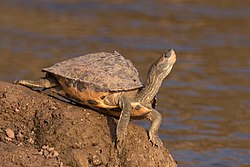
- Scientific Order: Testudines.
- Primary Subgroups: Cryptodira (hidden-necked turtles) and Pleurodira (side-necked turtles).
- Defining Feature: A bony or cartilaginous shell developed from ribs and vertebrae.
- Temporal Range: Present from the Late Jurassic to the modern era.
- Diversity: Comprises 14 living families across land, freshwater, and marine habitats.
Anatomy and Physiology
The Shell
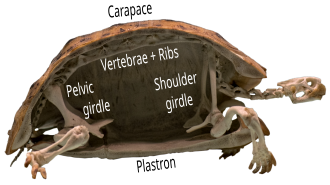
The most defining characteristic of a turtle is its shell, a complex structure that serves as both a protective shield and a structural support. The shell consists of the carapace (the upper part) and the plastron (the lower part). Unlike many other animals, a turtle's shell is fused to its ribs and spine, meaning the animal cannot "leave" its shell.
During development, the ribs grow sideways into the carapacial ridge to support the formation of the carapace.
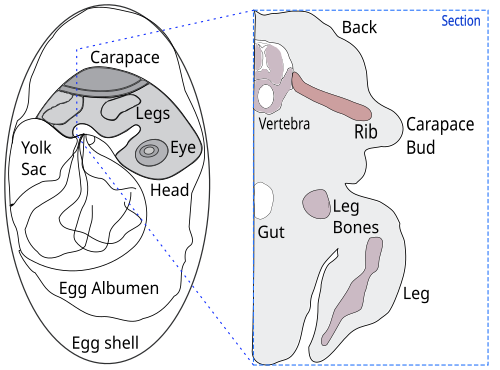
The internal structure of the skeleton reveals how the ribs have been modified to form this protective dome, as seen in sagittal sections of tortoise skeletons.
Head, Neck, and Senses
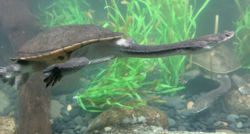
Turtles are divided into two suborders based on how they retract their necks: Cryptodira, which pull their heads straight back into the shell, and Pleurodira, which fold their necks sideways.
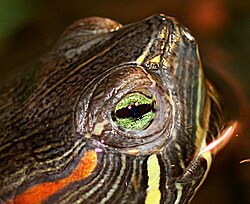
Their sensory capabilities vary by species. For example, the red-eared slider possesses an exceptional seven types of color-detecting cells in its eyes, allowing for highly specialized vision.
Limbs and Locomotion
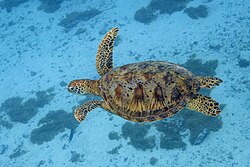
Locomotion is highly adapted to the turtle's specific habitat. Land-dwelling tortoises have sturdy, pillar-like legs for walking, while sea turtles have evolved streamlined shells and limbs that function as flippers for efficient swimming.
Physiological Adaptations
Breathing and Circulation
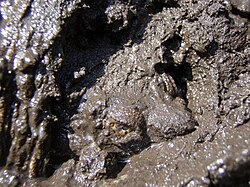
While turtles primarily breathe air using lungs, many species have developed remarkable adaptations for underwater survival. Some can utilize specialized circulatory and physiological mechanisms to endure long periods without breathing, a trait essential for those undergoing brumation (a state of dormancy similar to hibernation) in mud.
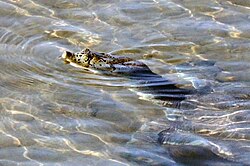
Some aquatic species, such as the Indian softshell turtle, are capable of nose-breathing at the river surface while remaining almost entirely submerged.
Thermoregulation
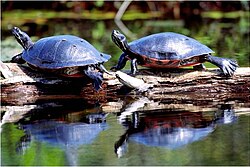
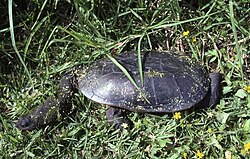
As ectotherms, turtles rely on external heat sources to regulate their body temperature. Smaller pond turtles, such as the northern red-bellied cooter, frequently bask in the sun to raise their internal temperature.
Behavior and Life Cycle
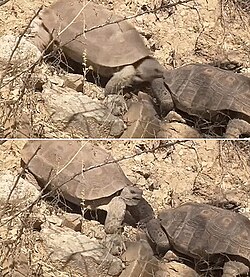
Diet and Communication
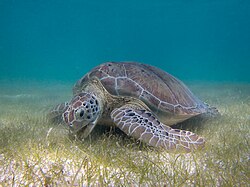
Turtles exhibit a wide range of diets. Green sea turtles, for instance, graze primarily on seagrass.
While often perceived as silent, some species have a sizable vocal repertoire, such as the oblong turtle, used for communication.
Reproduction and Migration
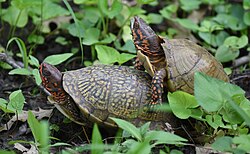
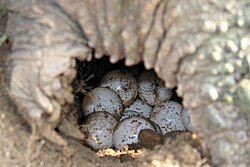
Turtles lay amniotic eggs in holes dug in the soil. Female sea turtles are famous for their long-distance migrations, returning to the specific beaches where they were born to nest.

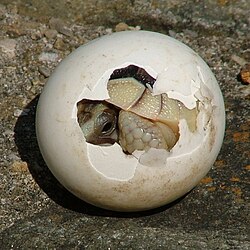
The life cycle begins with the hatchling emerging from the egg, a vulnerable stage that marks the start of a potentially very long lifespan.
Evolution and Systematics
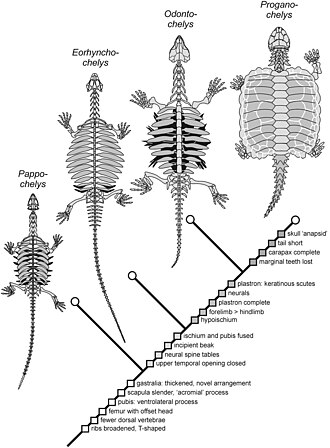
The evolution of the turtle body plan is a subject of intense scientific study. Fossil evidence from the Triassic period suggests that the shell evolved from isolated bony plates that eventually merged into a complete structure. This sequence is traced through ancestral forms such as Pappochelys, Eorhynchochelys, Odontochelys, and Proganochelys.
Modern molecular evidence suggests that turtles are the sister group to archosaurs (the group containing crocodiles, birds, and dinosaurs), placing them firmly within the diapsid lineage of reptiles.
Conservation and Human Impact
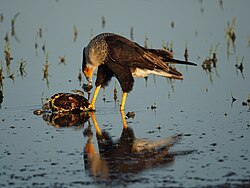
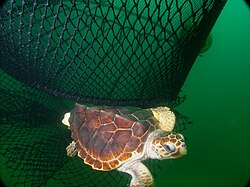
Turtles face numerous threats, including habitat loss, poaching for food or traditional medicine, and accidental capture in fishing gear. To combat the latter, some trawlers now use turtle excluders—specialized net openings that allow loggerheads and other sea turtles to escape.
| Feature | Cryptodira | Pleurodira |
|---|---|---|
| Common Name | Hidden-necked turtles | Side-necked turtles |
| Neck Retraction | Vertical (straight back) | Horizontal (folded sideways) |
| Examples | Sea turtles, Box turtles | Austro-South American side-necked turtles |
Frequently Asked Questions
What is the difference between a turtle and a tortoise?
While all tortoises are turtles, not all turtles are tortoises. Generally, "turtle" is the broad term for the order Testudines, while "tortoise" refers specifically to land-dwelling species with heavy, stumpy feet and dome-shaped shells.
How do turtles breathe underwater?
Turtles cannot breathe underwater in the way fish do; they must surface for air. However, many species have physiological adaptations that allow them to hold their breath for extended periods, and some can absorb small amounts of oxygen through other membranes.
How is the turtle shell formed?
The shell is not a separate piece of armor but is part of the turtle's skeleton. It is formed by the fusion of the ribs and the vertebrae, which grow and harden into the carapace and plastron.
Why do sea turtles return to the same beach to nest?
This behavior is known as natal homing. Sea turtles use environmental cues and imprinting to navigate back to the specific beach where they hatched, ensuring their offspring are born in a proven viable habitat.
What are turtle excluders?
Turtle excluders are specialized devices fitted into commercial fishing nets. They provide an escape route for turtles that accidentally enter the net, reducing the number of accidental deaths in the fishing industry.