Treaty of San Ildefonso: The Secret Deal That Reshaped North America
In the high-stakes world of early 19th-century diplomacy, a secret agreement signed in a Spanish royal site fundamentally altered the map of the Western Hemisphere. The Third Treaty of San Ildefonso, signed on October 1, 1800, was a clandestine pact between the French Republic and the Kingdom of Spain. At its core, the treaty arranged for Spain to return the vast territory of Louisiana to France in exchange for political and territorial concessions in Italy.
This agreement was not an isolated event but a piece of a larger geopolitical puzzle involving the ambitions of Napoleon Bonaparte and the declining influence of the Spanish Empire.

Key Facts
- Date Signed: October 1, 1800.
- Location: Real Sitio de San Ildefonso.
- Primary Exchange: Louisiana (North America) for territories in Tuscany/Italy.
- Additional Assets: Spain provided six ships of the line to France.
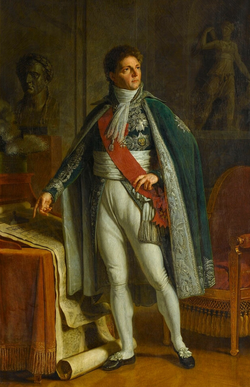
- Key Negotiators: Louis-Alexandre Berthier (France) and Mariano Luis de Urquijo (Spain).
- Ultimate Outcome: France later sold the territory to the United States in 1803.
The Road to San Ildefonso: A Fragile Alliance
To understand why Spain would surrender a massive North American colony, one must look at the financial and political instability of the Spanish Crown. Throughout the late 18th century, Spain's relationship with France fluctuated. After the execution of Louis XVI in 1793, Spain fought against the French Republic but was eventually defeated in the War of the Pyrenees, leading to the Peace of Basel in 1795.
By the late 1790s, Spain was in crisis. A British naval blockade had crippled the Spanish economy, which relied heavily on silver imports from New Spain. Between 1793 and 1798, the national debt increased eightfold. Furthermore, maintaining control over the Mississippi Basin was becoming an expensive burden, as Spain struggled to prevent American settlers from encroaching on the territory.
Napoleon's Global Ambitions
While Spain was weakening, France was ascending. Following the Coup of 18 Brumaire in 1799, Napoleon Bonaparte and his deputy, Charles Talleyrand, sought to expand French influence globally. Their strategy included the Egyptian campaign to secure trade and attempts to push French borders further into Brazil.
Central to this vision was the restoration of "New France." Napoleon viewed Louisiana as a vital source of raw materials to support French sugar plantations in the Caribbean, specifically in colonies like Saint-Domingue (modern-day Haiti).
Provisions of the Treaty
The negotiations were handled by General Louis-Alexandre Berthier and the former Spanish Chief Minister Mariano Luis de Urquijo. While France initially demanded the Floridas and ten warships, a compromise was reached.
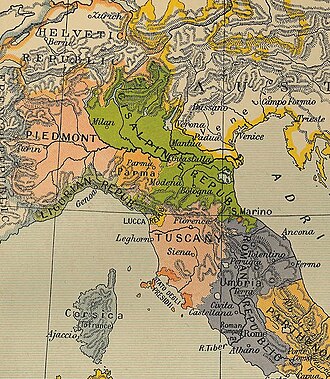
Spain agreed to cede Louisiana and six warships—including four modern ships of the San Ildefonso class: San Antonio, Intrepido, Conquistador, and Infante Don Pelayo. In return, King Charles IV of Spain sought compensation for his son-in-law, the Duke of Parma, whose inheritance was being annexed by France.

The territorial exchange in Italy was left intentionally vague, described as potentially consisting of Tuscany or the three Roman legations. This ambiguity meant that Spain would only finalize the transfer of Louisiana once the specific Italian territories were confirmed.
The Aftermath and the Louisiana Purchase
The terms were later formalized in the 1801 Treaty of Aranjuez, which created the short-lived Kingdom of Etruria for the Duke of Parma. However, the French dream of a North American empire was short-lived. Napoleon's attempt to secure Saint-Domingue ended in disaster; yellow fever and fierce resistance killed approximately 29,000 French troops, including General Charles Leclerc.
Realizing that Louisiana was strategically useless without a Caribbean base, and facing imminent war with Britain, Napoleon decided to sell the territory. In April 1803, the United States purchased Louisiana for $15 million (80 million francs), effectively removing France from the North American mainland.
The Italian territories promised to Spain also proved fleeting. The Kingdom of Etruria was dissolved and absorbed into France by 1807, and most of the region was reorganized during the Congress of Vienna in 1815.
| Feature | Details |
|---|---|
| Primary Parties | French Republic & Kingdom of Spain |
| Spanish Concessions | Louisiana territory and 6 ships of the line |
| French Concessions | Territories in Italy (Tuscany/Roman legations) |
| Key Motivation (Spain) | Financial crisis and pressure from U.S. expansion |
| Key Motivation (France) | Restoration of New France and Caribbean support |
| Final Result | Sale of Louisiana to the U.S. in 1803 |
Frequently Asked Questions
Why did Spain agree to give Louisiana back to France?
Spain was under severe financial pressure, with its national debt increasing eightfold between 1793 and 1798. Additionally, the British naval blockade crippled its economy, and the cost of defending the Mississippi Basin against American settlers became unsustainable.
What did France give Spain in exchange for the territory?
France agreed to provide territories in Italy, specifically in the region of Tuscany or the Roman legations, to compensate the Duke of Parma, who was the son-in-law of King Charles IV of Spain.
Did France actually maintain control of Louisiana for long?
No. France only held the territory briefly. After a catastrophic military failure in Saint-Domingue due to yellow fever and resistance, Napoleon concluded that Louisiana was not strategically viable and sold it to the United States in 1803.
What happened to the Italian territories promised to Spain?
The territorial shuffling was largely futile. The Kingdom of Etruria, created as part of the agreement, was dissolved and incorporated into France in 1807, and the region was later reorganized by the Congress of Vienna in 1815.