Tramway History: From Medieval Beams to Modern Rails
Long before the high-speed locomotives of the modern era, the world relied on simpler systems to move heavy goods across rugged terrain. The tramway, in its earliest form, was a pragmatic solution to the problem of friction, evolving from simple wooden planks to the sophisticated steel networks that define global transport today.
The Origins of the Tramway
The term "tramway" dates back to approximately 1517. It is believed to have originated from an English dialect word for a wheelbarrow shaft, which itself derived from the Low German word traam, meaning a beam. In medieval Great Britain and Europe, these early systems consisted of wagons running on primitive tracks.
Before the 12th century, these paths were often called gangways—essentially planks laid directly on the ground to create a "going road." In specific regions like Somerset and south Wales, these systems were referred to as dramways, with the individual minecarts known as drams. Another common term of the era was the wagonway (or wainway), which encompassed the entire operation, including the horses, equipment, and the tracks themselves.
Technological Evolution: Plateways vs. Edge-Rails
Early tramway wheels were typically guided by grooves. To prevent the timber tracks from wearing down, engineers began reinforcing them with iron strips. This eventually evolved into the plateway, which utilized L-shaped steel plates to guide the wagons.
A significant shift occurred in 1789 with the introduction of the edge-rail. Unlike plateways, where the track guided the wheel, edge-rails used flanged wheels (wheels with a projecting rim) to keep the wagon on the track. This design offered several advantages and disadvantages:
- Advantages: Because the rails were raised above the ground, they were less likely to be obstructed by debris.
- Disadvantages: They obstructed other road traffic, and the flanged wagons could not be used outside the rail limits. In contrast, plateway trucks with unflanged wheels could move freely across factories and wharves.
Despite these drawbacks, the edge-rail became the direct ancestor of the modern railway track.
Industrial Expansion and Legal Frameworks
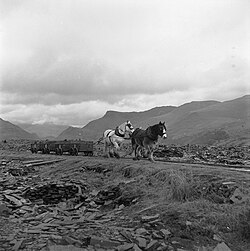
Initially, these lines were built for a specific purpose: transporting minerals from mines and quarries to canal wharves. By 1830, more extensive trunk railways emerged. These were faster, heavier, and more complex, leading the British Parliament to impose increasingly stringent safety requirements.
Because these strict regulations were often impractical for small-scale mineral lines, the United Kingdom introduced the Light Railways Act 1896. This legislation allowed smaller lines to be categorized as "light railways," provided they met specific provisos.
Urban Transit and Modern Adaptations
As the industrial era progressed, the term "tramway" shifted in the United Kingdom to describe passenger vehicles—trams—that shared public highways with other road users. These evolved from horse-drawn carriages to electric vehicles powered by overhead lines. A further evolution was the trolleybus, which maintained the overhead electric power but dispensed with the physical tracks entirely.
The utility of tramways continued into the 21st century for industrial logistics. Between 2001 and 2020, Dresden, Germany, operated the CarGoTram, a specialized system of two trams designed to transport automotive parts between a Volkswagen factory and a logistics center.
Summary of Tramway Evolution
| System Type | Guidance Method | Primary Advantage | Primary Disadvantage |
|---|---|---|---|
| Plateway | L-shaped steel plates | Wagons could move freely on wharves | Higher wear on track surfaces |
| Edge-Rail | Flanged wheels | Less prone to debris blockage | Wagons restricted to the rails |
| Trolleybus | Overhead wires (no rails) | Greater flexibility on roads | Dependent on electric infrastructure |
Key Facts
- The word "tram" likely comes from the Low German traam, meaning beam.
- Edge-rails, introduced in 1789, are the precursors to modern railway tracks.
- The Light Railways Act 1896 provided regulatory relief for small mineral lines in the UK.
- Trolleybuses evolved from tramways by removing the tracks while keeping overhead power.
- The CarGoTram in Dresden (2001–2020) proved the viability of trams for automotive logistics.
Frequently Asked Questions
What is the difference between a plateway and an edge-rail?
A plateway uses L-shaped plates to guide unflanged wheels, allowing the vehicle to move off the track onto flat surfaces. An edge-rail uses flanged wheels that grip a raised rail, which prevents debris blockage but restricts the vehicle to the track.
What were "gangways" in the context of early transport?
Gangways were primitive tracks dating from before the 12th century, consisting of simple wooden planks laid on the ground to facilitate the movement of goods.
How did the Light Railways Act 1896 help small mineral lines?
It allowed small-scale industrial lines to be categorized as "light railways," exempting them from the overly restrictive and expensive safety requirements imposed on major trunk railways.
What is a trolleybus?
A trolleybus is a development of the electric tramway that draws power from overhead wires but does not require tracks, allowing it to navigate public roads more flexibly.
What was the CarGoTram?
The CarGoTram was a specialized tram system operated in Dresden, Germany, between 2001 and 2020 to transport automotive parts between a logistics center and a Volkswagen factory.