Toronto Amalgamation History: From Early Settlements to the Megacity
The modern landscape of Toronto, Ontario, is the result of centuries of complex municipal evolution. Through a series of annexations, mergers, and large-scale amalgamations, the city has transformed from a collection of small 18th-century settlements into a massive, unified "megacity." Understanding how Toronto reached its current scale requires looking back at the foundational townships and the political shifts that reshaped the region.
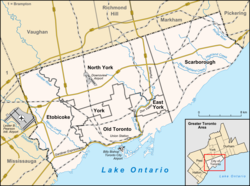
The Founding Era: 1791–1882
The roots of the region trace back to 1791, when the townships of Etobicoke, York, and Scarborough were surveyed for settlement. On August 27, 1793, the unincorporated town of York was founded within York township. Named in honor of Prince Frederick, Duke of York and Albany, the area had previously been known as Toronto.
By March 6, 1834, York was officially incorporated as the City of Toronto. At its inception, it was the largest town in Upper Canada, boasting a population of 9,250. The original city boundaries were defined by Bathurst Street to the west, Parliament Street to the east, Lake Ontario to the south, and a line near Dundas Street to the north. Beyond these limits lay an area known as the "Liberties."
Early Municipal Growth
As the 19th century progressed, several distinct communities began to form around the city core:
- Yorkville: Founded as an unincorporated village in 1830 and incorporated in 1853.
- Brockton: Incorporated as a village in 1876 and later became a town.
- Parkdale: Incorporated as a village in 1878, covering 487 acres.
- Weston: Incorporated as a village in 1881.
![Map and timeline of Toronto annexation history[9]](/images/df/b4/dfb4a1401d0355ccc36b02318b4d2804faee292c5a7f4630eee7b9e82f376da4.jpg)
Expansion and Annexation: 1883–1914
For nearly fifty years, Toronto's boundaries remained largely static. However, starting in 1883, the city entered a period of aggressive annexation—the process of a municipality adding neighboring land to its territory. During this era, Toronto's geographical size nearly quadrupled, growing to approximately 80 km².
This flurry of expansion saw the absorption of various villages and towns, including Yorkville (1883), Brockton (1884), and Parkdale (1889). By 1908, West Toronto was upgraded from a town to a city, and by 1914, the period of rapid expansion had largely concluded, with no further major growth until 1967.
The Rise of Metropolitan Toronto
Following the post-war suburban boom, the need for coordinated regional management became evident. In 1953, the provincial government passed the Metropolitan Toronto Act, creating a new level of government known as Metropolitan Toronto (or Metro Toronto) in 1954.
This regional federation was designed to manage services that crossed municipal boundaries, such as highways, water, and public transit. Metro Toronto was composed of the City of Toronto and several surrounding municipalities, including the towns of New Toronto, Mimico, Weston, and Leaside, as well as the townships of Etobicoke, York, North York, East York, and Scarborough.
The 1967 Reorganization
In 1967, a significant round of mergers occurred to streamline the region. The seven smallest municipalities were merged into larger neighbors, resulting in a six-municipality configuration:
- City of Toronto: Annexed Forest Hill and Swansea.
- Borough of East York: Formed by merging Leaside with the Township of East York.
- Borough of York: Formed by combining Weston with the Township of York.
- Borough of Etobicoke: Formed by merging Long Branch, Mimico, and New Toronto with the Township of Etobicoke.
- Borough of North York: Promoted from a township.
- Borough of Scarborough: Promoted from a township.
The 1998 Amalgamation and the "Megacity"
The most transformative event in Toronto's modern history occurred on January 1, 1998. The Government of Ontario dissolved the federation of Metropolitan Toronto and its six lower-tier municipalities, merging them into a single-tier entity: the current City of Toronto.
This merger, often referred to as the creation of the "megacity," was proposed by the provincial government under Mike Harris as a cost-saving and administrative improvement measure. Despite a 1997 referendum where over three-quarters of voters rejected the plan, the provincial government exercised its constitutional authority to proceed with the amalgamation.
While the merger created one of the largest cities in North America, it remains a point of historical discussion. Some reports, such as those from 2007, suggested that the anticipated cost savings did not fully materialize, as city staff numbers actually increased following the merger. Today, the legacy of the old municipalities lives on through local identities, postal addresses, and even duplicate street names that are distinguished by postal codes.
Key Facts
- Original Name: The area was known as Toronto before being named York in 1793, then reverted to Toronto upon incorporation in 1834.
- The Megacity: The 1998 amalgamation created a single-tier city from the former Metro Toronto federation.
- Population Milestone: In 2013, Toronto surpassed Chicago to become one of the most populous cities in North America.
- Provincial Authority: Under the Constitution Act, 1867, municipal governments are institutions of the provincial government.
Summary of Municipal Evolution
| Year | Event | Description |
|---|---|---|
| 1834 | Incorporation | York is incorporated as the City of Toronto. |
| 1883–1914 | Annexation Period | Rapid expansion through the absorption of surrounding villages. |
| 1954 | Metro Toronto | Creation of a regional government to manage shared services. |
| 1967 | Municipal Mergers | Seven small municipalities merged into six larger boroughs/cities. |
| 1998 | Amalgamation | The "megacity" is formed, dissolving the Metro Toronto federation. |
Frequently Asked Questions
Why was Toronto amalgamated in 1998?
The provincial government proposed the amalgamation as a way to improve administration and achieve cost savings by creating a single, unified city government.
What was Metropolitan Toronto?
Metropolitan Toronto was a regional level of government created in 1954 to manage services that crossed municipal boundaries, such as transit and water, for the City of Toronto and its surrounding municipalities.
Did voters support the 1998 amalgamation?
No. In a 1997 municipal referendum, over three-quarters of voters rejected the amalgamation proposal.
How did the province justify ignoring the referendum?
Under the Constitution Act, 1867, municipal governments are considered institutions of the provincial government, meaning the province has the legal authority to create or dissolve them regardless of local referendums.
Can I still use old municipal names like "Scarborough" or "Etobicoke"?
Yes. While they are no longer independent municipalities, Canada Post allows the use of former municipal names for mail delivery, relying on postal codes for accuracy.