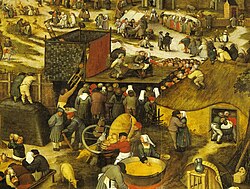
Theatre History: From Classical Greece to Modern Performance
Theatre is one of humanity's oldest forms of expression, evolving from sacred rituals and civic competitions into a sophisticated global art form. From the open-air amphitheatres of the Mediterranean to the neon lights of Broadway, the stage has served as a mirror to society, exploring the depths of human emotion through tragedy, comedy, and improvisation.
Classical, Hellenistic Greece and Magna Graecia
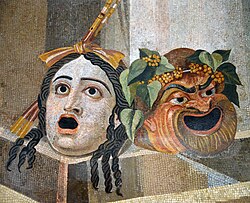
The foundations of Western drama were laid in 5th-century BCE Athens. Theatre was deeply institutionalized through the agon (competitions) held during festivities honoring Dionysus, the god of wine and fertility. The most prestigious of these was the City Dionysia, where playwrights competed by presenting a tetralogy: three tragedies and one satyr play.
While over a thousand tragedies were performed during the 5th century BCE, only 32 survive today. We possess complete texts from the masters Aeschylus, Sophocles, and Euripides. Most of these works dramatized Greek mythology, with a notable exception being Aeschylus's The Persians (472 BCE), which focused on the military defeat at the Battle of Salamis. Later, around 335 BCE, the philosopher Aristotle provided the first formal analysis of these works in his Poetics.
![The best-preserved example of a classical Greek theatre, the Ancient Theatre of Epidaurus, has a circular orchêstra and probably gives the best idea of the original shape of the Athenian theatre, though it dates from the 4th century BC.[6]](/images/9f/8a/9f8a00613a51ae928f825ddb7111696221889c0c07986d4f2883c0691803cf13.jpg)
The Influence of Magna Graecia
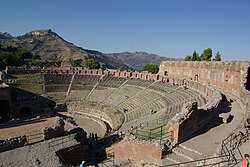
The development of drama was not limited to Athens; early compositions also emerged from Sicily, contributing to the rich tapestry of the Hellenistic world.
Roman Theatre
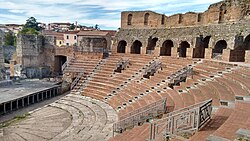
As the Roman Republic expanded into Greek territories between 270 and 240 BC, Rome encountered and adopted Greek drama. Regular Roman drama began around 240 BC, eventually spreading across Europe and the Mediterranean to as far as England. Roman theatre was characterized by its variety and sophistication, surpassing previous cultures in its breadth.
However, as the Roman Empire progressed, interest in full-length dramas declined. Audiences began to prefer a wider array of theatrical entertainments over the traditional long-form plays of the Greeks.
Global Traditions: India and East Asia
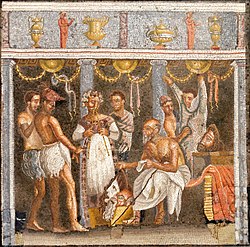
Theatre developed independently across Asia, often blending music, dance, and spirituality. In India, while the ancient Vedas (1500–1000 BCE) do not explicitly mention theatre, the Mahābhāṣya by Patañjali (140 BCE) provides the earliest reference to the seeds of Sanskrit drama.
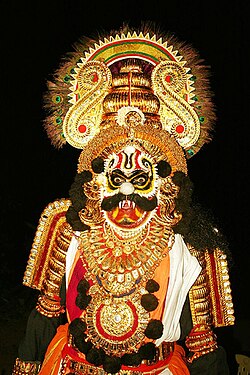
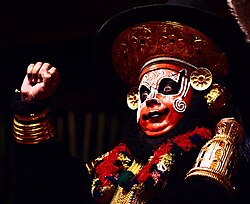
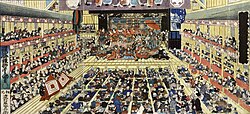
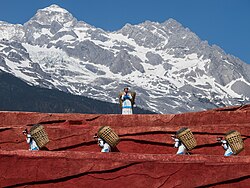
Across East and Southeast Asia, theatre evolved into diverse forms, including the highly stylized Peking opera in China and the Wayang puppet theatre in Indonesia, the latter of which is recognized as an Intangible Cultural Heritage of Humanity.
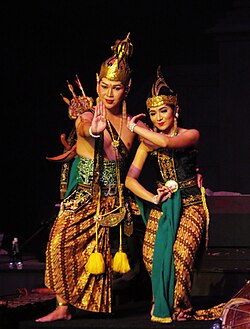
Evolution of Modern Western Theatre
The transition to early modern theatre saw the rise of professional troupes and permanent venues. In Italy, the Commedia dell'arte introduced a highly improvisational style based on lazzi (rough outlines of scenic action) and immediate interaction with the audience.
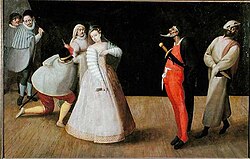
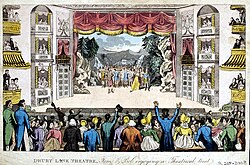
In England, the 17th century marked a golden age of playwriting. The Theatre Royal, Drury Lane, opened in May 1663 and remains the oldest theatre in London. The era was defined by the works of William Shakespeare and a shift toward more structured commercial productions.
![The Theatre Royal, Drury Lane in the West End was opened in May 1663, it is the oldest theatre in London.[74]](/images/49/f7/49f735e01f4fb7a979f594906d0457647fd265cb548cba25dd3f2ff2b5e62226.jpg)
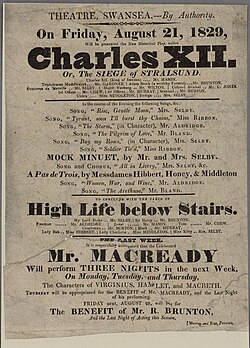
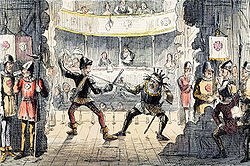
By the 19th and 20th centuries, theatre branched into numerous subcategories, from the commercial powerhouses of Broadway and the West End to more experimental forms like Fringe, Immersive, and Site-specific theatre.
![The "Little House" of the Vanemuine Theatre from 1918 in Tartu, Estonia[81]](/images/78/de/78de3133d583521dc4526e120cf4b440be6061ff1fc9c328fb380e6d08a4d073.jpg)
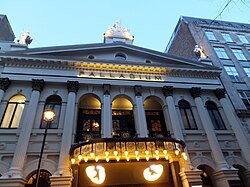
Technical Aspects and Organization
Modern theatre relies on complex technical infrastructure, including rotating auditoriums, mechanical curtain pullers, and sophisticated backstage machinery to create immersive environments.
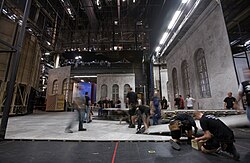
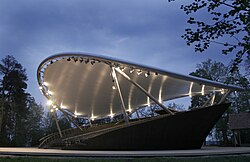
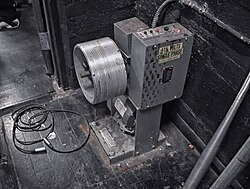
To protect the rights and working conditions of artists, various unions have been established, such as the Actors' Equity Association (AEA) in the U.S., the Canadian Actors' Equity Association, and Equity in the UK.
![La Scala in Milan, Italy, is the world's most famous opera house.[121]](/images/a1/d9/a1d98b0b0a9207ac6a726c9a88d77fcd1d99556c36a2d2501f7f9894ca8015fd.jpg)
Key Facts
- City Dionysia: The most prestigious Athenian festival where playwrights presented three tragedies and one satyr play.
- Aristotle's Poetics: The oldest surviving work of dramatic theory, written circa 335 BCE.
- Roman Expansion: Roman theatre began regularly in 240 BC and spread Greek influence across Europe.
- Sanskrit Drama: Early references appear in Patañjali's Mahābhāṣya around 140 BCE.
- Drury Lane: Opened in 1663, it is the oldest theatre in London.
- Commedia dell'arte: A form of theatre based on improvisation and lazzi.
| Tradition | Key Period/Origin | Defining Characteristic |
|---|---|---|
| Classical Greek | 5th Century BCE | Civic competitions (agon) and mythological tragedies. |
| Roman | 240 BCE onwards | Varied entertainments; spread theatre across Europe. |
| Sanskrit (Indian) | Circa 140 BCE | Rooted in early grammatical treatises and rituals. |
| Commedia dell'arte | Early Modern | Improvisation based on scenic outlines (lazzi). |
| Modern Western | 17th Century - Present | Commercial hubs (Broadway/West End) and experimental forms. |
Frequently Asked Questions
What was a tetralogy in ancient Greek theatre?
In the City Dionysia competition, playwrights were required to present a tetralogy, which typically consisted of three tragedies and one satyr play, though the plays were not necessarily connected by theme or story.
How did Roman theatre differ from Greek theatre?
While Roman theatre began by adopting Greek drama, it became more varied and extensive. Over time, the Romans shifted their interest from full-length dramas toward a broader range of theatrical entertainments.
What is the role of 'lazzi' in Commedia dell'arte?
Lazzi are rough outlines of scenic action or comedic business that performers use as a basis for improvisation, allowing them to respond dynamically to the audience and other characters.
Which is the oldest theatre in London?
The Theatre Royal, Drury Lane, which opened in May 1663, is the oldest theatre in London.
When did theatre begin in India?
While the earliest Vedas do not mention it, the Mahābhāṣya by Patañjali, a treatise on grammar from 140 BCE, provides the earliest feasible date for the beginnings of theatre in India.
![Dario Fo, one of the most widely performed playwrights in modern theatre, received international acclaim for his highly improvisational style.[97][98] He was awarded the Nobel Prize for Literature in 1997.[99]](/images/94/18/9418c917e67f080aa9bb75ff4e596c6c94b88ca56e7bcfca5c2de0229f89030b.jpg)