The Times-Picayune | The New Orleans Advocate
For nearly two centuries, the landscape of news in Louisiana has been shaped by a series of mergers, acquisitions, and resilient reporting. Today, The Times-Picayune | The New Orleans Advocate stands as the primary journalistic voice of New Orleans, blending a deep historical legacy with modern digital operations via NOLA.com.
The current iteration of the publication is the result of a 2019 acquisition where the New Orleans edition of The Advocate (based in Baton Rouge) purchased The Times-Picayune. This merger brought together two of the region's most prominent news entities under the ownership of Georges Media Group.
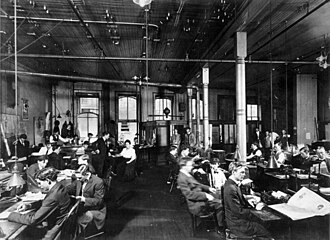
Key Facts
- Founded: January 25, 1837 (as The Picayune).
- Headquarters: 840 St. Charles Ave., New Orleans, Louisiana.
- Ownership: Georges Media Group.
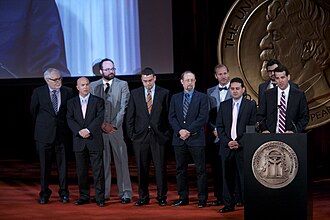
- Major Awards: Two Pulitzer Prizes for Public Service (1997 and 2006).
- Digital Presence: Operates through the website nola.com.
- Format: Broadsheet.
A History of Evolution and Innovation
The publication began its journey in 1837 as The Picayune, established by Francis Lumsden and George Wilkins Kendall. Its name derived from the picayune, a Spanish coin worth 6¼¢, which was the original price of the paper.
The paper saw significant growth and modernization under Eliza Jane Nicholson, who took over in 1876. Nicholson introduced pioneering features, including children's pages, society reporting (the "Society Bee" columns), and the first women's advice column, penned by Dorothy Dix. By 1890, circulation had more than tripled. In 1914, the paper merged with its rival, the New Orleans Times-Democrat, becoming The Times-Picayune.
Throughout the 20th century, the paper continued to consolidate. In 1962, Samuel Irving Newhouse, Sr. acquired both The Times-Picayune and the States-Item. These two were eventually merged in 1980, operating as The Times-Picayune/States-Item until 1986.
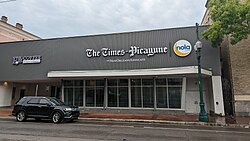
Reporting Through Crisis: Hurricane Katrina
One of the most defining eras for the newspaper was its coverage of Hurricane Katrina in 2005. The disaster forced the paper into a period of online-only publication for three days. Printing eventually resumed in Houma, Louisiana, and later in Mobile, Alabama, before returning to New Orleans on October 10, 2005.
This heroic effort earned the paper the Pulitzer Prize for Public Service in 2006. Additionally, staff reporters Gordon Russell, Jed Horne, and Bob Marshall received Pulitzers for breaking news reporting. This marked a historic milestone as the first time the Pulitzer Board recognized online journalism.
The trauma of the storm also took a personal toll on the staff. Columnist Chris Rose sought treatment for clinical depression, and photographer John McCusker suffered a mental health crisis linked to the failure of insurance settlements for his damaged home.
The Shift to Limited Publication and Competition
In October 2012, the paper transitioned from a daily to a thrice-weekly broadsheet schedule (Wednesdays, Fridays, and Sundays). This move left New Orleans as the largest U.S. city without a daily newspaper, creating a void that The Advocate of Baton Rouge filled by launching a daily New Orleans edition on August 18, 2013.

The paper attempted various strategies to regain its daily presence, including the launch of Times-Picayune Street—a tabloid version sold at retail locations—in June 2013. However, the organization faced significant financial and operational cuts. In 2016, the paper ceased printing in New Orleans entirely, moving its production to Mobile, Alabama, and selling its historic Howard Avenue building for $3.5 million.
The 2019 Merger and Current State
The "newspaper war" between the two entities ended on May 2, 2019, when Advance Publications sold The Times-Picayune to Georges Media. While the merger resulted in significant layoffs—including 161 jobs—it unified the news operations of the two papers. The combined entity continues to serve the region, maintaining the NOLA.com brand for its digital reach.
| Attribute | Details |
|---|---|
| Founded | January 25, 1837 |
| Current Owner | Georges Media Group |
| Publisher | Judi Terzotis |
| Editor | Rene Sanchez |
| Circulation (2019) | 77,565 Daily / 81,398 Sunday |
| ISSN | 1055-3053 |
Frequently Asked Questions
Why was the paper originally called The Picayune?
The paper was named after the picayune, a Spanish coin equivalent to 6¼¢, which was the original purchase price of a single copy.
What major awards has the newspaper won?
The publication won the Pulitzer Prize for Public Service in 1997 for its reporting on global fisheries and again in 2006 for its coverage of Hurricane Katrina.
When did the paper stop being a daily broadsheet?
The paper moved to a thrice-weekly broadsheet schedule in October 2012, though it later experimented with daily tabloid editions for street sales.
Who owns the newspaper now?
The newspaper is currently owned by Georges Media Group, following the 2019 acquisition of The Times-Picayune by the owners of The Advocate.
What is the significance of the 2006 Pulitzer Prize?
Beyond recognizing the coverage of Hurricane Katrina, this award was the first time a Pulitzer Prize was granted for online journalism.