The Times-Picayune | The New Orleans Advocate
For nearly two centuries, the landscape of news in Louisiana has been shaped by a legacy of resilience and evolution. The Times-Picayune | The New Orleans Advocate stands as the primary journalistic voice of New Orleans, representing a complex history of mergers, acquisitions, and a steadfast commitment to reporting through some of the city's darkest hours.
The current iteration of the publication is the result of a 2019 acquisition where the New Orleans edition of The Advocate (based in Baton Rouge) purchased The Times-Picayune. Today, the operation is owned by Georges Media Group and maintains its digital presence through the well-known brand nola.com.
Key Facts
- Founded: January 25, 1837 (as The Picayune).
- Headquarters: 840 St. Charles Ave., New Orleans, Louisiana.
- Major Awards: Two Pulitzer Prizes for Public Service (1997 and 2006).
- Current Owner: Georges Media Group.
- Digital Hub: nola.com.
The Evolution of a New Orleans Institution
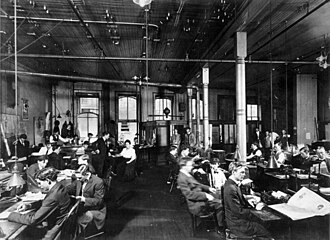
The paper began its journey on January 25, 1837, established by Francis Lumsden and George Wilkins Kendall as The Picayune. Its name was derived from the price of the paper: one picayune, a Spanish coin worth 6¼¢. In the late 19th century, under the leadership of Eliza Jane Nicholson, the paper pioneered several journalistic innovations, including children's pages, society reporting via the "Society Bee" columns, and the first women's advice column written by Dorothy Dix.
The publication evolved through several key mergers. In 1914, The Picayune merged with its rival, the New Orleans Times-Democrat, to become The Times-Picayune. Later, in 1962, Samuel Irving Newhouse, Sr. acquired both The Times-Picayune and the afternoon States-Item, which were eventually merged into a single entity by 1980.
The Shift to Digital and Limited Print
The 21st century brought significant structural changes. In October 2012, the paper shifted from a daily broadsheet to a thrice-weekly schedule (Wednesdays, Fridays, and Sundays), making New Orleans the largest American city without a daily newspaper at the time. This gap was filled on August 18, 2013, when The Advocate of Baton Rouge launched its own New Orleans edition.
Throughout the 2010s, the paper experimented with various formats, including a tabloid version called Times-Picayune Street and "bonus" editions during football seasons, before eventually consolidating operations.

Reporting Through Crisis: Hurricane Katrina
One of the most defining chapters in the paper's history was its coverage of Hurricane Katrina in 2005. After the storm, the paper was forced into online-only publication for three days. Printing eventually resumed in Houma, Louisiana, and later in Mobile, Alabama, before finally returning to New Orleans on October 10, 2005.
This heroic effort earned the paper the Pulitzer Prize for Public Service in 2006. Additionally, staff reporters Gordon Russell, Jed Horne, and Bob Marshall received Pulitzers for breaking news reporting. This marked a historic milestone as the first time the Pulitzer Board recognized online journalism.

The Human Cost of Journalism
The trauma of the disaster extended to the newsroom itself. Columnist Chris Rose publicly shared his struggle with clinical depression following the storm, and photographer John McCusker suffered a mental health crisis linked to the failure of receiving insurance settlements for his damaged home. These events highlighted the emotional toll on those documenting the city's recovery.
Corporate Transitions and Modern Era
The paper's physical footprint changed significantly over the years. The landmark Howard Avenue building, which opened in 1968 and featured communication-themed art by Enrique Alferez, was sold in 2016 for $3.5 million after printing operations moved to Mobile, Alabama. The newsroom eventually relocated to the Warehouse District at 201 St. Joseph Street.
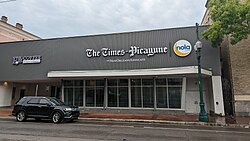
The most recent major transition occurred on May 2, 2019, when Advance Publications sold The Times-Picayune to Georges Media. While the merger resulted in significant staff layoffs, it unified the two competing New Orleans news operations under one roof.
| Attribute | Details |
|---|---|
| Format | Broadsheet |
| Publisher | Judi Terzotis |
| Editor | Rene Sanchez |
| Circulation (2019) | 77,565 Daily / 81,398 Sunday |
| ISSN | 1055-3053 |
Frequently Asked Questions
Why was the paper originally called The Picayune?
The paper was named after the picayune, a Spanish coin worth 6¼¢, which was the original purchase price of a single copy.
What Pulitzer Prizes has the publication won?
The paper won the Pulitzer Prize for Public Service in 1997 for its reporting on global fisheries and again in 2006 for its comprehensive coverage of Hurricane Katrina.
How did the 2019 acquisition change the paper?
Georges Media, owner of The Advocate, purchased The Times-Picayune, merging the two operations into a single entity while maintaining the nola.com digital brand.
Where is the newspaper currently headquartered?
The headquarters are located at 840 St. Charles Ave. in New Orleans, Louisiana.
What is the significance of the 2006 Pulitzer for breaking news?
The awards given to staff reporters for their Katrina coverage were the first Pulitzers ever awarded for online journalism.