The Times-Picayune: A History of New Orleans' Iconic Newspaper
For nearly two centuries, The Times-Picayune—affectionately known in local vernacular as the "T-P"—has served as the primary chronicler of New Orleans. From its humble beginnings as a low-cost sheet to its role as a lifeline during the city's greatest disasters, the paper reflects the resilience and evolution of the Crescent City itself.
Foundations and Early Innovation
Established in 1837 by Francis Lumsden and George Wilkins Kendall, the paper was originally named The Picayune. Its name derived from its initial price: one picayune, a Spanish coin worth 6¼¢ (or one-sixteenth of a dollar). The publication saw a transformative era under Eliza Jane Nicholson, who took over the struggling paper after her husband's death in 1876. Nicholson introduced pioneering features, including children's pages, society reporting via the "Society Bee" columns, and the first women's advice column, penned by Dorothy Dix.
These innovations fueled rapid growth, with circulation more than tripling between 1880 and 1890. In 1914, the paper merged with its rival, the New Orleans Times-Democrat, officially becoming The Times-Picayune.
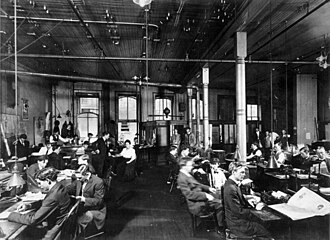
Mid-Century Expansion and Ownership Changes
The paper expanded its reach into broadcasting from 1947 to 1958 via WTPS. This operation included an FM station (94.7 MHz) and an AM station (initially 1450 kHz, later 940 kHz), airing music, news, and local sports. These stations were eventually sold to Rounsaville in 1958.
In 1962, Samuel Irving Newhouse, Sr. acquired both The Times-Picayune and the afternoon daily, the States-Item. The two were merged on June 2, 1980, operating as The Times-Picayune/States-Item until September 30, 1986. To this day, the Picayune name persists in community editions, such as the Gretna Picayune.
The Defining Moment: Hurricane Katrina
Hurricane Katrina (2005) remains the most significant event in the paper's modern history. As the storm approached on August 28, dozens of staffers stayed behind, sheltering in a "hurricane bunker" within the photography department. They provided continuous updates via the internet until the building was evacuated on August 30.
When electrical outages disabled the printing presses, the staff pivoted to a digital-first strategy, producing the newspaper in electronic PDF format. Simultaneously, NOLA.com became a critical hub for citizen journalism—the collection and reporting of news by non-professionals. Tens of thousands of displaced residents used the site's forums to coordinate rescues and locate missing loved ones.
Despite the chaos, a small team of armed reporters and photographers remained in the city, operating from a private residence to document the looting and desperation. While print editions were paused from August 30 to September 1, the paper resumed printing in Houma, Louisiana, and later Mobile, Alabama, before returning to New Orleans on October 10, 2005.
The paper's courage and innovation were recognized in 2006 when it won the Pulitzer Prize for Public Service. Additionally, reporters Gordon Russell, Jed Horne, and Bob Marshall received a Pulitzer for breaking news, marking the first time the award was granted for online journalism.
The Struggle for Daily Publication
The 21st century brought significant economic challenges. In May 2012, owner Advance Publications announced a shift to a three-day-a-week print schedule (Wednesday, Friday, and Sunday), leading to massive layoffs of approximately 200 employees. This move made New Orleans the largest U.S. city without a daily newspaper, a gap eventually filled by the Baton Rouge-based The Advocate in August 2013.
The community responded with protests and the formation of The Times-Picayune Citizens Group. In an attempt to regain daily presence, the paper launched Times-Picayune Street in June 2013—a tabloid version sold at retail locations on Mondays, Tuesdays, and Thursdays. By September 2014, the paper returned to a full broadsheet format for all editions, though home delivery remained limited to three days a week.

Operational Shifts and Regional Mergers
Cost-cutting measures continued with the closure of the Howard Avenue printing plant in New Orleans. The final paper printed locally was published on January 17, 2016, after which production moved to Mobile, Alabama. The historic Howard Avenue building, known for its communication-themed sculptures by Enrique Alferez, was sold in 2016 for $3.5 million.
In 2015, NOLA Media Group joined with Alabama Media Group to form the Southeast Regional Media Group (later Advance Media Southeast). This consolidation led to further job losses, particularly affecting music and high school sports reporting.
The 2019 Acquisition
A major shift occurred on May 2, 2019, when Advance Publications sold The Times-Picayune to Georges Media, owned by businessman John Georges. Georges Media already owned The Advocate. The acquisition resulted in the layoff of 161 staff members, including 65 journalists, though a small number were rehired.
On July 1, 2019, the publications merged into a single operation carrying the nameplates of both The Times-Picayune and The New Orleans Advocate, while maintaining NOLA.com for digital operations.
Key Facts
- Founded: 1837 as The Picayune.
- Original Price: One picayune (approx. 6¼¢).
- Major Merger: Combined with New Orleans Times-Democrat in 1914.
- Pulitzer Win: Awarded the 2006 Pulitzer Prize for Public Service for Hurricane Katrina coverage.
- Digital Milestone: First Pulitzer awarded for online journalism.
- Current Owner: Georges Media (acquired in 2019).
| Era/Event | Key Change | Impact |
|---|---|---|
| 1837 | Founding | Established as a low-cost daily. |
| 1914 | Merger | Became The Times-Picayune. |
| 2005 | Hurricane Katrina | Shift to digital/PDF; Pulitzer Prize win. |
| 2012 | Print Reduction | Moved to 3-day home delivery; major layoffs. |
| 2019 | Acquisition | Purchased by Georges Media; merged with The Advocate. |
Frequently Asked Questions
Why was the paper originally called The Picayune?
The paper was named after the picayune, a Spanish coin worth 6¼¢, which was the original purchase price of a single issue.
How did the paper handle the loss of printing presses during Hurricane Katrina?
Staffers produced the newspaper in an electronic PDF format and utilized NOLA.com to provide continuous updates and a platform for citizen journalism.
What is the significance of the 2006 Pulitzer Prize?
The paper won the Pulitzer Prize for Public Service for its Katrina coverage, and its staff achieved the first-ever Pulitzer for online journalism.
Is The Times-Picayune still a daily newspaper?
While it has fluctuated between three-day home delivery and daily retail sales, it currently operates as a merged entity with The New Orleans Advocate under Georges Media.
Who currently owns the newspaper?
The paper is owned by Georges Media, a company chaired by New Orleans business owner John Georges.