The Smothers Brothers Comedy Hour
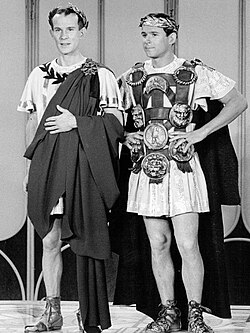
What began as a slightly "hip" take on the traditional comedy-variety show quickly transformed into a cultural phenomenon. The Smothers Brothers Comedy Hour pushed the boundaries of television satire, challenging the social and political norms of the late 1960s. While the brothers were the faces of the program, the show's edge was sharpened by a talented roster of writers and performers, including Steve Martin, Rob Reiner, Albert Brooks, and Don Novello. The series also served as a launchpad for artists like pop singer Jennifer Warnes and featured the television premiere of Mason Williams' hit "Classical Gas," with Williams also serving as the head writer.
Key Facts
- Genre: Comedy-variety show known for boundary-pushing satire.
- Key Themes: Focused heavily on racism, the Vietnam War, and the U.S. Presidency.
- Musical Impact: Provided a platform for politically charged or unconventional artists often avoided by other networks.
- Network Conflict: Ended in a breach of contract suit following cancellation by CBS.
- Accolades: Won the Emmy Award for best writing in the year of its cancellation.
A Platform for Counterculture Music
Unlike other variety shows of the era, the Smothers Brothers welcomed musical guests whose political affiliations or styles were considered risky for advertisers. The show featured an eclectic array of talent, including George Harrison, Ringo Starr, The Doors, Cream, Jefferson Airplane, and Simon & Garfunkel.
One of the most significant moments occurred when Pete Seeger appeared on network television for the first time since being blacklisted in the 1950s. His anti-war song, "Waist Deep in the Big Muddy," was initially censored because the network viewed it as an insult to President Lyndon Johnson's Vietnam War policies, though it was permitted in a later appearance.
The show also embraced the emerging format of "promotional films" (now known as music videos), broadcasting The Beatles' "Hey Jude" and "Revolution" in successive weeks in September 1968. The show's influence extended to the rock elite; Jimi Hendrix famously dedicated "I Don't Live Today" to the brothers during a performance at the Los Angeles Forum.
The Who Incident
In 1967, a performance by The Who became one of the series' most infamous moments. Known for destroying their instruments, the band concluded "My Generation" with a planned pyrotechnic display. However, a series of mishaps led to an oversized explosion.
A stagehand had added an explosive charge to the small cannon in Keith Moon's bass drum without Moon's knowledge; Moon then added another charge himself, totaling three. The resulting blast was so intense that cymbal shrapnel cut into Moon's arm, and guitarist Pete Townshend had his hair singed. This specific incident contributed significantly to Townshend's long-term hearing loss.
Conflict, Censorship, and Cancellation
As the show shifted toward a youth-oriented focus, it became a lightning rod for controversy. The writers targeted three primary subjects: racism, the President of the United States, and the Vietnam War. Interestingly, the brothers themselves held different views; Tom Smothers was the primary driver of the political challenges, while he later described his younger brother as being more politically conservative.
This direction led to a volatile relationship with CBS censors. By the 1968–69 season, CBS demanded that finished episodes be delivered 10 days before airing for review. The network frequently deleted content, such as a performance by Harry Belafonte set against the 1968 Democratic National Convention and a satirical sermon by David Steinberg.
The tension peaked in March 1969 when CBS aired a rerun instead of a new episode, claiming the new material had not arrived in time for preview. The delayed episode featured Joan Baez paying tribute to her husband, David Harris, who was imprisoned for refusing military service. When the episode finally aired two months later, the reason for Harris's imprisonment was edited out.
Despite an initial renewal for the 1969-70 season, CBS CEO and President William S. Paley abruptly cancelled the show on April 4, 1969. The network cited the brothers' failure to meet delivery deadlines for censorship review. While the brothers won a subsequent breach of contract lawsuit, the show never returned to the air. The story of this conflict was later detailed in the 2002 documentary Smothered.
Summary of Show Impact
| Category | Details |
|---|---|
| Notable Performers | Steve Martin, Rob Reiner, Albert Brooks, Jennifer Warnes |
| Key Musical Guests | The Beatles, The Who, Pete Seeger, The Doors, Joan Baez |
| Primary Conflicts | CBS Network Censorship, Political Satire |
| Legal Outcome | Successful breach of contract suit against CBS |
| Major Award | Emmy Award for Best Writing |
Frequently Asked Questions
Why was The Smothers Brothers Comedy Hour cancelled?
CBS officially cancelled the show because the brothers refused to adhere to the network's requirement of delivering episodes 10 days before the air date, which was intended to allow censors time to edit controversial content.
Who were some of the famous writers on the show?
The show featured a highly influential writing and performing staff that included future stars such as Steve Martin, Rob Reiner, and Albert Brooks, as well as head writer Mason Williams.
What happened during The Who's appearance?
During a performance of "My Generation," an accidental triple-charge of explosives in Keith Moon's bass drum caused a massive blast that injured Moon and singed Pete Townshend's hair, contributing to Townshend's permanent hearing loss.
Did Tom and Dick Smothers share the same political views?
No. While they presented a united front on the show, Tom was the more politically active challenger of the establishment, and he later noted that his brother was more conservative.
How did the show handle Pete Seeger's appearance?
The show gave Seeger his first network television appearance since his 1950s blacklisting. However, his anti-war song "Waist Deep in the Big Muddy" was initially censored by the network before being allowed in a later episode.