The Sistine Chapel of Football: A Tribute to Argentina's Legends
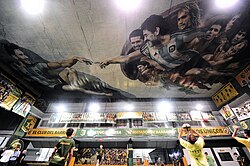
In the heart of Barracas, Buenos Aires, there exists a unique intersection of high art and athletic passion. Known as the Sistine Chapel of Football (or "The Creation of Football"), this striking artwork transforms a sports facility into a sanctuary of Argentine football history. Located at the Sportivo Pereyra club, the installation serves as a monumental tribute to the nation's most iconic players.
The artwork gained global attention in mid-2018 after an amateur video of the ceiling went viral on social media, drawing eyes from around the world to this hidden gem in Argentina.
Key Facts
- Location: Sportivo Pereyra club, Barracas, Buenos Aires, Argentina.
- Artist: Santiago Barbeito (also known as Santuke).
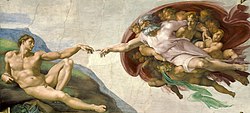
- Inspiration: Michelangelo's The Creation of Adam.
- Scale: Approximately 500 m² across eight stretched canvases.
- Cost: Valued at around $20,000 USD, funded through donations.
- Central Figures: Diego Maradona (as God) and Lionel Messi (as Adam).
The History and Vision
The project began in 2014 when the authorities at Sportivo Pereyra sought to decorate the ceiling of their main indoor pitch. While the initial plan was a simple depiction of a cloudy sky, a more ambitious proposal emerged to honor the historical representatives of Argentine football.
Ricardo Elsegood, the club's head coach, described the indoor pitch as a "sacred temple of football," suggesting that a ceiling inspired by the Sistine Chapel was the most fitting way to express that reverence.
Artistic Characteristics and Symbolism
Created by graphic designer Santiago Barbeito, the artwork is a digital photomontage. It meticulously recreates the composition of Michelangelo's famous fresco, but replaces the biblical figures with footballing royalty. In this version, Diego Maradona takes the role of God, while Lionel Messi represents Adam.
According to Barbeito, the positioning is symbolic: it represents Maradona granting the legacy of "good football" to Messi. Surrounding the two leads are several other Argentine legends acting as cherubs, including Juan Román Riquelme, Gabriel Batistuta, Mario Kempes, Sergio Agüero, Claudio Caniggia, Ricardo Bochini, and Ariel Ortega.
The original inspiration for this piece is one of the most recognized images in human history, emphasizing the divine status these athletes hold in Argentine culture.
About Sportivo Pereyra
The Sportivo Pereyra club is situated at 2785 Alvarado Street in the Barracas neighborhood of Buenos Aires. Its location is particularly poignant for football fans, as it sits just a few blocks away from La Bombonera, the legendary stadium of Boca Juniors.
Beyond its artistic ceiling, the club has a proud history of developing talent, having produced renowned players such as Juan Manuel Iturbe and Mauro Boselli.
| Feature | Details |
|---|---|
| Artist | Santiago Barbeito (Santuke) |
| Year Created | 2014 |
| Medium | Digital photomontage on stretched canvas |
| Total Area | ~500 m² |
| Primary Figures | Maradona and Messi |
| Supporting Figures | Riquelme, Batistuta, Kempes, Agüero, Caniggia, Bochini, Ortega |
Frequently Asked Questions
Who is the artist behind the Sistine Chapel of Football?
The artwork was created in 2014 by Santiago Barbeito, an Argentine graphic designer and artist who also goes by the name Santuke.
What is the symbolic meaning of the painting?
The painting symbolizes the passing of a legacy; specifically, it depicts Diego Maradona (acting as God) granting the legacy of great football to Lionel Messi (acting as Adam).
Where exactly is this artwork located?
It is located on the ceiling of the main indoor pitch at the Sportivo Pereyra club, found at 2785 Alvarado Street in the Barracas neighborhood of Buenos Aires, Argentina.
How was the project funded and how much did it cost?
The project was produced through donations and is valued at approximately $20,000 USD.
Which other players are featured in the artwork?
In addition to Messi and Maradona, the piece includes Juan Román Riquelme, Gabriel Batistuta, Mario Kempes, Sergio Agüero, Claudio Caniggia, Ricardo Bochini, and Ariel Ortega.