The Shreveport Times: A History of Evolution and Adaptation
The landscape of local journalism is often a reflection of broader economic and technological shifts. For The Shreveport Times, the journey from the turn of the 20th century to the modern era is marked by fierce competition, daring format changes, and the logistical challenges of the digital age.
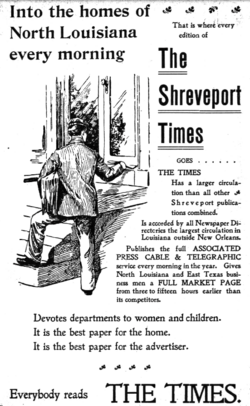
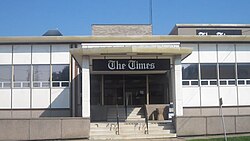
For nearly a century, the city's news cycle was defined by a rivalry between two daily publications. From 1895 until 1991, The Times competed directly with the Shreveport Journal, an afternoon daily published Monday through Saturday. Interestingly, while the two papers remained entirely separate and independent entities, they eventually shared a single address at 222 Lake Street, operating out of opposite sides of the same building.
The End of an Era and the Transition to Op-Eds
The competitive era ended on March 30, 1991, when publisher Charles T. Beaird closed the Shreveport Journal. This decision was driven by financial pressures resulting from a sharp decline in circulation. To honor the legacy of the defunct publication, The Times dedicated the page opposite its editorial section—commonly known as the op-ed page—as "The Journal Page" for editorial commentary. This tribute continued until December 31, 1999.
Technological Shifts and the Berliner Format
As the newspaper industry faced nationwide cost-cutting measures in 2009, The Times underwent a significant downsizing and technical overhaul. The publication replaced its aging Goss Headliner letterpresses—installed in 1961 and the last of their kind within the Gannett company—with a Wifag offset press.
This upgrade allowed The Times to adopt the Berliner format, a modified tabloid size popular in Europe. By introducing this format to the U.S. market, publishers found a strategic way to reduce newsprint consumption and lower overall costs. To manage this transition, Gannett brought in three graduates from the Rochester Institute of Technology to lead the organization.
Modern Logistics and Production Changes
In recent years, the focus has shifted from how the paper is printed to where it is printed. In October 2017, The Times ceased local publication in Shreveport to reduce labor and production costs. Printing operations were moved to the Longview News-Journal in Longview, Texas, requiring a 65-mile one-way commute for distribution.
This trend of centralized printing extended to other regional papers; for example, the Monroe News-Star, previously published in Shreveport, moved its printing to the Jackson Clarion-Ledger in Jackson, Mississippi. Despite these geographical shifts, delivery schedules remained unaffected.
The most recent adjustment occurred in March 2022, when The Times transitioned to a six-day printing schedule, resulting in the elimination of the printed Saturday edition.
Key Facts
- Competition: Rivalry with the Shreveport Journal lasted from 1895 to 1991.
- Format Change: Adopted the European-style Berliner format in 2009 to save on newsprint.
- Printing Shift: Production moved from Shreveport to Longview, Texas, in 2017.
- Current Schedule: Moved to a six-day printing cycle in March 2022, removing the Saturday print edition.
- Parent Company: Operated under Gannett.
| Year | Event | Impact |
|---|---|---|
| 1991 | Closure of Shreveport Journal | End of local daily competition; creation of "The Journal Page." |
| 2009 | Installation of Wifag press | Shift to Berliner format and reduction of newsprint costs. |
| 2017 | Closure of Shreveport distribution center | Printing moved to Longview, Texas. |
| 2022 | Schedule adjustment | Elimination of the printed Saturday edition. |
Frequently Asked Questions
What was the relationship between The Times and the Shreveport Journal?
They were independent competitors from 1895 to 1991. Although they eventually shared the same building at 222 Lake Street, they operated as separate entities until the Journal closed due to financial reasons.
What is the Berliner format?
The Berliner format is a modified tabloid size common in Europe. The Shreveport Times adopted this format in 2009 using a Wifag offset press to reduce the amount of newsprint used and save money.
Where is The Shreveport Times printed now?
Since October 2017, the paper has been printed at the Longview News-Journal in Longview, Texas, located approximately 65 miles away from Shreveport.
Does the paper still print every day of the week?
No. As of March 2022, The Times moved to a six-day printing schedule, which eliminated the printed Saturday edition.
How did the closure of the Shreveport Journal affect the layout of The Times?
From 1991 until December 31, 1999, the op-ed page (the page opposite the editorial page) was reserved as "The Journal Page" for editorial commentary.