The Philadelphia Inquirer: A Legacy of Journalism in Pennsylvania
The Philadelphia Inquirer stands as a cornerstone of American journalism, serving as the largest newspaper in both Pennsylvania and the Philadelphia metropolitan area. With a reach extending across southeastern Pennsylvania, South Jersey, northern Delaware, and the northern Eastern Shore of Maryland, it remains a dominant voice in the region's media landscape.
Founded on June 1, 1829, as The Pennsylvania Inquirer, the publication is the third-oldest surviving daily newspaper in the United States. Its deep roots in the community are matched by a commitment to excellence, evidenced by the 20 Pulitzer Prizes it has earned over its long history.
Key Facts
- Founded: June 1, 1829.
- Format: Broadsheet daily newspaper.
- Reach: Largest circulation in Pennsylvania and the Philadelphia metro area.
- Accolades: Recipient of 20 Pulitzer Prizes.
- Sister Publication: Philadelphia Daily News.
- Digital Presence: Approximately 125,000 digital subscribers.
Historical Evolution
19th Century and the Civil War
The newspaper's early growth was significantly accelerated by the American Civil War. Circulation jumped from roughly 7,000 in 1859 to 70,000 by 1863, driven by intense public interest in war news. The publication supported the Union, though management sought to maintain neutral coverage. This accuracy made the paper a sought-after resource even for Confederate generals.
During this era, the paper distributed between 25,000 and 30,000 copies to Union Army soldiers, occasionally publishing special editions at the request of the U.S. government. However, the post-war period brought financial hardship and a decline in distribution, which fell to 5,000 by 1888.
20th Century Growth and Corporate Shifts
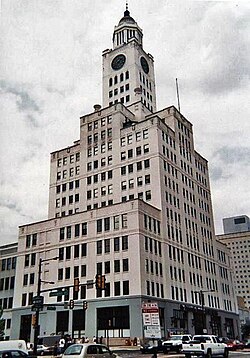
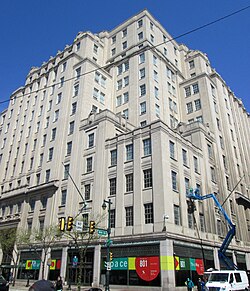
The publication saw a major turnaround under Moses Annenberg, who introduced new features and promotions that boosted weekday circulation to over 345,000 by 1938. In 1948, Walter Annenberg expanded the Inquirer Building to house modern printing presses.
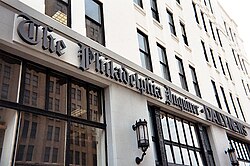
The late 20th century was marked by significant ownership changes. In 1969, the paper was sold to Knight Newspapers, later becoming part of Knight Ridder after a 1974 merger. By 1980, The Inquirer became the most circulated paper in Philadelphia, contributing to the closure of the Evening Bulletin in 1982.

Modern Era and Ownership Transitions
Bankruptcy and New Ownership
The 21st century brought the challenges of the digital age. In 2006, Knight Ridder was acquired by The McClatchy Company, which subsequently sold The Inquirer and the Philadelphia Daily News to Philadelphia Media Holdings LLC (PMH). Following a period of financial instability and bankruptcy, the papers were acquired by Philadelphia Media Network (PMN) in 2010 for $139 million.
Recent Challenges and Workforce
In recent years, the organization has transitioned toward a nonprofit model. It has faced modern disruptions, including a severe cyberattack in May 2023 and the elimination of its Communities and Engagement Desk in March 2025. Production has also shifted; the Schuylkill Printing Plant closed in 2020, with printing eventually moving to a Gannett plant in Wilmington, Delaware.
The newsroom has also focused on diversity and labor relations. In 2020 and 2023, the NewsGuild of Greater Philadelphia secured contracts providing workforce diversity provisions and the first across-the-board salary increases in over a decade.
Journalistic Excellence
The Inquirer is renowned for its investigative depth. Its Pulitzer Prize-winning work spans several decades and categories, from national reporting on the IRS to public service awards for covering violence in city schools.
| Attribute | Details |
|---|---|
| Current Publisher | Elizabeth H. Hughes |
| Current Editor | Gabriel Escobar |
| Print Circulation | 32,400 (Average) |
| Digital Circulation | 125,000 |
| Total Pulitzer Prizes | 20 |
| Headquarters | United States |
Frequently Asked Questions
How many Pulitzer Prizes has The Philadelphia Inquirer won?
As of 2020, The Philadelphia Inquirer has won 20 Pulitzer Prizes across various categories, including Public Service, National Reporting, and Criticism.
Who is the current publisher of the newspaper?
The current publisher is Elizabeth H. Hughes, who is the first female publisher in the organization's history.
What is the relationship between The Inquirer and the Philadelphia Daily News?
The Philadelphia Daily News is a sister newspaper to The Philadelphia Inquirer; both have shared ownership and newsroom resources through various corporate transitions.
Where is the newspaper currently printed?
Following the closure of its own plant in 2020 and the subsequent closure of a Cherry Hill plant in 2024, the papers are currently printed at a Gannett plant in Wilmington, Delaware.
What is the current circulation of the paper?
The newspaper has an average print circulation of 32,400 and a digital circulation of 125,000.