The Daily Telegraph: A History of the British Newspaper of Record
With a motto that reads "Was, is, and will be," The Daily Telegraph stands as one of the United Kingdom's most enduring and influential publications. Established in the mid-19th century, it has evolved from a local courier into a globally recognized broadsheet—a large-format newspaper typically associated with serious, high-quality journalism—serving as a cornerstone of the British media landscape.
Founded on June 29, 1855, by Arthur B. Sleigh as the Daily Telegraph & Courier, the publication has spent over 170 years documenting the political and social shifts of the UK. Today, it is owned by the Telegraph Media Group under Axel Springer SE and continues to operate from its headquarters in London, England.
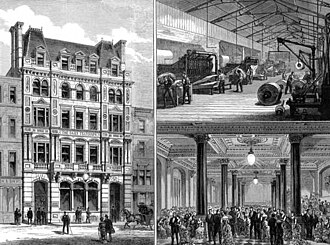
Key Facts
- Founded: June 29, 1855, by Arthur B. Sleigh.
- Format: Broadsheet.
- Political Alignment: Conservative Right-wing.
- Current Editor: Christopher Evans (since 2014).
- Ownership: Telegraph Media Group (Axel Springer SE).
- Circulation: 317,817 (as of December 2019).
- Sister Publication: The Sunday Telegraph.
Evolution and Ownership
The history of The Daily Telegraph is marked by significant shifts in ownership and operational scale. For decades, it maintained a prestigious presence on Fleet Street, the historic heart of British journalism. In more recent years, the publication has navigated the digital transition, launching its website, telegraph.co.uk, and introducing innovative features like "My Telegraph" to engage a modern audience.
The path to its current ownership by Axel Springer SE was complex. Between 2023 and 2024, the paper was the subject of several high-profile takeover bids. This included a bid by a UAE-backed group that was ultimately blocked by the UK government, and a subsequent £500 million bid by RedBird Capital that eventually collapsed in November 2025. The transition to Axel Springer SE was completed in June 2026 for £575 million.
Editorial Stance and Notable Coverage
The Daily Telegraph is widely recognized for its Conservative Right-wing political alignment. This stance has been reflected in its coverage of major national events, including its support for the "Vote Leave" campaign during the Brexit referendum and its commentary on LGBT+ issues and the UK anti-trans movement.
The publication has a reputation for high-impact investigative journalism. One of its most notable achievements was the 2009 MP expenses scandal, where it led a comprehensive investigation into the financial claims of Members of Parliament. Other significant stories include the 2016 investigation into Sam Allardyce and the 2025 leak of a BBC memo regarding Gaza-Israel coverage.

Editorial Leadership and Contributors
The quality of the paper has been shaped by a long line of editors and distinguished columnists. From the early tenure of Thornton Leigh Hunt to the current leadership of Christopher Evans, the editorial board has maintained the paper's status as a "newspaper of record"—a publication regarded as a definitive source of historical documentation.
The paper has attracted a diverse array of journalists and critics, including former political columnist Boris Johnson, film critic Robbie Collin, and associate editor Camilla Tominey. Its pages have also featured contributions from figures such as William Hague and Norman Tebbit.
| Attribute | Detail |
|---|---|
| ISSN | 0307-1235 |
| OCLC Number | 49632006 |
| Headquarters | London, United Kingdom |
| Primary Format | Broadsheet |
| Political Lean | Conservative Right-wing |
Frequently Asked Questions
Who founded The Daily Telegraph?
The newspaper was founded by Arthur B. Sleigh on June 29, 1855, originally under the name Daily Telegraph & Courier.
What is the political leaning of the publication?
The Daily Telegraph is aligned with the Conservative Right-wing of British politics.
Who currently owns the newspaper?
The publication is owned by the Telegraph Media Group, which is part of the German media company Axel Springer SE.
What is a "newspaper of record"?
A newspaper of record is a publication that is considered to be a reliable and comprehensive source of news, often archived by libraries and historians as a definitive account of current events.
What was the 2009 MP expenses scandal?
It was a major investigative report by The Daily Telegraph that exposed the misuse of expense claims by Members of Parliament in the UK.