The Michigan Daily: A Legacy of Student Journalism
For over a century, The Michigan Daily has served as a cornerstone of student voice and journalistic ambition at the University of Michigan. From breaking global medical news to challenging administrative authority, the publication has evolved from a campus newsletter into a significant historical record of student life and social change.
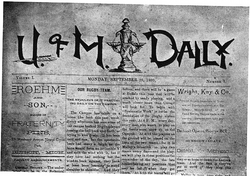
Key Facts
- First Report: Was the first newspaper to report the success of Jonas Salk's polio vaccine on April 12, 1955.
- Editorial Independence: Won a major victory for press freedom in 1969 when the Board of Regents stripped the Board in Control of Student Publications of its power to select editors.
- Cultural Impact: Played a pivotal role in spreading the "Paul is dead" urban legend regarding Paul McCartney in 1969.
- Leadership Milestones: Harriett Woods served as the first female editor-in-chief.
- Modern Evolution: Launched a podcast section in 2017 and transitioned to a dual editor-in-chief leadership model in 2023.
A History of Bold Reporting and Activism
The Michigan Daily has a long history of placing its staff at the center of pivotal historical moments. In 1955, the paper beat other outlets to report the announcement of the polio vaccine's success at the University of Michigan. This commitment to frontline reporting continued in 1957, when a staff member went undercover as a student to attend classes during the first day of integration in Little Rock, Arkansas.
The Fight for Editorial Independence
The late 1960s marked a turning point for the paper's autonomy. In February 1967, the Board in Control of Student Publications rejected the nomination of Roger Rapoport for editor-in-chief, citing that he was too controversial. This sparked a fierce student pressure campaign against administrative overreach. The effort was successful; by 1969, the U-M Board of Regents passed a measure that removed the Board's editorial influence and its authority to select editors, securing the paper's independence.
National Attention and Controversies
The publication has frequently attracted national scrutiny for its provocative stances. In 1967, it gained attention for urging the legalization of marijuana, and in 1991, it made headlines during the Gulf War by calling for the reinstatement of the military draft.
Beyond political discourse, the paper inadvertently shaped pop culture. On October 14, 1969, writers Fred LaBour and John Gray published "McCartney Dead; New Evidence Brought to Light." By itemizing various clues—some of which they invented—they fueled the "Paul is dead" urban legend. Beatleologist Andru J. Reeve identifies this specific reporting as the most significant factor in the rumor's widespread proliferation.
Leadership and Infrastructure
The Daily has been led by trailblazers, most notably Harriett Woods, the first female editor-in-chief. Woods later transitioned into a distinguished career in Missouri state government, ran for the Senate twice in the 1980s, and led the National Women's Political Caucus during the 1992 "Year of the Woman."
The physical home of the publication, located at 420 Maynard Street, underwent complete renovations in 2007. These improvements were funded entirely by alumni donations. To celebrate the reopening, a reunion was held from October 26 to 28, 2007, bringing together former staffs of The Michigan Daily, the Michiganensian yearbook, and the Gargoyle Humor Magazine.
Modern Era and Current Operations
As media consumption shifted, the publication adapted. In 2017, Avery Friedman established the paper's podcast section to expand its reach. To manage a large staff and a high volume of content production, The Daily moved to a leadership structure featuring two editors-in-chief starting in 2023.
The publication's history is not without legal turmoil. In a recent incident, staffers Mariam Odeh and Amatullah Hakim were arrested and indicted on conspiracy charges related to the coordinated vandalism of private residences belonging to University of Michigan regents.
| Year | Event/Milestone | Significance |
|---|---|---|
| 1955 | Polio Vaccine Report | First newspaper to report Salk's success. |
| 1969 | Regents' Ruling | Established editorial independence from the Board. |
| 1969 | "Paul is Dead" Article | Catalyzed a global urban legend. |
| 2007 | Building Renovation | Alumni-funded upgrades to 420 Maynard Street. |
| 2017 | Podcast Launch | Expansion into digital audio journalism. |
| 2023 | Dual Leadership | Shift to two editors-in-chief for high production volume. |
Frequently Asked Questions
Who was the first female editor-in-chief of The Michigan Daily?
Harriett Woods was the first woman to serve as editor-in-chief. She later became a prominent figure in Missouri politics and the National Women's Political Caucus.
How did the paper contribute to the "Paul is dead" rumor?
In an October 14, 1969 article, Fred LaBour and John Gray listed "clues" suggesting Paul McCartney had died, which is considered the primary driver of the rumor's spread.
When did The Michigan Daily achieve editorial independence?
The U-M Board of Regents passed a measure in 1969 that stripped the Board in Control of Student Publications of its power to select editors and its editorial influence.
What changes were made to the leadership structure in 2023?
Due to the high volume of content and a large staff, the publication began being led by two editors-in-chief instead of one.
How was the renovation of the 420 Maynard Street building funded?
The renovations, completed in 2007, were funded entirely through private donations from alumni.