The Light Dragoons: England's Northern Cavalry
The Light Dragoons (LD) are a distinguished light cavalry regiment of the British Army, serving as a vital component of the Royal Armoured Corps. Specializing in both mounted and dismounted reconnaissance, the regiment provides the British military with a flexible, agile capability to gather intelligence and operate in challenging environments. Known affectionately as "England's Northern Cavalry," the regiment draws its personnel primarily from Northern England, including Northumberland, County Durham, Tyne and Wear, South Yorkshire, and the East Riding of Yorkshire.
Currently based at the Catterick Garrison in North Yorkshire, the Light Dragoons combine a rich historical lineage with modern tactical expertise to maintain their role as the eyes and ears of the army.
Key Facts
- Role: Light Cavalry specializing in Formation Reconnaissance.
- Nickname: "England's Northern Cavalry."
- Base: Catterick Garrison, North Yorkshire.
- Equipment: Jackal armoured fighting vehicles.
- Size: Approximately 403 personnel.
- Mottos: Viret in aeternum (It Flourishes Forever) and Merebimur (We shall be Worthy).
Historical Evolution
Origins of Light Cavalry
The concept of "Light Dragoons" dates back to the 1740s, when the British Army began experimenting with light cavalry in response to the French hussar regiments. By the 1750s, several dragoon regiments were officially converted into Light Dragoons. This designation remained common for British light cavalry until the early 19th century, when many were reclassified as hussars or lancers.
Formation of the Modern Regiment
The current regiment was officially formed on December 1, 1992, at Haig Barracks in Hohne. It was created through the amalgamation of two storied units: the 13th/18th Royal Hussars (Queen Mary's Own) and the 15th/19th The King's Royal Hussars. Both antecedent units had a long history as light dragoons, including service during the Napoleonic Wars.
Operational History and Deployments
Early Peacekeeping and Conflict
Shortly after its formation, the regiment entered active service in Bosnia and Herzegovina in 1993. Over the course of 13 operational tours in Bosnia, the regiment earned high praise for its effectiveness. In 2001, General Sir Charles Guthrie, the Chief of Defence Staff, described them as the most effective regiment in the army at the time.
The regiment later deployed to Iraq during Operation Telic 2 (2003) and Operation Telic 6 (2005), where they focused on counter-insurgency, training local police, and post-conflict stabilization.
Afghanistan and Beyond
Between 2006 and 2012, the Light Dragoons served multiple tours in Afghanistan's Helmand Province. Their roles included providing the Brigade Reconnaissance Force and mentoring local forces, notably participating in Operation Panther's Claw in 2009.
In 2014, the regiment returned to Bosnia for Operation Althea, providing mobile reconnaissance for EU forces during the Bosnian elections.
Recent Global Missions
Since 2015, the regiment has continued its global reach. This includes deployments to Poland as part of the NATO Enhanced Forward Presence (Op Cabrit) and a platoon deployment to Afghanistan in 2018 (Op Toral). Most recently, in December 2020, the regiment deployed to Mali on Operation Newcombe. Serving as the Long Range Reconnaissance Group for the UN peacekeeping force, they conducted intelligence patrols spanning up to 1,500 km.
Operational Role and Structure
Formation Reconnaissance
The primary mission of the Light Dragoons is Formation Reconnaissance. This involves operating ahead of the main fighting force, often in unknown or hostile territory. Their goal is to identify enemy positions and gather critical intelligence to inform the main force, strike targets of opportunity, or engage with local populations to build relations and aid planning.
Equipment and Organization
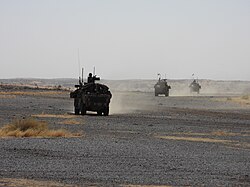
The regiment is currently equipped with the Jackal, a high-mobility armoured fighting vehicle. They work in close partnership with the Queen's Own Yeomanry, an Army Reserve light cavalry regiment.
The regiment is structured as follows:
- Regimental Headquarters: Based at Fenham Barracks.
- Headquarters Squadron: Equipped with Coyote and Panther CLV (Commercial Light Vehicles).
- A Squadron (The Empire): Jackal equipped.
- B Squadron (The Guards): Jackal equipped.
- C Squadron (The Legion): Jackal equipped.
| Category | Details |
|---|---|
| Branch | British Army (Royal Armoured Corps) |
| Primary Vehicle | Jackal |
| Colonel-in-Chief | King Abdullah II of Jordan |
| Regimental Colonel | Brigadier Angus GC Fair, CBE, DSO |
| Recruitment Area | Northern England |
Frequently Asked Questions
What is the primary role of the Light Dragoons?
Their primary role is Formation Reconnaissance, which involves operating ahead of the main army to gather intelligence on enemy forces and the local environment.
Why are they called "England's Northern Cavalry"?
The regiment earns this nickname because it recruits its personnel mainly from Northern English counties, including Northumberland, Durham, and Yorkshire.
What vehicles do the Light Dragoons use?
The main fighting squadrons (A, B, and C) are equipped with Jackal armoured fighting vehicles, while the Headquarters Squadron uses Coyote and Panther CLVs.
Which regiments merged to form the Light Dragoons?
The regiment was formed in 1992 from the amalgamation of the 13th/18th Royal Hussars (Queen Mary's Own) and the 15th/19th The King's Royal Hussars.
Where can the public find the regimental museum?
The regimental museum of the Light Dragoons, along with the Northumberland Hussars, is located within the Newcastle Discovery Museum.