The Dixie Cups: New Orleans Icons of the Girl Group Era
Emerging from the vibrant musical landscape of New Orleans, The Dixie Cups became one of the most recognizable voices of the 1960s pop era. Originally known as The Meltones, this talented ensemble blended rhythm and blues with pop sensibilities to create a sound that resonated globally, leaving an indelible mark on the Billboard charts and the soundtrack of American culture.
Key Facts
- Biggest Hit: "Chapel of Love," which reached number one on the Billboard Hot 100 in June 1964.
- Origin: New Orleans, Louisiana, United States.
- Core Members: Sisters Barbara Ann and Rosa Lee Hawkins, and cousin Joan Marie Johnson.
- Major Labels: Red Bird, ABC-Paramount, and ABC Records.
- Legacy: Inducted into the Louisiana Music Hall of Fame in 2007.
The Journey from New Orleans to New York
The group's foundation was built on family ties. Sisters Barbara Ann and Rosa Lee Hawkins, along with their cousin Joan Marie Johnson, began singing together during their grade school years in New Orleans. Before settling on their famous name, they were briefly known as Little Miss and the Muffets, and later as the Meltones when they began pursuing music professionally in 1963.
Their trajectory changed when Joe Jones, a singer known for the 1960 hit "You Talk Too Much," became their manager. After five months of development, Jones brought the trio to New York City. There, they caught the attention of legendary songwriters and producers Jerry Leiber and Mike Stoller, who signed them to the newly formed Red Bird Records.
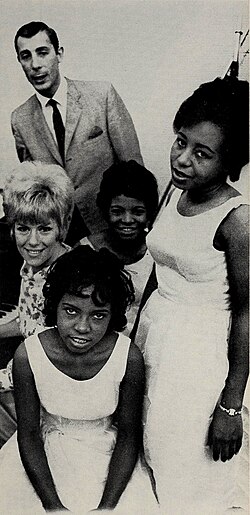
Chart-Topping Success and "Chapel of Love"
The group's debut single, "Chapel of Love," catapulted them to international stardom. Released in 1964, the track hit number one on the Billboard Hot 100, sold over one million copies, and earned a gold disc. Its enduring popularity is evidenced by its inclusion in the Full Metal Jacket (1987) and Father of the Bride (1991) soundtracks, as well as its ranking at No. 279 on Rolling Stone's list of The 500 Greatest Songs of All Time.
Following their debut, the group maintained a strong presence on the charts with several other successful singles:
- "People Say" (No. 12, 1964)
- "You Should Have Seen the Way He Looked at Me" (No. 39, 1964)
- "Little Bell" (No. 51, 1965)
- "Iko Iko" (No. 20, 1965)
The Story Behind "Iko Iko"
One of their most culturally significant tracks, "Iko Iko," was a New Orleans traditional song. Barbara Hawkins had learned it from her grandmother; the song had previously been recorded in 1953 as "Jock-a-Mo" by James "Sugar Boy" Crawford. The Dixie Cups' version was captured almost by accident during a recording session when the group was "clowning around" using drumsticks on ashtrays. Producers Leiber and Stoller kept the tapes running, added a bassline and percussion, and released it as the group's fifth and final major hit.
Evolution and Later Years
In 1965, the group transitioned to the ABC-Paramount label, but a recording hiatus in 1966 slowed their momentum. By 1974, the Hawkins sisters returned to New Orleans, where they balanced music with successful careers in modeling and makeup artistry.
The group's lineup evolved over the decades. Joan Marie Johnson retired from the group due to the stress of travel and later became a Jehovah's Witness. She was replaced by Beverly Brown, who remained until the early 1980s, and subsequently by Dale Mickle. In later years, the group continued to perform with Athelgra Neville, sister of the renowned Neville Brothers.
The members faced significant hardship in 2005 when Hurricane Katrina devastated New Orleans, displacing Barbara and Rosa Hawkins to Florida and Joan Johnson to Texas. Despite these challenges, their contributions were formally recognized in April 2007 when they were inducted into the Louisiana Music Hall of Fame.
The group suffered the loss of two original members in recent years: Joan Marie Johnson passed away on October 3, 2016, and Rosa Lee Hawkins passed away on January 11, 2022.
Career Summary
| Category | Details |
|---|---|
| Active Years | 1963–present |
| Primary Genres | Pop, Rhythm and Blues |
| Key Singles | "Chapel of Love", "Iko Iko", "People Say" |
| Notable Albums | Chapel of Love (1964), Riding High (1965), Doing It Our Way (2011) |
| Key Producers | Jerry Leiber and Mike Stoller |
Frequently Asked Questions
What was the biggest hit for The Dixie Cups?
Their biggest hit was "Chapel of Love," which reached number one on the Billboard Hot 100 in June 1964 and sold over one million copies.
How did the song "Iko Iko" come to be recorded?
The song was a New Orleans traditional that Barbara Hawkins heard her grandmother sing. It was recorded spontaneously during a session while the group was playing with drumsticks on ashtrays, unaware that the producers were recording them.
Who were the original members of the group?
The original trio consisted of sisters Barbara Ann Hawkins and Rosa Lee Hawkins, and their cousin Joan Marie Johnson.
When were The Dixie Cups inducted into the Louisiana Music Hall of Fame?
They were inducted in April 2007 in recognition of their significant contributions to the music of Louisiana.
What other names did the group use before becoming The Dixie Cups?
The group was originally intended to be called Little Miss and the Muffets and performed locally as the Meltones before adopting the name The Dixie Cups.