The Cloud Dream of the Nine: A Masterpiece of Korean Literature
Widely regarded as one of the most beloved masterpieces in Korean literature, The Cloud Dream of the Nine (known in Korean as Kuunmong) is a profound 17th-century novel. Set during the Chinese Tang dynasty, this work serves as a complex blend of a Buddhist romance and a philosophical exploration of human existence. It weaves together intricate themes of Confucianism, Taoism, and Buddhism, creating a narrative that blurs the lines between reality and illusion.
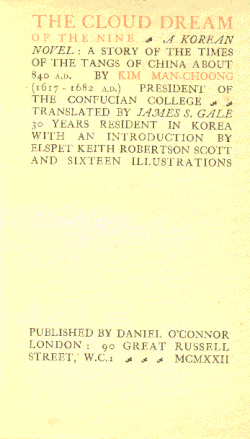
The novel is most commonly attributed to the scholar Kim Man-jung. While some historical debates exist regarding the authorship, the consensus among the Korean scholarly community is that Kim Man-jung is the true author. This attribution is supported by the fact that the work is both a Hanmun (a literary style using Classical Chinese) and a fantasy novel—genres that a 17th-century Korean scholar might have been hesitant to claim publicly.
Key Facts
- Original Title: Kuunmong (구운몽 / 九雲夢)
- Author: Kim Man-jung (widely accepted)
- Setting: Tang Dynasty, China
- Genre: Buddhist romance, fantasy, and classical Chinese literature
- Historical Significance: The first Korean literary work to be translated into English
- Core Themes: Confucianism, Taoism, and Buddhism
A Journey Through Dream and Reality
The narrative structure of the novel is built upon a framework of spiritual awakening and worldly temptation. The story begins with the education of a young monk named Seongjin at the monastery on Lotus Peak. After a transformative encounter with eight fairies on a bridge, Seongjin is perceived to have succumbed to worldly desires. As punishment, his master, Yookgwan, banishes him to the human world.
In this human realm, Seongjin is reborn as Yang Soyu, the son of a hermit. As Soyu, he quickly forgets his previous life as a monk and embarks on a journey through life's many triumphs and tribulations. His life becomes a whirlwind of success, from passing the civil service examination to achieving high political rank and navigating complex romantic entanglements.
The Life of Yang Soyu
Soyu's journey is marked by several significant encounters:
- Jin Chaebong: The daughter of an official whom he meets during his travels.
- Gye Seomwol: A highly respected poet he meets in Nakyang.
- Gyeongpae: The daughter of Minister Jung, with whom he eventually becomes engaged.
- Princess Nanyang: The emperor's sister, whom he eventually marries.
Through his talents and strategic brilliance in war, Soyu rises to become a chancellor. He eventually marries his various female acquaintances—who are revealed to be the same eight fairies he met as Seongjin—bringing them all to his court as concubines.
The Awakening
After a long life filled with wealth, power, and family, an elderly Soyu begins to reflect on the fleeting nature of human greatness. Seeking spiritual peace, he decides to devote himself to Buddhism. It is at this moment of realization that his master, Yookgwan, appears to him. The encounter reveals the truth: Soyu's entire life of worldly splendor was merely a dream experienced by Seongjin.
Historical Translations and Legacy
The novel has maintained a significant presence in global literature through several key English translations:
- 1922: James Scarth Gale produced the first English translation.
- 1974: Richard Rutt published a translation titled A Nine Cloud Dream.
- 2019: Heinz Insu Fenkl released a new translation with Penguin Classics, which received significant acclaim from The New York Times.
| Year | Translator | Title |
|---|---|---|
| 1922 | James Scarth Gale | The Cloud Dream of the Nine |
| 1974 | Richard Rutt | A Nine Cloud Dream |
| 2019 | Heinz Insu Fenkl | The Nine Cloud Dream |
Cultural Impact
Beyond its literary merit, The Cloud Dream of the Nine continues to influence modern Korean pop culture. For instance, the 2017 studio album by singer Uhm Jung-hwa shares its title. Additionally, the novel is referenced in the popular K-drama My Love from the Star, where the character Do Min-joon mentions living by the book.
Frequently Asked Questions
What is the primary theme of the novel?
The novel explores the tension between worldly ambition and spiritual enlightenment, using the concept of a dream to illustrate the fleeting nature of human life and success.
In what language was the original text written?
The oldest existing text of the book was written in Classical Chinese (Hanmun).
Who is the protagonist of the story?
The story features two identities for the protagonist: the monk Seongjin and his reincarnated worldly persona, Yang Soyu.
Why is the book considered a "Buddhist romance"?
It is described this way because it combines elements of romantic pursuit and worldly desire with profound Buddhist philosophical concepts regarding the illusion of reality.
Is the authorship of the novel certain?
While there have been arguments regarding the author, the consensus among Korean scholars is that Kim Man-jung wrote the work.