The Catholic Encyclopedia: A Definitive History of the Original Reference Work
The Catholic Encyclopedia, often referred to as the Old or Original Catholic Encyclopedia, stands as a monumental English-language reference work dedicated to the constitution, doctrine, discipline, and history of the Roman Catholic Church. Published in the United States in the early 20th century, it was designed to provide an authoritative and comprehensive resource on the full spectrum of Catholic interests and actions for an Anglophone audience.
Unlike previous efforts that focused strictly on internal Church affairs, this work expanded its scope to record the achievements of Catholics across various intellectual and professional fields, including science, education, and the arts. It provides a detailed Roman Catholic perspective on historical and philosophical events, particularly those that distinguish Catholicism from Protestantism and other faith traditions.
Key Facts
- Publication Period: The main volumes were released between 1907 and 1912.
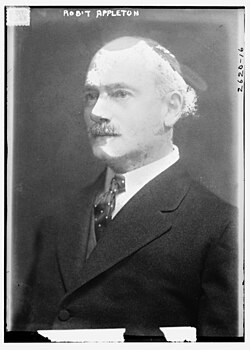
- Publisher: The Robert Appleton Company (later renamed The Encyclopedia Press).
- Scope: 15 main volumes, followed by a master index (1914) and supplementary volumes.
- Successor: The New Catholic Encyclopedia, first published in 1967.
- Legal Status: The original 1907–1913 edition is in the public domain.
Origins and Publication
The project began in 1905 under the leadership of five primary editors: Charles G. Herbermann, Reverend Edward A. Pace, Condé B. Pallen, Reverend Thomas J. Shahan, and Thomas F. Woodlock, with Reverend John J. Wynne, S.J., also serving as an editor. The Robert Appleton Company (RAC) was incorporated in February 1905 specifically to bring this encyclopedia to fruition.
The editorial process was rigorous, involving 134 formal meetings to determine the work's scope and plan. To ensure ecclesiastical accuracy, the editors obtained a nihil obstat (a declaration of no objection) from Church censor Remy Lafort in 1908, and the first volumes received an imprimatur (official license to print) from Archbishop John M. Farley of New York.
The publication rolled out sequentially, starting with Volume 1 in March 1907 and concluding with Volume 15 in 1913. In 1912, the Robert Appleton Company changed its name to The Encyclopedia Press, which remained dedicated solely to this project throughout its duration.
Content and Historical Context
While the encyclopedia was a groundbreaking effort, it is a snapshot of a specific era. Because it has never been updated, some entries are now outdated. Notably, the original text predates the establishment of the Vatican City State in 1929 and the Second Vatican Council (1962–1965), the latter of which introduced significant changes to Catholic practices and doctrine.
The work was largely original, though some articles from European contributors, such as Johann Peter Kirsch and Pierre Batiffol, were translated and edited from existing European publications. Other contributors, such as Herbert Thurston and Anthony Maas, wrote new material specifically in English.
Publication Timeline and Structure
| Volume | Entry Range | Year Published | Chief Editor |
|---|---|---|---|
| 1 | Aachen–Assize | 1907 | Charles George Herbermann |
| 2-3 | Assize–Clancy | 1908 | - |
| 4-5 | Cland–Fathers | 1909 | - |
| 6-7 | Fathers–Infallibility | 1910 | - |
| 8-10 | Infamy–Newman | 1911 | - |
| 11-15 | New Mexico–Zwirner | 1912 | - |
| 16 | Master Index | 1914 | - |
Digital Preservation and Online Access
Because works published in the U.S. before 1928 are in the public domain, the Catholic Encyclopedia has seen a resurgence online. In 1995, Kevin Knight launched New Advent, a website that hosted a transcription of the original text created by international volunteers. While New Advent occasionally modernizes biblical citations and titles, other sites like Catholic Answers and Catholic Online provide exact transcriptions of the original text.
Additionally, scanned copies of the original volumes are available through Google Books, the Internet Archive, and Wikimedia Commons, while Wikisource hosts an ongoing transcription project.
Frequently Asked Questions
What is the difference between the original Catholic Encyclopedia and the New Catholic Encyclopedia?
The original Catholic Encyclopedia was published between 1907 and 1913 and remains a historical record of that era. The New Catholic Encyclopedia, first published in 1967 by the Catholic University of America, is a modernized successor that incorporates changes from the Second Vatican Council and subsequent ecclesiastical developments.
Was the original Catholic Encyclopedia controversial?
Yes. In the United States, some nativist protesters argued that placing the encyclopedia in public libraries violated the constitutional separation of church and state, leading to legal challenges in places like Belleville, New Jersey.
Who were the primary editors of the work?
The work was supervised by a board including Charles G. Herbermann, Reverend Edward A. Pace, Condé B. Pallen, Reverend Thomas J. Shahan, and Thomas F. Woodlock, with Reverend John J. Wynne, S.J., also serving as an editor.
Is the original Catholic Encyclopedia still accurate today?
While it remains an authoritative source for historical and philosophical perspectives of the early 20th century, many entries are outdated regarding current culture and Church doctrine, as it predates the 1929 creation of Vatican City and the 1962–1965 Second Vatican Council.
Where can I read the original Catholic Encyclopedia for free?
The original text is in the public domain and can be accessed via websites such as New Advent, Catholic Answers, and Catholic Online, as well as through digital archives like Google Books and the Internet Archive.