Baptist Traditions: History, Beliefs, and Global Expansion
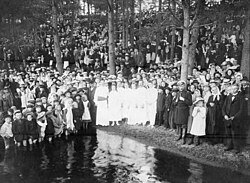
Baptists represent a diverse Protestant tradition of Christianity defined by a commitment to the autonomy of the individual believer and the authority of Scripture. At the heart of the Baptist identity is the practice of believer's baptism—the conviction that baptism should be reserved for those who have personally professed faith in Christ, rather than infants—and the requirement that this be performed by total immersion in water.
From their origins as dissenters in England to their current status as a global movement, Baptists have emphasized the separation of church and state and the responsibility of every person to be accountable before God.
Key Facts
- Core Practice: Baptism is performed only for believers via total immersion.
- Authority: Adherence to sola scriptura (the Bible as the sole infallible authority).
- Governance: Use of congregationalist ecclesiastical polity, where the local church governs itself.
- Key Doctrines: Belief in sola fide (justification by faith alone) and soul competency.
- Global Reach: Represented by the Baptist World Alliance, with significant presence on every continent.
The Origins of the Baptist Movement
The Baptist tradition is primarily traced back to Dissenters from the Church of England in Great Britain. In the early 17th century, a nonconformist church led by cleric John Smyth formed in Gainsborough. Seeking religious freedom, Smyth and the Scrooby congregation went into exile in Amsterdam in 1608.
Through their exegesis—the critical interpretation of the New Testament—these early believers rejected infant baptism, instituting baptism only for those who could profess their faith.
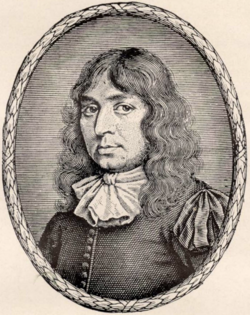
Following this, Thomas Helwys led a congregation back to England. Helwys became a pivotal figure in the fight for liberty of conscience, arguing that the state should remain separate from the church in legal matters to ensure individuals could worship according to their beliefs.

Diverse Theological Paths
As the movement grew in England, it split into two primary theological camps:
- General Baptists: Believed that Christ's atonement was available to all people. They widely accepted the Orthodox Creed of 1679.
- Particular Baptists: Believed that atonement extended only to the "elect." Their primary creedal document is the Second London Confession of Faith of 1689.
Core Beliefs and Practices

While Baptist congregations vary widely, several foundational principles unite the tradition. These include soul competency, the belief that every individual is responsible and accountable before God, and the recognition of two primary ordinances: Baptism and the Lord's Supper.
Areas of Theological Diversity
Because of their congregational nature, Baptists often differ on several points of doctrine and practice, including:
- Sacraments: Some include feetwashing or headcovering as additional ordinances.
- Eschatology: Differing views on the end times and the final destiny of humanity.
- Hermeneutics: Varying methods of interpreting the Bible, including the "King James Only" movement.
- Charismatic Gifts: Differences regarding the operation of the Holy Spirit, such as speaking in tongues.
- Gender Roles: Differing perspectives on the role of women in marriage and church leadership.
Global Expansion and Membership

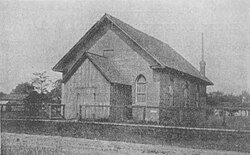
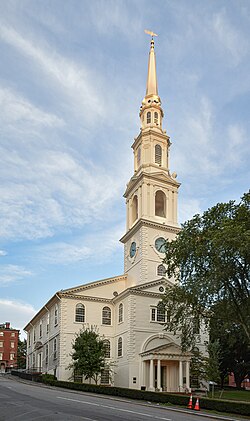
Baptist missionaries have carried these convictions to every continent, establishing a vast network of churches and institutions. In North America, the movement grew rapidly, establishing early landmarks like the First Baptist Church in Providence, Rhode Island.
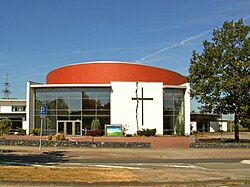
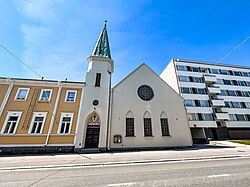
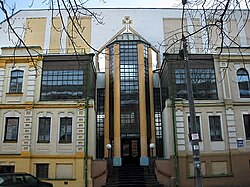
The tradition has since expanded into South America, Africa, Asia, and Europe, often adapting to local cultures while maintaining core tenets.
Global Baptist Statistics
The following table provides a snapshot of some of the largest Baptist communions worldwide.
| Region | Convention/Union Name | Number of Churches | Approx. Members |
|---|---|---|---|
| North America | Southern Baptist Convention | 46,608 | 12,331,954 |
| North America | National Baptist Convention, USA | 21,145 | 8,415,100 |
| Africa | Nigerian Baptist Convention | 14,678 | 9,015,000 |
| South America | Brazilian Baptist Convention | 9,238 | 1,814,158 |
| Asia | Myanmar Baptist Convention | 5,494 | 1,723,500 |
| Europe | All-Ukrainian Union of Churches of Evangelical Christian Baptists | 2,154 | 112,000 |
Historical Challenges and Controversies

The Baptist tradition has not been without internal conflict. In the United States, the issue of slavery caused deep divisions within the community for over a century. This legacy of racial tension continued into the 20th century, though it also produced influential leaders like Martin Luther King Jr., a Baptist minister who led the civil rights movement.
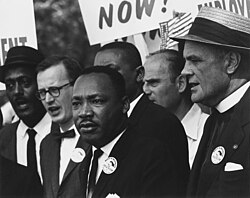
Other historical crises include the "Landmark crisis" regarding church succession and the "Modernist crisis" concerning the interpretation of scripture in the face of modern science and philosophy.
Frequently Asked Questions
What is the difference between General and Particular Baptists?
General Baptists believe that Christ's atonement is available to all people, whereas Particular Baptists believe it extends only to the elect.
What does "soul competency" mean?
Soul competency is the Baptist belief that every individual has the responsibility and accountability to stand before God and interpret Scripture for themselves.
Why do Baptists reject infant baptism?
Baptists believe that baptism should be a conscious act of faith. Therefore, it is only administered to "believers" who have personally professed their faith in Christ.
What is congregationalist ecclesiastical polity?
This is a form of church governance where each local congregation is autonomous and self-governing, rather than being ruled by a central hierarchy like a bishop or pope.
What are the two primary ordinances of the Baptist faith?
The two most widely recognized ordinances are Baptism (by immersion) and the Lord's Supper.