The Bancroft Library: The Evolution of a Premier Western North American Collection
The story of the Bancroft Library is one of obsessive passion and meticulous preservation. What began as a simple request to clear a desk has evolved into one of the most significant repositories of history for the western portion of North America. Founded by Hubert H. Bancroft, the collection serves as a critical bridge to the past, preserving documents that would otherwise have been lost to time and disaster.
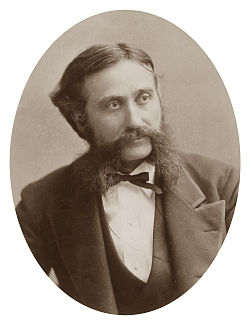
The Accidental Beginning
The library's origins date back to 1859. At the time, William H. Knight was employed by Hubert H. Bancroft as an editor for statistical works regarding the Pacific coast. The process of collecting began when Knight was asked to clear the shelves around Bancroft's desk to make room for every book in the store that referenced the region. To his surprise, Knight discovered an initial nucleus of 50 to 75 volumes.
While there was no formal plan to build a library at the start, Bancroft soon began noticing rare pamphlets in antiquarian bookstores. This sparked a growing interest that led him to scour stores and stalls in San Francisco, Sacramento, Portland, and Victoria. His search eventually expanded to the eastern United States, where he acquired second-hand materials in New York, Boston, and Philadelphia.
Expanding the Horizon
As the collection grew, so did Bancroft's ambition. After reaching 1,000 volumes, he traveled to London and Paris, where the vast stocks of second-hand bookstores revealed that his collection was only in its infancy. By the time he reached 5,000 volumes, he realized the true scale of the task ahead.
Bancroft eventually commissioned special journeys across Europe and the Americas. He did not merely buy individual books; he purchased entire libraries whenever the opportunity arose. This expansion shifted the scope of the collection from a local interest to a massive geographical survey. The library eventually covered approximately one-twelfth of the earth's surface, spanning from Panama to Alaska, including Mexico, Central America, and the Rocky Mountain region.
The Pursuit of Completeness
Determined to create a comprehensive archive, Bancroft spared no expense or effort. He appointed agents in the world's leading book markets to ensure that no relevant volume was lost due to high pricing. Through aggressive acquisition at European auctions, the collection grew exponentially. By 1869, the library held approximately 16,000 volumes and pamphlets.
The collection's physical location shifted as it grew. It moved from a corner of a second-story building on Merchant Street to the fifth floor of a building on Market Street.
Establishing a Permanent Home
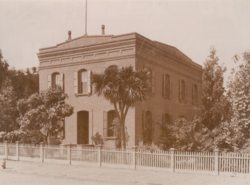
As Bancroft began his own literary work, he became concerned about the safety of his archives, specifically the risk of fire. Following a proposal from his nephew, who needed the Market Street space for a manufacturing department, Bancroft sought a fireproof location. After considering sites in Oakland, San Rafael, Sonoma, San Mateo, and Menlo Park, he chose a site on Valencia Street, near the junction with Mission.
The library officially moved to the Valencia Street building on October 9, 1881.
A Legacy of Preservation
The true value of the Bancroft Library became evident following the 1906 San Francisco earthquake. The resulting fires destroyed most of the Spanish and Mexican government records for Las Californias and Alta California (the regions comprising present-day California) that had been located by American officials. Because Bancroft and his researchers had previously created verbatim copies and detailed notes of these records, much of this vital history survived.
Key Facts
- Founded: 1859
- Founder: Hubert H. Bancroft
- Geographic Scope: Panama to Alaska, including Mexico and Central America
- Growth: Expanded from ~75 volumes to 16,000 volumes by 1869
- Valencia Street Move: October 9, 1881
- Critical Contribution: Preserved Spanish and Mexican government records lost in the 1906 San Francisco earthquake
| Period/Date | Milestone | Collection Size/Location |
|---|---|---|
| 1859 | Initial collection started | 50–75 volumes |
| Early Growth | Expansion to US East Coast and Europe | 1,000 to 5,000 volumes |
| 1869 | Major expansion via auctions | ~16,000 volumes |
| 1881 | Move to fireproof facility | Valencia Street |
| 1906 | San Francisco Earthquake | Preserved lost government records |
Frequently Asked Questions
How did the Bancroft Library start?
It began in 1859 when William H. Knight, working for Hubert H. Bancroft, gathered books related to the Pacific coast to clear space around Bancroft's desk, discovering an initial set of 50 to 75 volumes.
What geographical areas does the collection cover?
The collection covers the western part of North America from Panama to Alaska, including the Rocky Mountain region, Mexico, and all of Central America.
Why was the library moved to Valencia Street?
Bancroft feared the risk of fire at the Market Street location and wanted a dedicated, fireproof building to ensure the safety of the collection.
How did the library help preserve California's history after 1906?
Many original Spanish and Mexican government records were destroyed in the fires following the 1906 San Francisco earthquake. These records survive today largely because Bancroft and his team had made verbatim copies and detailed notes of them.
Did Hubert H. Bancroft only collect books?
No, he also collected pamphlets and purchased entire libraries and individual collections at auctions in European cities to ensure the archive was as complete as possible.