The Abernethy Pearl: Scotland's Rare Freshwater Treasure
In the depths of Scotland's River Tay, a remarkable natural wonder was uncovered that would eventually capture the imagination of collectors and historians alike. Known as the Abernethy Pearl, this specimen stands as a testament to the rare beauty produced by freshwater ecosystems.
The pearl was discovered in 1967 by William Abernethy (1925–2021). Because of its discoverer, the gem is frequently referred to by several names, including the "Little Willie Pearl" and "Bill's Pearl."
The Biology of a Rare Find
Unlike the more common saltwater pearls, the Abernethy Pearl is a freshwater pearl. It was produced by a mussel of the species Margaritifera margaritifera, a species of freshwater mussel known for its ability to create these precious gems under specific environmental conditions.
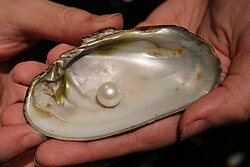
Physically, the pearl is characterized by its spherical shape. Its color is a clean white, accented by a subtle pink overtone, contributing to its aesthetic appeal and rarity.
Value and Provenance
From the moment of its discovery, the Abernethy Pearl was recognized as a high-value asset. In 1967, it was reportedly valued at £10,000, a sum that would be equivalent to approximately £205,926 in 2024 currency values.
For many years, the pearl was displayed at A&G Cairncross jewellers in Perth, where it served as a local attraction. However, in 2024, the pearl transitioned from private commerce to public heritage when it was sold at auction for £93,951. It has since been acquired for display at the National Museum of Scotland.
Key Facts
- Weight: 43.60 grains (2.825 g).
- Origin: River Tay, Scotland.
- Species: Produced by the Margaritifera margaritifera mussel.
- Appearance: Spherical, white with a slight pink overtone.
- Current Location: National Museum of Scotland.
| Attribute | Detail |
|---|---|
| Alternative Names | Little Willie Pearl, Bill's Pearl |
| Discovery Year | 1967 |
| Mass | 2.825 grams |
| 2024 Auction Price | £93,951 |
Frequently Asked Questions
Who discovered the Abernethy Pearl?
The pearl was discovered in 1967 by William Abernethy, who lived from 1925 to 2021.
Where was the pearl found?
It was found in the River Tay, located in Scotland.
What kind of mussel produced this pearl?
The pearl was produced by a freshwater mussel of the species Margaritifera margaritifera.
What are the physical characteristics of the pearl?
The Abernethy Pearl is spherical in shape and white in color with a slight pink overtone.
Where can the Abernethy Pearl be seen today?
The pearl is currently on display at the National Museum of Scotland.