River Tay Nature and Conservation
The River Tay is a cornerstone of Scottish biodiversity, serving as a vital sanctuary for a diverse array of wildlife. Due to its ecological importance, the river is designated as both a Site of Special Scientific Interest (SSSI) and a Special Area of Conservation (SAC), ensuring that its unique habitats are protected for future generations.
Key Facts
- The River Tay is a designated Special Area of Conservation (SAC) and Site of Special Scientific Interest (SSSI).
- It hosts a flagship population of the endangered freshwater pearl mussel.
- The British record for the largest rod-caught salmon (64 lbs) was set here in 1922.
- The first wild Eurasian beaver population in Scotland in over 400 years established itself here in 2001.
- The River Tay (Dunkeld) National Scenic Area covers 5,708 hectares.
Biodiversity and Protected Species
The SAC designation highlights the river's critical role in supporting several key species. These include the Atlantic salmon (Salmo salar), otters (Lutra lutra), and three types of lampreys: the brook lamprey (Lampetra planeri), river lamprey (Lampetra fluviatilis), and sea lamprey (Petromyzon marinus).
One of the most significant residents is the freshwater pearl mussel (Margaritifera margaritifera). As one of Scotland's most endangered species, the Tay maintains a flagship population. This is particularly vital given that Scotland hosts two-thirds of the world's remaining stock of these mussels.
The Legacy of Salmon Fishing
Internationally renowned, the Tay is considered one of the premier salmon rivers in Western Europe. The most prestigious fishing beats, such as Islamouth and Taymount, are located within the lowest ten miles (sixteen kilometres) of the river. The river's fame is cemented by a historic record: in 1922, Georgina Ballantine caught a salmon weighing 64 pounds (29 kilograms), which remains the largest rod-caught salmon in Britain.
Beyond the main stem, salmon fisheries thrive on various tributaries, including the Eden, Lyon, Dochart, Garry, Tummel, Ericht, Isla, and Earn. However, the population has faced challenges. A 50% reduction in catches in 2009 led the Tay District Salmon Fisheries Board to implement a catch-and-release policy starting in January 2010, covering all females for the season and males until May.
Research by the North Atlantic Salmon Conservation Organisation suggests these declines are not merely local. The number of salmon dying at sea has doubled or trebled over the last 20 years, likely due to ocean overfishing during the two years salmon spend at sea before returning to freshwater to spawn.
Landscape Protection and the National Scenic Area
The aesthetic value of the river is as protected as its biology. The section surrounding the town of Dunkeld is designated as a National Scenic Area (NSA). This is one of only 40 such areas in Scotland, designed to identify and protect exceptional scenery by restricting specific types of development. The River Tay (Dunkeld) NSA encompasses 5,708 hectares.
The Return of the Eurasian Beaver
In 2001, the first significant wild population of the Eurasian beaver (Castor fiber) in over 400 years appeared in the Tay catchment. By 2011, the population grew to between 20 and 100 individuals. These beavers likely entered the wild via illegal release or as escapees from captive sites.
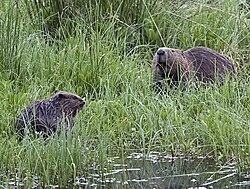
The beavers' presence was initially contested. In late 2010, Scottish Natural Heritage targeted them for removal, leading to the trapping of a beaver on the River Ericht in Blairgowrie, which later died at the Edinburgh Zoo. However, by March 2012, the Scottish Government reversed this decision to await the results of re-introduction studies.
Following a trial release project in Knapdale, Argyll, and monitoring of the Tay population, the Scottish Government announced in November 2016 that beavers would be granted protected status as a native species. While beavers are permitted to expand their range naturally, there are currently no plans to release additional beavers into the Tay, though 28 more were slated for release in Knapdale between 2017 and 2020.
Summary of River Tay Conservation
| Category | Details / Species | Significance |
|---|---|---|
| Designations | SSSI, SAC, NSA (Dunkeld) | High biodiversity and scenic protection |
| Key Fish | Atlantic Salmon, 3 Lamprey species | International fishing renown; ecological health |
| Endangered Species | Freshwater Pearl Mussel | Scotland holds 2/3 of world stock |
| Reintroduced Fauna | Eurasian Beaver | First wild population in 400+ years |
Frequently Asked Questions
What are the primary conservation designations for the River Tay?
The river is designated as a Site of Special Scientific Interest (SSSI) and a Special Area of Conservation (SAC), while the area around Dunkeld is a National Scenic Area (NSA).
Why is the freshwater pearl mussel significant to the Tay?
The Tay maintains a flagship population of this species, which is one of Scotland's most endangered. Scotland is home to two-thirds of the remaining global stock of these mussels.
What caused the decline in Atlantic salmon catches?
While local catch-and-release policies were implemented after a 50% drop in 2009, research indicates a broader problem: salmon mortality at sea has doubled or trebled in 20 years, likely due to ocean overfishing.
How did beavers return to the River Tay?
Beavers established a wild population in the Tay catchment around 2001, likely as a result of illegal releases or escapes from captive sites.
What is the current legal status of beavers in Scotland?
As of November 2016, the Scottish Government granted beavers protected status as a native species, allowing them to extend their range naturally.