Tetrachromacy: The Science of Four-Channel Color Vision
While most humans experience the world through three primary color channels, some organisms possess a far more complex visual palette. Tetrachromacy—derived from the Ancient Greek tetra (four) and chroma (color)—is the biological condition of having four independent channels for conveying color information. This is typically achieved through the presence of four distinct types of cone cells in the retina.
For a tetrachromat, the sensory color space is four-dimensional. This means that to match the sensory effect of a specific spectrum of light, they would require mixtures of at least four primary colors, rather than the three (red, green, and blue) used by standard human vision.
Key Facts
- Definition: Tetrachromacy is the possession of four independent color-sensing channels, usually via four types of cone cells.
- Evolution: The common ancestor of all vertebrates was a tetrachromat; mammals later lost two cone types during a "nocturnal bottleneck," evolving dichromacy.
- Human Occurrence: While humans are typically trichromats, some women may be functional tetrachromats due to genetic variations in opsin alleles.
- Animal Examples: Many birds, fish, and reptiles are natural tetrachromats, often extending their vision into the ultraviolet spectrum.
- Beyond Four: Pentachromacy (five channels) exists in some species, such as pigeons and certain lampreys.
The Physiology of Color Vision
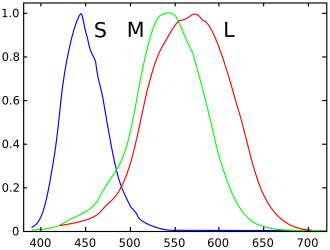
Color vision depends on cone cells, which are high-intensity light receptors in the retina. These differ from rod cells, which are designed for low-intensity light. Each cone type has a different spectral sensitivity, meaning it responds most strongly to specific wavelengths of light.
Tetrachromats possess a fourth cone type, allowing them to see wavelengths beyond the typical human range or distinguish between colors that appear identical to a trichromat. This expanded capability may provide significant physiological advantages in foraging or mate selection.
Tetrachromacy in Humans
Humans and Old World monkeys are generally trichromats, possessing three types of cone cells. However, research suggests that a small percentage of the human population may be tetrachromats. This is most common in women because the genes for two cone pigments (OPN1MW and OPN1MW2) are located on the X chromosome.
The Role of Color Vision Deficiency (CVD)
Interestingly, tetrachromacy may be linked to carriers of recessive opsin alleles that cause color vision deficiency (CVD), often called color blindness. Female carriers of anomalous trichromacy possess heterozygous alleles for L-opsin or M-opsin. If both alleles are expressed through X-inactivation, the individual may possess four functioning cone types.
Studies suggest that up to 15% of women may have a fourth cone with sensitivity between the standard red and green cones. Some research indicates that as many as 50% of women and 8% of men may possess four photopigments, though not all are "functional" tetrachromats. In 2010, neuroscientist Gabriele Jordan identified a woman (subject 'cDa29') who demonstrated true functional tetrachromacy, detecting a wider variety of colors than trichromats in the 546–670 nm range.
Neurological Requirements
Possessing four cone types is not enough; the brain must also have the post-receptoral mechanisms to process these signals. According to the opponent process theory, humans have three opponent channels. Whether the human brain can naturally create a fourth channel remains a subject of debate, though experiments with engineered mice—which showed increased discrimination after receiving a third cone pigment—suggest such plasticity may be possible.
Conditional and Blocked Tetrachromacy
Humans can experience a limited form of tetrachromacy during mesopic vision, which occurs in low light when both cone cells and rod cells are active. Because rod cells are most sensitive at 500 nm (bluish-green), they can provide a small additional dimension to the color space.
Additionally, some argue humans are "blocked" tetrachromats. While our retinas may be sensitive to near-ultraviolet (UV) light, the lens of the eye blocks wavelengths between 300–400 nm. People with aphakia (the absence of a lens) can see near-UV light as whitish-blue or violet, though there is no peer-reviewed evidence that this constitutes true tetrachromacy.
Tetrachromacy in the Animal Kingdom
Tetrachromacy is widespread among non-mammalian vertebrates, often providing a window into the ultraviolet spectrum.
Birds
Many birds, including zebra finches and pigeons, use UV vision (300–400 nm) for foraging and selecting mates based on plumage and skin coloration. Their vision is further enhanced by pigmented oil droplets that filter light before it reaches the visual pigment. However, some birds, like raptors, have evolved to peak in the violet range instead of UV to reduce chromatic aberration, which would otherwise blur their vision and hinder hunting.
![The four pigments in a bird's cone cells (in this example, estrildid finches) extend the range of color vision into the ultraviolet.[1]](/images/0e/33/0e3310e94f50bfedd0fb9098c8f6a9ec7da3b852252840e1c297f21a798c18a7.webp)
Fish and Others
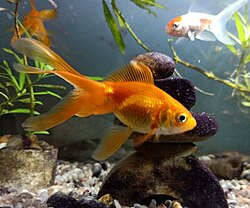
Teleost fish are typically tetrachromats, though there are exceptions. Sharks and rays range from monochromacy to trichromacy, while deep-sea fish are often rod monochromats. Some cichlids may even exhibit pentachromacy.
Beyond Tetrachromacy: Pentachromacy and Higher
There is no theoretical upper bound to the dimensionality of color vision. Pentachromacy involves five independent channels of color information. This is believed to exist in pigeons and some lampreys, though functional psychophysical evidence is limited.
Invertebrates exhibit even more extreme variety. Bluebottle butterflies have 15 opsins, and mantis shrimp have 33. However, it is not yet proven that their actual color perception is as high-dimensional as their number of opsins suggests.
| Vision Type | Number of Channels | Common Examples | Key Characteristics |
|---|---|---|---|
| Dichromacy | 2 | Early mammals, some sharks | Limited color discrimination |
| Trichromacy | 3 | Most humans, Old World monkeys | Standard RGB perception |
| Tetrachromacy | 4 | Birds, fish, some human women | Often includes UV sensitivity |
| Pentachromacy | 5+ | Pigeons, lampreys | Highly complex spectral range |
Frequently Asked Questions
Can any human actually be a tetrachromat?
Yes, although it is rare. Some women who are carriers of color vision deficiency genes may possess a fourth cone type. Research has identified at least one functional tetrachromat capable of distinguishing colors that appear identical to trichromats.
Why can't humans see ultraviolet light like birds do?
The human lens and cornea act as filters that block most UV light (300–400 nm) from reaching the retina. While the retina itself may be sensitive to these wavelengths, the physical structure of the eye prevents them from entering.
What is the difference between a cone cell and a rod cell?
Cone cells are photoreceptors responsible for high-intensity light and color vision. Rod cells are more sensitive to low-light levels but do not contribute to color perception in the same way cones do.
How does the "nocturnal bottleneck" affect mammal vision?
It is conjectured that early mammal ancestors were nocturnal, leading to the evolutionary loss of two of the four ancestral cone types. This resulted in dichromacy, which was later partially reversed in primates who re-evolved a third cone.
Do mantis shrimp see more colors than humans?
Mantis shrimp possess a very high number of opsins (up to 33), which is far more than humans. However, scientists have not yet confirmed if this translates to a higher-dimensional color experience or a different method of processing light.