Taxonomic Anagrams: The Art of Wordplay in Biological Nomenclature
In the rigorous world of science, naming a new species is often seen as a formal, clinical process. However, the binomial nomenclature system—the formal system of naming species of living things—actually allows for a surprising amount of creativity. One of the most intriguing methods scientists use to name new taxa is the use of anagrams.
An anagram is a word or phrase formed by rearranging the letters of another. In biological nomenclature, this wordplay serves as a source of inspiration for researchers. As long as the resulting name remains pronounceable, scientists have the latitude to rearrange letters to create unique identifiers for genera and species.
The Rules of Naming
The use of anagrams is not merely a whim but is recognized within official guidelines. For instance, the International Code of Nomenclature for algae, fungi, and plants (ICN) explicitly allows a new generic name to be derived from a person's name using an abbreviation or an anagram.
This practice allows taxonomists to honor a colleague or a historical figure while ensuring the name is distinct from existing taxa. While many anagrams are perfect letter-for-letter swaps, some in the historical record are considered imperfect anagrams, where a few letters may be altered to improve pronunciation or fit linguistic norms.
Pioneers of Taxonomic Wordplay
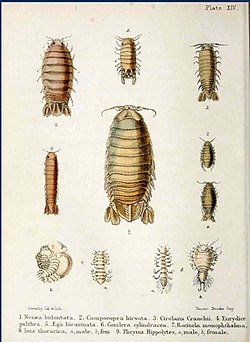
William Elford Leach was one of the first naturalists to embrace this creative approach. In 1818, Leach described several isopod genera that were all anagrams of the name 'Caroline'. These included Conilera, Lironeca, Nerocila, Olencira, and Rocinela.
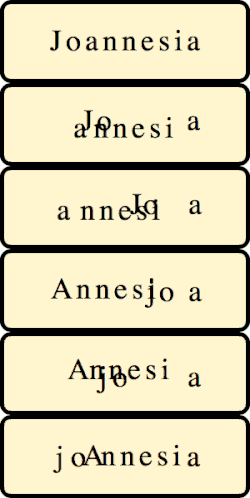
Other examples appear across various plant families. In the Euphorbiaceae family, the genus Joannesia (named for John VI of Portugal) has a corresponding anagrammatic synonym, Annesijoa.
Key Facts
- Pronounceability: Anagrams are permitted in scientific naming provided the resulting name can be spoken.
- ICN Approval: The International Code of Nomenclature for algae, fungi, and plants allows anagrams of personal names for new genera.
- Historical Precedent: William Elford Leach pioneered the use of multiple anagrams for a single namesake (e.g., 'Caroline').
- Variety: Anagrams can be perfect, imperfect, or even anadromes (words spelled backward).
Examples of Taxonomic Anagrams
The following table highlights several instances where initial taxon names were rearranged to create new taxonomic anagrams, often honoring the same individual or concept.
| Initial Taxon Name | Taxonomic Anagram | Namesake / Etymology |
|---|---|---|
| Albizia | Balizia | Filippo degli Albizzi |
| Alibertia | Ibetralia | Jean-Louis-Marc Alibert |
| Allium | Muilla | Latin for garlic |
| Bartsia | Starbia | Johann Bartsch |
| Ekmania | Manekia | Erik Leonard Ekman |
| Fuchsia | Schufia | Leonhart Fuchs |
| Joannesia | Annesijoa | John VI of Portugal |
| Lobelia | Bolelia | Matthias de l'Obel |
Anagrams Beyond Valid Taxonomy
Not all taxonomic anagrams are intended for permanent scientific record. Some have been used as subtle jokes or critiques. A famous example occurred in 1975 when Sir Peter Scott and Robert Rines published a paper in Nature proposing the name Nessiteras rhombopteryx for the Loch Ness Monster. It was later revealed that the name was an anagram for "Monster hoax by Sir Peter S."
Frequently Asked Questions
Are anagrams officially allowed in scientific naming?
Yes, specifically in the International Code of Nomenclature for algae, fungi, and plants, where anagrams or abbreviations of a person's name can be used to create a new generic name.
Who was one of the first naturalists to use this method?
William Elford Leach was a pioneer in this practice, notably creating five different isopod genera in 1818 based on anagrams of the name 'Caroline'.
Must a taxonomic anagram be a perfect rearrangement of letters?
While many are perfect, some are considered imperfect anagrams, and others may be anadromes, which are simply the original name spelled in reverse.
What is the primary requirement for an anagrammatic name?
The most critical requirement is that the resulting name must remain pronounceable.
Can anagrams be used for things other than people's names?
Yes. For example, the genus Allium (Latin for garlic) was used to create the anagram Muilla, and Planogyra (from Latin for "flatwhorl") became Plagyrona.