Understanding Biological Types: The Anchors of Scientific Naming
In the vast and complex world of biology, scientists need a way to ensure that when they talk about a specific organism, everyone else is talking about the exact same thing. This stability is achieved through biological nomenclature—the formal system of naming organisms. At the heart of this system lies the concept of a "type."
A taxon (a scientifically named grouping of organisms, such as a species) is defined by a detailed description and the provision of "type material." A type is a particular specimen, or sometimes a group of specimens, to which the scientific name of that organism is formally attached. Essentially, the type serves as the permanent anchor that centralizes the defining features of a taxon.
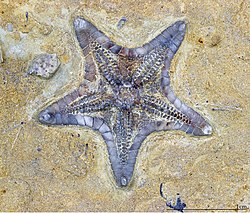
The Rules of Nomenclature
The process of naming and classifying organisms is not arbitrary; it is governed by strict international rules. In zoology, these rules are set by the International Code of Zoological Nomenclature (ICZN). In botany, algae, and fungi, the rules are dictated by the International Code of Nomenclature for algae, fungi, and plants (ICN).
According to these codes, the scientific name of almost every taxon is based on one specific specimen. These specimens are typically physical objects kept in secure research collections, such as museums or herbaria (specialized libraries for dried plant specimens), so that other scientists can examine them to verify identifications.
Differences Between Botany and Zoology
While the goal of anchoring a name is the same, the application of "types" can differ slightly between the study of plants and animals.
Types in Botany
In botanical nomenclature, a type can be either a physical specimen or an illustration. While dried plant specimens are the standard, highly detailed drawings or paintings are sometimes used as types. This is particularly helpful for specimens from the early days of botany that may have been lost or damaged, or for microscopic organisms where a single slide might be difficult to examine reliably.
It is important to note that a type does not determine the circumscription of a taxon. Circumscription refers to the boundaries of a group—for example, whether a group of plants is considered one large species or many small, distinct species. The type remains the same regardless of how scientists choose to draw those boundaries.
Types in Zoology
In zoology, the type of a species or subspecies is typically a physical specimen or a series of specimens. As we move up the taxonomic hierarchy, the definition of a type changes: the type of a genus is a species, and the type of a higher group, such as a family, is a genus. Names for groups higher than the superfamily rank do not have designated types.
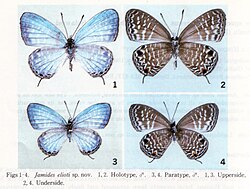
The Hierarchy of Type Designations
Because many species were described long ago—sometimes before modern rules were established—or because original specimens have been destroyed by war or fire, scientists use several different terms to describe various kinds of type material.
| Term | Definition |
|---|---|
| Holotype | The single specimen or illustration clearly designated as the original nomenclatural type. |
| Lectotype | A specimen selected from the original material to serve as the type when no holotype was originally specified. |
| Syntype | Any of two or more specimens cited in the original description when no holotype was designated. |
| Isotype | A duplicate specimen of the holotype. |
| Paratype | Additional specimens cited in the original description that are not the holotype, isotype, or syntype. |
| Neotype | A new specimen selected to serve as the type when the original material is lost or destroyed. |
| Epitype | An interpretative type selected to help clarify identification when other types are insufficient. |
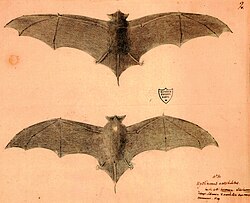
Important Nuances in Taxonomy
The "Typical" Misconception
A common misunderstanding is that a type specimen must be a "typical" or "perfect" example of a species. In reality, a type is simply a name-bearing type (or onomatophore). It is a fixed point of reference. Theoretically, a type specimen could even be an aberrant or deformed individual, though scientists rarely choose such specimens because they make it harder to understand the broader population.
The Case of Homo sapiens
One of the most famous examples of type designation involves our own species. In 1959, Professor William Stearn designated Carl Linnaeus himself as the lectotype for Homo sapiens. This was based on the reasoning that Linnaeus, who studied himself extensively through his writings, was the most appropriate reference point for the species he described in the 10th edition of Systema Naturae.
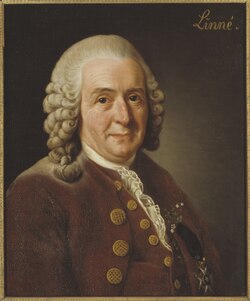
Type Species and Type Genera
The concept of a "type" also applies to higher taxonomic levels:
- Type Species: The specific species that serves as the name-bearing type for a genus.
- Type Genus: The genus that serves as the name-bearing type for a family or subfamily.
Key Facts
- Anchoring Names: A type is the physical specimen or illustration that links a scientific name to a specific organism.
- Not Always "Typical": A type specimen does not have to be a perfect or average representative of its species.
- Institutional Care: Types are usually preserved in museums or herbaria for long-term scientific study.
- Replacement Types: If an original holotype is lost, scientists can designate a neotype to restore taxonomic clarity.
- Hierarchical Types: In zoology, the type of a genus is a species, while the type of a family is a genus.
Frequently Asked Questions
Can an illustration be used as a type?
Yes, particularly in botany. Detailed illustrations are used when physical specimens are difficult to preserve, such as microscopic organisms, or when historical specimens have been lost.
What is the difference between a holotype and a neotype?
A holotype is the single specimen originally designated by the author during the first description of a species. A neotype is a replacement specimen chosen later if the original holotype has been lost or destroyed.
What happens if a scientist finds a specimen that doesn't match the type?
Scientists use the type material as the ultimate standard. If a specimen does not match the characteristics of the type, it may belong to a different species, or the definition of the existing species may need to be revised.
Why are there so many different types like "isotypes" and "syntypes"?
These terms exist to account for different historical methods of describing species. Before modern rules required a single holotype, scientists often described species using multiple specimens (syntypes) or duplicates (isotypes).
Where are type specimens kept?
They are typically housed in major museum research collections or herbarium archives to ensure they are protected and available for examination by taxonomists worldwide.