Tail Coat History and Variations
The tail coat, characterized by its shorter front and extended rear skirts, has evolved from a functional garment into a symbol of formality, military rank, and tradition. From the high-society salons of the Regency era to the rigorous demands of the battlefield, the variations of the dress coat reflect the shifting social and professional hierarchies of the last three centuries.
Key Facts
- Shadbellies are still used in equestrian disciplines as a form of daytime formalwear.
- The Levée dress coat was a black velvet garment used for court and state functions until the mid-20th century.
- Coatees were short-tailed military jackets used by the British Army and early American forces.
- Livery for footmen featured knee-length coats with sloped cut-away fronts.
- The Royal Navy used tail coat designs to denote rank, with double-breasted styles reserved for lieutenants and above.
Formal and Social Variations
The Shadbelly
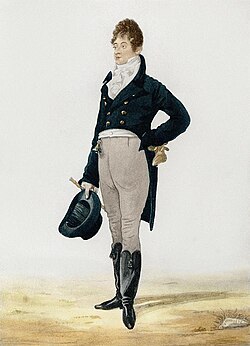
In the world of equestrianism, the shadbelly remains a staple of formal competition. Unlike modern evening dress, the shadbelly is a variant of the dress coat that mirrors the early nineteenth-century style popularized by Beau Brummell. In some contexts, the male version of this garment is referred to as a "weaselbelly."
The Levée Dress Coat
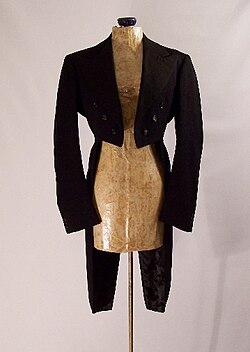
Until the mid-twentieth century, the levée dress coat served as a primary component of court dress for those not wearing military uniforms. Typically crafted from black velvet—though black barathea was used for diplomatic dress—this single-breasted coat featured a stand-up collar and plain gauntlet cuffs.
The garment was detailed with six metal buttons at the front and two decorative buttons at the back, featuring two three-pointed flap pockets at the waist. For a complete formal look, it was paired with breeches, black silk hose, a white bow tie, white gloves, and steel-buckled court pumps. The interior was lined with black silk in the body and white silk in the skirts.
Military and Official Coatees
British and American Infantry
From approximately 1790 until after the Crimean War, the British Army infantry wore the coatee, a red tail coat with short tails. These featured white braid on the front and cuffs and collars in regimental colors. To improve movement and provide camouflage, elite units such as the 95th Rifles were issued short green versions.
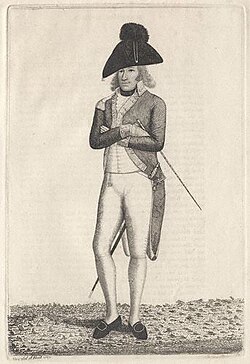
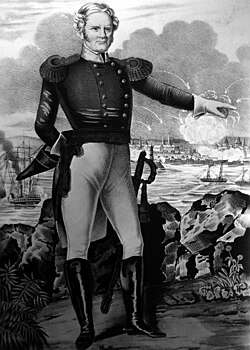
The United States adopted a similar style in dark blue for enlisted men during the War of 1812. While enlisted men transitioned to shell jackets by 1833, officers continued wearing tail coats until after the Mexican War, when frock coats became the standard for field wear. By the introduction of the M1858 uniform, tail coats were reserved exclusively for full dress.
Naval and Highland Variations
The Royal Navy utilized a complex hierarchy of tail coats to signal seniority. Junior officers wore single-breasted coats, while those with the rank of lieutenant and above wore double-breasted versions, with increased gilding and buttons denoting higher rank.
In traditional Highland dress, the Highland coatee is utilized. It maintains the square cut-away front of a standard dress coat but features significantly shorter tails.
Service and Livery
The footman's coat was a specific form of livery (a servant's uniform). This coat was knee-length with a sloped cut-away front, similar to a morning coat. It featured a stand-up collar, gilt buttons, and three-pronged side pockets reminiscent of the levée dress coat.
Summary of Tail Coat Types
| Type | Primary Use | Key Characteristic | Typical Material/Color |
|---|---|---|---|
| Shadbelly | Equestrian / Formal | Early 19th-century cut | Varies |
| Levée Coat | Court / Diplomatic | Stand-up collar, gauntlet cuffs | Black velvet or barathea |
| Military Coatee | Infantry Uniform | Short tails, regimental colors | Red (British) or Blue (US) |
| Highland Coatee | Highland Dress | Square cut-away, very short tails | Varies |
| Footman's Coat | Servant Livery | Knee length, sloped front | Gilt buttons |
Frequently Asked Questions
What is the difference between a shadbelly and a modern tail coat?
A shadbelly is cut closer to the early nineteenth-century style of Beau Brummell and is primarily used today in equestrian disciplines as daytime formalwear, whereas modern tail coats are typically associated with evening formal dress.
Who wore the levée dress coat?
The levée dress coat was worn by individuals attending court, levées, and evening state parties who were not required to wear military uniforms.
How did the Royal Navy use tail coats to show rank?
The Navy used a system of buttons and gilding to show seniority; specifically, junior officers wore single-breasted coats, while lieutenants and higher-ranking officers wore double-breasted coats.
Why did the 95th Rifles wear green coatees?
The 95th Rifles were issued short green coats instead of the standard red to provide better camouflage and allow for greater ease of movement during operations.
When did American military officers stop wearing tail coats in the field?
Officers continued to wear tail coats until after the Mexican War, at which point frock coats became the standard field wear.