H.H. Kung: The Architect of Finance in Nationalist China
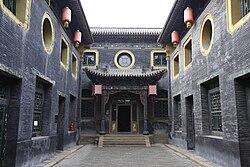
H.H. Kung was a pivotal and controversial figure in the early 20th-century Republic of China. Born into a prosperous banking and trading family in Taigu County, Shanxi Province, Kung bridged the gap between traditional Chinese society and Western academic thought. His journey from a mission school student to the Minister of Finance and Premier of China reflects the turbulent transition of China from the Qing dynasty to the Nationalist era.
Kung's early education was unconventional for the time. He attended North China Union College near Beijing, where he studied mathematics, physics, and chemistry—subjects largely absent from traditional Chinese curricula. His resilience was tested early during the Boxer Rebellion; after the Taiyuan Massacre, he risked his life to smuggle letters from murdered missionaries to Beijing, hiding them within the layers of his cloth shoes.
Academic Pursuits and Early Influence
In 1901, through the help of missionary Luella Miner, Kung traveled to the United States. His arrival was fraught with difficulty due to the Chinese Exclusion Act, a law restricting Chinese immigration, which led to his temporary detention in San Francisco. Despite these hurdles, Kung excelled academically, graduating from Oberlin College in 1906 and later earning a master's degree in chemistry from Yale University.
Upon returning to China, Kung became a key ally to Yan Xishan during the 1911 Xinhai Revolution. As one of Yan's most trusted advisors, Kung helped steer the modernization of Shanxi, earning the region a reputation as the "Model Province" during the Warlord Era. He also focused on education, establishing Ming Hsien, a complex of Christian schools in Taigu.
Rise Within the Nationalist Government
Kung's ascent in national politics was bolstered by his marriage to Soong Ai-ling in 1914. This union linked him to the powerful Soong family, making him the brother-in-law of both Sun Yat-sen (the founder of the Kuomintang) and Chiang Kai-shek. Together, the Soong sisters and their husbands were known as one of the "Four Big Families" of the era.
Kung held several high-ranking positions within the Nationalist government, including:
- Minister of Industry: 1927–1928
- Minister of Industry and Commerce: 1928–1931
- Minister of Finance: 1933–1944
- Governor of the Central Bank of China: 1933–1945
- Premier of the Republic of China: 1938–1939
One of his most significant economic legacies was the creation of the fabi, a fiat currency (money not backed by a physical commodity) that replaced the silver standard in 1935. While intended to modernize the economy, the fabi eventually suffered from severe inflation and hyperinflation, which clouded Kung's financial legacy.
Global Diplomacy and the Axis Powers
During the 1930s, Kung engaged in complex diplomacy to secure aid for China. In 1933 and again in 1937, he visited Germany. During his 1937 trip, he met with Adolf Hitler, attempting to enlist German support against the Empire of Japan. Kung successfully persuaded Hitler to cancel a speech by Prince Chichibu, the brother of the Japanese Emperor, arguing that Japan sought global domination.
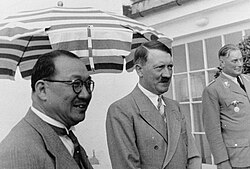
While Kung expressed satisfaction with his meetings with Hitler and Benito Mussolini, his primary goal was the industrialization and militarization of China. He worked to bring German business delegations to China to facilitate the development of raw materials and transportation infrastructure.
War, Power, and Downfall
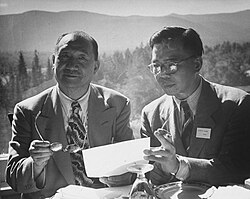
During the Second Sino-Japanese War (1937–1945), Kung became one of the most powerful figures in the government based in Chongqing. He operated his own secret service and maintained a complex relationship with other KMT factions. On the international stage, he represented China as the Chief Delegate at the 1944 Bretton Woods Conference, where he signed the accord that established the International Monetary Fund (IMF) and the World Bank.
However, Kung's influence waned as allegations of corruption grew. He was centrally implicated in the American Dollar Bond scandal of 1942–1943. In this scheme, government insiders, including Kung and members of the Soong family, secretly purchased unsold bonds using black-market currency, resulting in massive personal windfalls.
By 1944, Chiang Kai-shek lost confidence in Kung. He was replaced as Minister of Finance in November 1944 and removed from his other primary roles by the spring of 1945, marking the end of his political dominance.
Key Facts
- Education: Graduated from Oberlin College (1906) and Yale University (Master's in Chemistry).
- Family Ties: Married Soong Ai-ling; brother-in-law to Chiang Kai-shek and Sun Yat-sen.
- Economic Impact: Introduced the fabi fiat currency in 1935 to replace the silver standard.
- Global Role: Signed the Bretton Woods Accord in 1944, helping found the IMF and World Bank.
- Controversy: Implicated in the American Dollar Bond scandal involving the misappropriation of USD$200 million.
| Period | Role/Event | Key Outcome |
|---|---|---|
| 1906-1911 | US Education | Degrees from Oberlin and Yale |
| 1911-1920s | Advisor to Yan Xishan | Modernization of Shanxi Province |
| 1933-1944 | Minister of Finance | Implementation of fabi currency |
| 1938-1939 | Premier of ROC | National leadership during WWII |
| 1944 | Bretton Woods Delegate | Establishment of IMF and IBRD |
Frequently Asked Questions
How did H.H. Kung influence the economy of China?
Kung's most significant economic action was the 1935 replacement of the silver standard with the fabi, a fiat currency. While this was intended to modernize China's financial system, it eventually led to hyperinflation, which damaged his historical reputation.
What was the American Dollar Bond scandal?
It was a corruption scheme where Nationalist government insiders, including Kung, used black-market currency to secretly buy up unsold government bonds issued in 1942, allowing them to profit immensely from the exchange rates.
What was Kung's relationship with the Soong family?
Kung married Soong Ai-ling, making him part of the "Four Big Families." This connection gave him immense political leverage, as his sisters-in-law were married to the most powerful men in China: Sun Yat-sen and Chiang Kai-shek.
Why did H.H. Kung visit Nazi Germany in 1937?
Kung visited Germany to seek aid and industrial support against the Empire of Japan. He attempted to convince Adolf Hitler that Japan's ambitions for world domination were a threat, hoping to distance Germany from its Japanese allies.
What role did Kung play in the creation of the World Bank?
As China's Chief Delegate to the International Monetary & Financial Conference in 1944, Kung signed the Bretton Woods Accord, which established the International Monetary Fund (IMF) and the International Bank for Reconstruction and Development (now part of the World Bank).