Syrian Opposition: History, Governance, and the Fall of the Assad Regime
The Syrian opposition refers to the diverse array of political and military factions that rose against the Ba'athist rule of Bashar al-Assad during the Syrian Civil War. Beginning as a series of peaceful protests on March 15, 2011, the movement evolved into a complex network of armed rebels and political bodies seeking to dismantle the existing regime and establish a new governing structure for Syria.
This movement was characterized by a "big tent" political position, encompassing a wide spectrum of ideologies ranging from secular nationalism and democracy to Sunni Islamism and Salafism. Over more than a decade, the opposition shifted from street protests to territorial governance and eventually to the collapse of the Assad regime in December 2024.
Key Facts
- Active Period: March 15, 2011, to December 2024.
- Primary Goal: The removal of the Assad regime and the transition to a new political system.
- Major Political Bodies: The Syrian National Council (SNC) and the National Coalition of Syrian Revolutionary and Opposition Forces.
- Key Military Forces: The Free Syrian Army (FSA), Jaysh al-Islam, and Ahrar al-Sham.
- Outcome: The fall of the Assad regime in December 2024 and the subsequent formation of a transitional government.
Political Evolution and Governance
The political wing of the opposition sought international legitimacy and a unified voice to represent the Syrian people. Early efforts led to the creation of the Syrian National Council (SNC), which was later succeeded by the National Coalition of Syrian Revolutionary and Opposition Forces. These bodies operated largely from Istanbul, Turkey, and were recognized by various international entities, including the European Union and the United States, as legitimate representatives of the Syrian people.
Parallel to these exiled bodies, several internal governance structures emerged to manage liberated territories:
- Syrian Interim Government: Based in Azaz, this body aimed to provide administrative services in opposition-held areas.
- Syrian Salvation Government: Established in Idlib in 2017, primarily associated with Hay'at Tahrir al-Sham.
- Autonomous Administration of North and East Syria: A Kurdish-led administration focusing on regional autonomy.
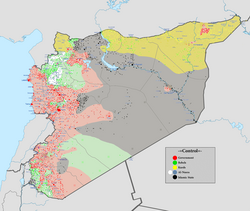
Military Forces and Territorial Control
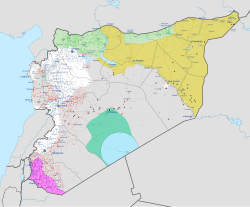
As the conflict militarized, the Free Syrian Army (FSA) emerged as a primary force, composed largely of defectors from the Syrian Armed Forces. Other significant armed groups included Jaysh al-Islam and Ahrar al-Sham. These forces fought to seize territory from the regime, often operating through regional hubs such as the Southern Front in Daraa and the Al-Tanf garrison.
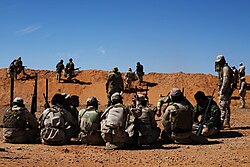
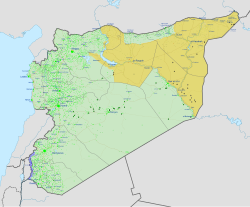
Territorial control fluctuated significantly throughout the war. By 2016, the map was divided between the regime, the opposition, Kurdish-led forces (Rojava), and the Islamic State. However, a series of offensives in 2024 culminated in the total collapse of the Assad regime in December of that year.
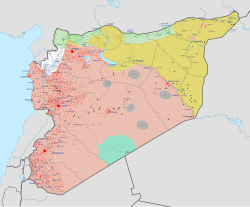
Following the regime's fall, opposition groups announced their disbandment during the Syrian Revolution Victory Conference in January 2025, merging their efforts into a unified national framework.
Summary of Opposition Structures
| Entity | Type | Primary Headquarters | Key Ideology/Focus |
|---|---|---|---|
| National Coalition | Political | Istanbul | Anti-Assadism, Diplomacy |
| Free Syrian Army | Military | Various (e.g., Al-Tanf) | Regime Change, Nationalism |
| Interim Government | Administrative | Azaz | Civil Governance |
| Salvation Government | Administrative | Idlib | Islamic Governance |
Frequently Asked Questions
When did the Syrian opposition officially end its activities?
The opposition's active period concluded between December 8 and December 10, 2024, following the fall of the Assad regime, with many forces merging into the Syrian Armed Forces.
Who was appointed to lead the transitional government?
Mohammed al-Bashir was tasked with forming a transitional government in December 2024, and subsequent reports in January 2025 identified the leader of the rebels who toppled Assad as the country's interim president.
What were the primary ideologies of the opposition?
The opposition was a "big tent" movement including democracy, Syrian nationalism, secularism, and various forms of Sunni Islamism, including Salafism and Wahhabism.
Which international bodies recognized the Syrian opposition?
The Syrian National Council and the National Coalition were recognized as legitimate representatives by the European Union, France, the United Kingdom, and the United States.
What was the role of the Free Syrian Army?
The Free Syrian Army (FSA) served as the primary military wing of the opposition, consisting of defecting army officers and volunteers fighting to overthrow the Ba'athist government.