Syrian Kurds: History, Demographics, and the Struggle for Rights
The Kurds represent the largest ethnic minority in Syria, with a complex history tied to the shifting borders of the Middle East. From their ancestral lands in the northeast to their roles in the modern Syrian state, the Kurdish people have navigated a challenging path between cultural preservation and political marginalization.
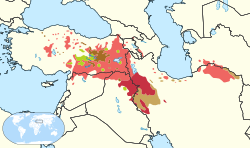
Current estimates suggest that between 1.6 million and 2.5 million Kurds reside in Syria, making up approximately 5% to 10% of the total population, though some analysts suggest the figure may be as high as 15% to 17%.
Key Facts
![The first licensed female doctors in India, Syria and Japan. Anandibai Joshee (Indian), Kei Okami (Japanese), Sabat Islambooly (Kurdish Jew from Syria)[62] – 10 October 1885](/images/e4/b3/e4b3b20a68b9c715a80381a2d1f9fd64b6ac627b2c1e8efd0b5c69f49c71304a.png)
- Population: Estimated between 1.6 million and 2.5 million people.
- Primary Regions: Concentrated in Northeastern Syria, Afrin, and Kobani.
- Language: Primarily Kurmanji (a Kurdish dialect), with Arabic also widely spoken.
- Religion: Majority Sunni Islam, with minorities practicing Yazidism and Shia Islam.
- Political Status: A history of citizenship deprivation and ongoing struggles for autonomy.
Demographics and Geographic Distribution
The Kurdish population is primarily concentrated in the northeast of the country. Historically, significant communities existed in Damascus (approximately 12,000 at the start of the 20th century), the Jarabulus region (16,000), and the Jazira province, where they likely formed the majority.
Migration patterns shifted significantly in the early 20th century. The expansion of roads and railways to Nusaybin in 1918 encouraged southward movement. Later, in the 1920s, approximately 25,000 Kurds fled to the Jazira province following failed rebellions in Kemalist Turkey. By 1939, the number of Kurdish villages in Jazira had grown from 45 to between 700 and 800.
| Category | Details |
|---|---|
| Estimated Population | 1.6 million to 2.5 million |
| Percentage of Total Population | 5% to 17% (varying estimates) |
| Main Dialect | Kurmanji |
| Key Hubs | Afrin, Kobani, Jazira Province |
| Primary Religions | Sunni Islam, Yazidism, Shia Islam |
Historical Journey and the French Mandate
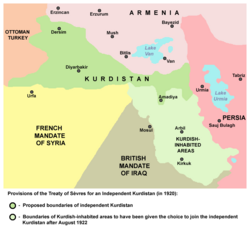
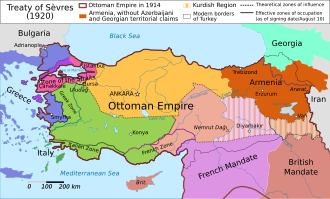
The modern Kurdish experience in Syria was heavily influenced by the Treaty of Sèvres (1920), which initially provided for an independent Kurdistan before colonial borders were redrawn.
During the French Mandate of Syria, the French authorities employed a "divide and rule" strategy. They encouraged minority autonomy and granted citizenship to newly arriving Kurds, recruiting them heavily into local armed forces alongside Alawite and Druze groups. However, this period was not without violence; in 1937, Kurdish tribes led by Sa'ed Agha al-Dakkuri attacked the town of Amuda in retaliation for a French bombardment, leading to the displacement of the town's Christian population.
The Struggle for Citizenship and Identity
Following independence, the relationship between the Syrian state and its Kurdish population deteriorated. A pivotal moment occurred in 1962 when a controversial census resulted in approximately 20% of the Kurdish population being stripped of their Syrian citizenship.
The Syrian government justified this by claiming that many Kurds had illegally infiltrated the Al-Hasakah Governorate from Turkey to benefit from agricultural land redistribution. Conversely, Human Rights Watch argued that the government falsely labeled original inhabitants as foreigners to violate their human rights.
The Syrian Civil War and Modern Conflict
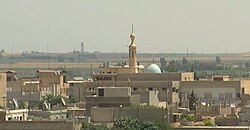
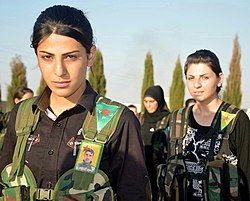
The Syrian Civil War brought a new era of Kurdish mobilization. The People's Protection Units (YPG), the primary Kurdish militia, captured several towns in northeastern Syria, including Ras al-Ayn in July 2012.
Kurdish forces, including dedicated female units, played a critical role in the fight against ISIS. However, this progress was met with opposition from Turkey. In early 2018, the Turkish Armed Forces and the Turkish-backed Free Syrian Army occupied the Afrin Canton, displacing between 150,000 and 200,000 people.
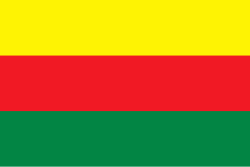
The flag of Kurdistan, while banned in Syria, became a symbol of resistance and identity during the uprising and civil war.
![The flag of Kurdistan is banned in Syria, but it has begun to be flown during the Syrian uprising and civil war.[126][127]](/images/1c/bd/1cbd106c2cf5697726c5703f76c6437a1d34f1feb98010159e27f96c80c51b9d.webp)
Influential Syrian Kurds
Despite political hardships, Kurds have held high-ranking positions in the Syrian government. Notable figures include:
- Adib Shishakli: President of Syria (1953–1954).
- Ata Bey al-Ayyubi: Prime Minister (1936) and President (1943).
- Husni al-Za'im: Prime Minister and President (1949).
- Mahmoud al-Ayyubi: Prime Minister (1972–1976).
- Muhammad Mustafa Mero: Prime Minister (2000–2003).
Frequently Asked Questions
What percentage of Syria's population is Kurdish?
Estimates vary, generally ranging from 5% to 10%, though some academic sources suggest the figure is closer to 15% or 17%.
Why were some Syrian Kurds stripped of their citizenship?
In 1962, following a controversial census, the government stripped many Kurds of citizenship, claiming they were illegal immigrants from Turkey. Human rights organizations argue this was a false claim used to marginalize the population.
What is the primary language spoken by Kurds in Syria?
The primary Kurdish dialect spoken in Syria is Kurmanji, although many are also fluent in Arabic.
What happened to the Afrin Canton in 2018?
The Afrin Canton was occupied by the Turkish Armed Forces and the Turkish-backed Free Syrian Army, resulting in the displacement of 150,000 to 200,000 people.
Who are the YPG?
The YPG (People's Protection Units) are a Kurdish militia that gained prominence during the Syrian Civil War, notably for capturing northeastern towns and fighting against ISIS.