Kurds: History, Culture, and Distribution of a Middle Eastern People
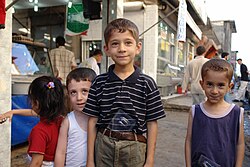
The Kurds are one of the largest ethnic groups in the Middle East, possessing a rich cultural heritage and a complex history spanning millennia. As an Iranic people, they have maintained a distinct identity despite being distributed across several modern nation-states. Today, they represent the fourth largest ethnic group in the region, following Arabs, Persians, and Turks.
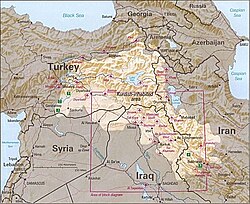
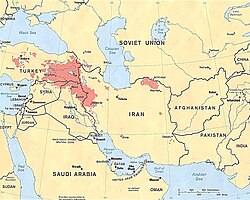
Their presence is most concentrated in a contiguous geographic area often referred to as Kurdistan, though this region is divided among four primary countries. Beyond West Asia, a significant and growing diaspora has established communities in Europe and North America.
Key Facts
- Estimated Population: Between 30 and 45 million people globally.
- Primary Regions: Turkey, Iran, Iraq, and Syria.
- Language Family: Iranic, with major dialects including Kurmanji and Sorani.
- Major Religions: Predominantly Islam (Sunni and Shia), with significant minorities practicing Yazidism, Yarsanism, Zoroastrianism, and Christianity.
- Political Status: They are the largest ethnic group in the world without a sovereign nation-state of their own.
Population and Geographic Distribution
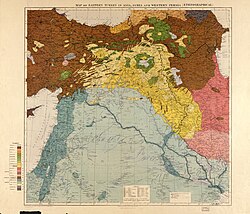
The Kurdish population is spread across several borders, with the highest concentrations found in Turkey, Iran, Iraq, and Syria. In these countries, Kurds often form regional majorities in the areas they inhabit.
| Country/Region | Estimated Population | Percentage of National Population |
|---|---|---|
| Turkey | 14.3–20 million | 18% – 25% |
| Iran | 8.2–12 million | 10% |
| Iraq | 5.6–8.5 million | 15% – 20% |
| Syria | 1.5–3.6 million | 9% |
| Germany | 1.2–1.5 million | N/A |
Beyond the Middle East, notable diaspora communities exist in Germany, France, Sweden, the Netherlands, and the United States. This global spread is a result of historical migrations and political displacement.
Language and Linguistics
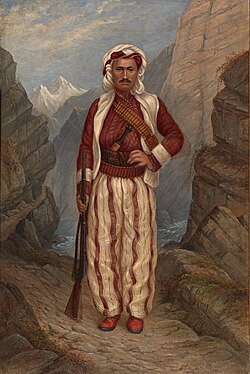
The Kurdish language is part of the Iranic branch of the Indo-European family. It is not a single monolithic tongue but a collection of related dialects. According to linguistic classifications, these are generally divided into three main groups:
- Northern Group: Primarily the Kurmanji dialect.
- Central Group: Primarily the Sorani dialect.
- Southern Group: Including the Xwarin dialect group and Laki.
While Kurdish is the primary language, many Kurds are multilingual, speaking Turkish, Persian, or Arabic as second languages depending on their country of residence. Minority languages such as Zaza, Gorani, and Shabaki are also spoken within the community.
Religion and Belief Systems
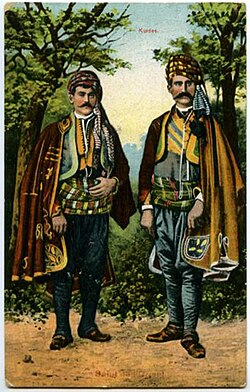
While the majority of Kurds practice Islam, predominantly in the Sunni and Shia traditions, the community is characterized by significant religious diversity. This diversity reflects the ancient history of the region.
Minority Faiths
- Yazidism: An ancient monotheistic faith with a unique set of beliefs and rituals.
- Yarsanism: A syncretic religion found primarily among Kurds in Iran.
- Zoroastrianism: One of the world's oldest religions, which left a lasting imprint on Kurdish culture.
- Christianity and Judaism: Long-standing minority communities that have coexisted within Kurdish regions.
Historical Overview
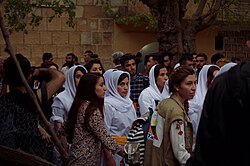
The history of the Kurds is marked by a transition from ancient tribal structures to the modern struggle for national identity. In antiquity, they were established in the highlands of the Middle East, later experiencing the Islamic conquests and subsequent Turkic invasions.
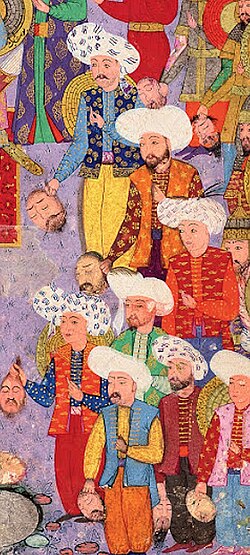
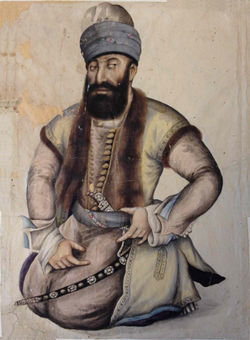
Throughout the medieval and early modern periods, Kurds lived under various dynasties, including the Ayyubids, Safavids, and Zands. During the Ottoman period, Kurdish principalities maintained varying degrees of autonomy.
![Eyewitness depiction of Kurdish prince Mir Sheref and his retinue in Jizra in 1602–03 (BNF, Turc 127).[140][141]](/images/75/2b/752ba0ae5f1bf13e760ee283a2ae37d17cbd3db50ded5efc6c46f5701c8080df.jpg)
The 20th Century and Nationalism
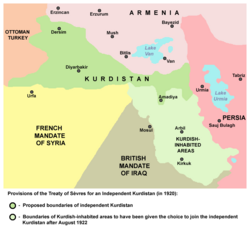
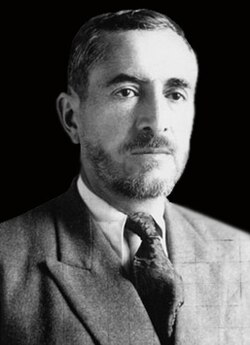
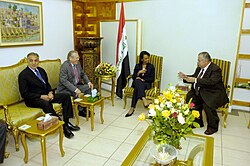
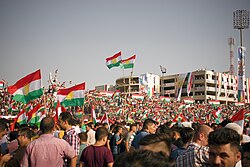
The 20th century saw the rise of Kurdish nationalism. Following World War I, the 1920 Treaty of Sèvres provided provisions for an independent Kurdistan, but these were not realized. This led to a century of political struggle and the emergence of various Kurdish-majority entities, such as the Kurdistan Region in Iraq (established 1992) and the Democratic Federation of Northern Syria (established 2013).
Culture and Traditions
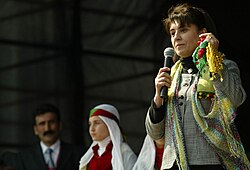
Kurdish culture is deeply tied to the land and a history of resilience. It is expressed through a variety of arts, crafts, and social customs.
Arts and Handicrafts
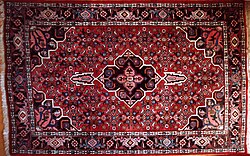
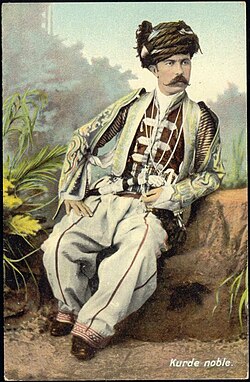
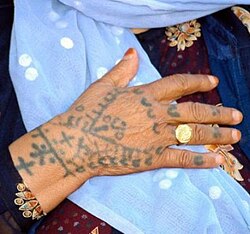
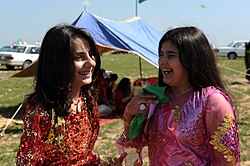
The Kurds are renowned for their weaving and textile arts, particularly the production of intricate rugs. Traditional attire often includes distinctive clothing and accessories, such as the jambiya dagger worn by noblemen. Additionally, the practice of deq (traditional tattooing) has been a cultural marker for some Kurdish women.
Folklore and Entertainment
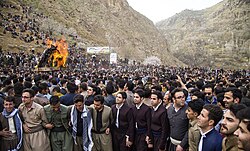
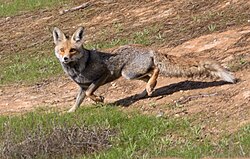
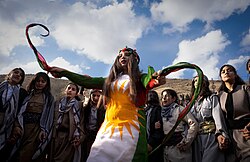
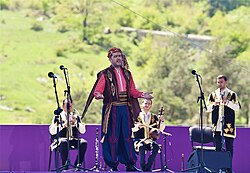
Kurdish folklore is rich with storytelling, often featuring recurring characters like the fox. Music and dance are central to social life, with Newroz (the Kurdish New Year) serving as the most significant cultural celebration, symbolizing renewal and spring.
Sports and Architecture
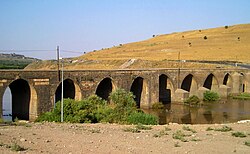
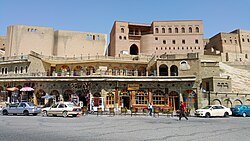
Wrestling is a prominent sport in Kurdish regions, particularly in Iran, where styles such as Zhir-o-Bal and Zouran-Patouleh originated. Architecturally, the region is home to significant landmarks, including the Citadel of Erbil and the Marwanid Dicle Bridge in Diyarbakir.
Frequently Asked Questions

Where do most Kurds live?
The majority of the Kurdish population resides in Turkey, followed by Iran, Iraq, and Syria. There are also significant diaspora populations in Germany and other European nations.
What are the main Kurdish dialects?
The most widely spoken dialects are Kurmanji (Northern) and Sorani (Central), along with Southern Kurdish and Laki.
What is Newroz?
Newroz is the Kurdish New Year, celebrated on March 21st. It is a major cultural event symbolizing the arrival of spring and the renewal of nature.
Do Kurds have their own country?
Kurds do not have a sovereign independent state, but they have established autonomous regions, most notably the Kurdistan Region in Iraq.
What religions are practiced by Kurds?
While predominantly Muslim (Sunni and Shia), Kurds also include practitioners of Yazidism, Yarsanism, Zoroastrianism, and Christianity.