Kurdish Population and Global Diaspora: A Comprehensive Demographic Overview
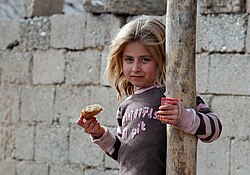
The Kurdish people constitute a significant ethnic group primarily concentrated in the Middle East, though their presence extends across Europe, Asia, and the Americas. With a total global population estimated between 31 and 32 million, the Kurds are characterized by their distinct languages—primarily Kurdish and Zaza–Gorani—and a shared cultural heritage that spans several national borders.
Historically centered in the region known as Kurdistan, the Kurdish population is distributed across four primary nations: Turkey, Iran, Iraq, and Syria. However, political shifts and migration have led to the establishment of a vast global diaspora, creating vibrant Kurdish communities far beyond their ancestral lands.
Key Facts
- Total Population: Estimated between 31 and 32 million people worldwide.
- Primary Regions: Turkey (14.7 million), Iran (8.1 million), Iraq (5.5 million), and Syria (1.7 million).
- Languages: Kurdish and Zaza–Gorani languages.
- European Presence: Approximately 1.5 to 1.7 million Kurds reside in Western Europe.
- Global Reach: Significant populations exist in the Transcaucasus, Russia, North America, and Oceania.
Population Distribution in the Middle East
The majority of the Kurdish population resides in the heart of the Middle East. Turkey hosts the largest number of Kurds, followed by Iran and Iraq. In Syria, the population is smaller but remains a significant demographic component of the nation.
| Country | Estimated Population | Percentage of National Population |
|---|---|---|
| Turkey | 14.7 million | 18% |
| Iran | 8.1 million | 10% |
| Iraq | 5.5 million | 17.5% |
| Syria | 1.7 million | 9.7% |
Cultural and Religious Diversity
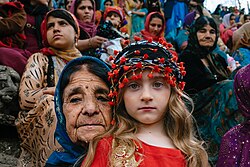
While the Kurdish people share linguistic ties, they are religiously diverse. This includes the Yazidis, who maintain distinct spiritual practices and pilgrimage sites, such as the Lalish temple in Iraqi Kurdistan.

The Kurdish Diaspora in Europe and Beyond
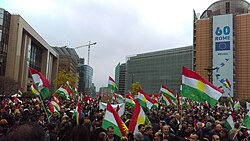
Due to various socio-political factors, millions of Kurds have migrated to other parts of the world. Western Europe has become a primary destination, with Germany hosting the largest community, estimated at 1.2 million people as of 2023. Other significant populations are found in France (320,000), Sweden (120,000), and the Netherlands (120,000).

The diaspora is not limited to Western Europe. In the Transcaucasus, Kurds reside in Armenia, Georgia, and Azerbaijan. In Georgia, for instance, a 2002 census recorded 20,843 Kurds, many of whom are concentrated in Tbilisi and Rustavi, with a high rate of assimilation.
Beyond Europe, Kurdish communities have established themselves in the Americas and Asia. In North America, the United States and Canada host tens of thousands of Kurds. In Asia, Kazakhstan and Kyrgyzstan have notable populations, with Kazakhstan recording over 50,000 Kurds in 2024 statistics.
European Statistical Tracking
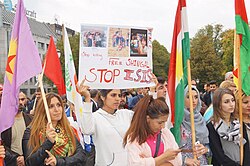
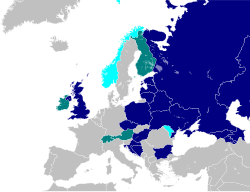
Tracking the Kurdish population in Europe varies by country. Some nations utilize ethnicity statistics, while others rely on first-language statistics or other official measures to estimate the population size.
Frequently Asked Questions
What is the total estimated population of Kurdish people?
The total global Kurdish population is estimated to be between 31 and 32 million people.
Which country has the largest Kurdish population?
Turkey has the largest Kurdish population, with an estimated 14.7 million people, representing approximately 18% of its total population.
What languages do Kurdish people speak?
The primary languages spoken by this ethnic group are Kurdish and the Zaza–Gorani languages.
Where are the largest Kurdish diaspora communities located?
The largest diaspora communities are in Western Europe, particularly in Germany, France, Sweden, and the Netherlands.
Are there Kurdish populations outside of the Middle East and Europe?
Yes, there are Kurdish populations in Central Asia (such as Kazakhstan and Kyrgyzstan), North America (USA and Canada), and Oceania (Australia and New Zealand).